
ETP Plant Manufacturer in Gurgaon Offering Turnkey Solutions
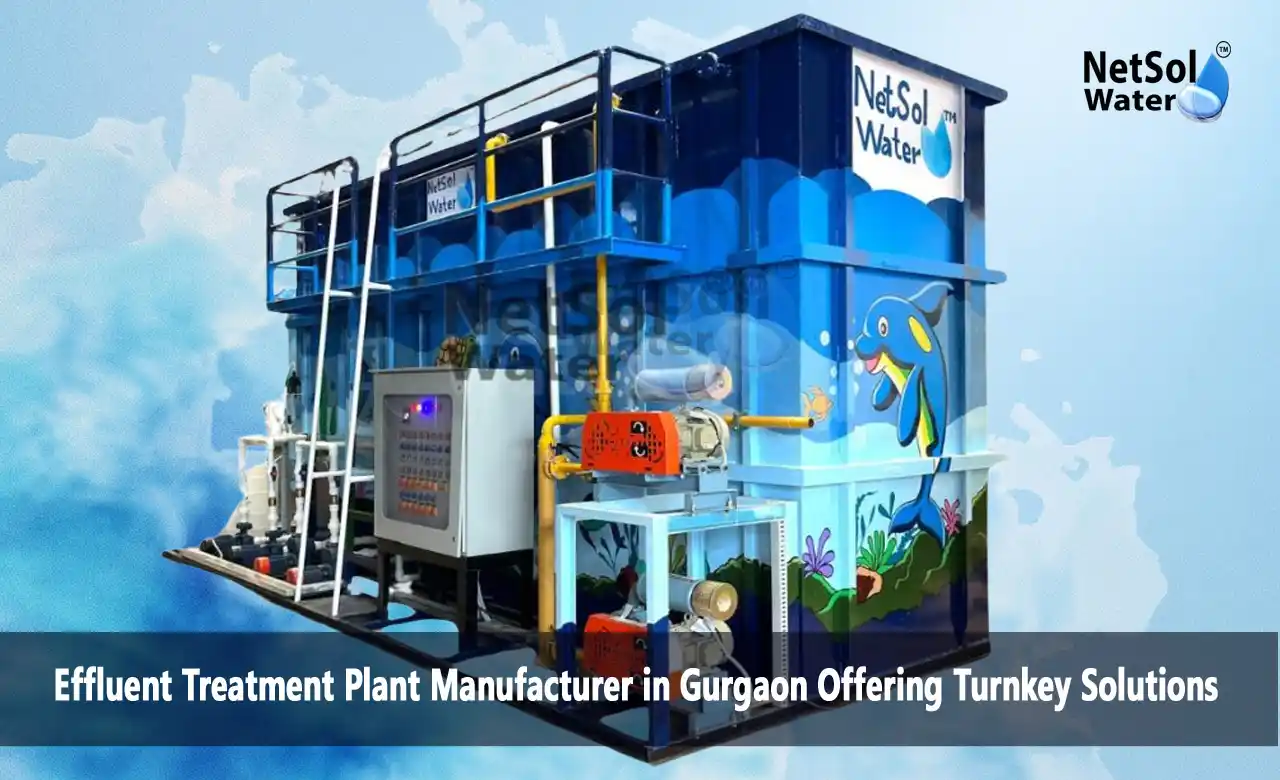
Efficient wastewater treatment is important for industrial units to address process effluent and meet environmental regulations. Netsol Water is a top Effluent Treatment Plant Manufacturer in Gurgaon, providing perfect Industrial ETP Plants for small, medium and large industrial units. It has products ranging from capacities of 5 KLD up to large scale and multi-MLD. Design, Fabrication, Installation, Commissioning and Technical Support for relevant services.
What Is an Effluent Treatment Plant and How Does It Work?
An Effluent Treatment Plant (ETP) is a plant that is used to remove contaminants from effluents of industrial processes before they are discharged or reused. It assists in minimizing suspended solids, organic pollutants, oils and other pollutants from the manufacturing processes.
The standard course of treatment is:
Treated Water Reuse or Compliant Discharge, or treated water for reuse, is the final step in the process of this effluent.
The different stages carry out different functions. Coarse material is filtered out in screening. Equalization will equalise flow and pollutant loads. Chemical treatment is used to separate fine solids and to adjust the pH. Biological treatment is used to decrease biodegradable organic matter. When necessary, additional polishing is done by filtration and membrane treatment.
The final process is determined by wastewater analyses, industry demands and the desired water discharge or re-use quality.
ETP Capacity Range and Technical Specifications
The ETP capacity options published by Netsol Water are from small systems to ETPs of 250 KLD and beyond. The table below will give illustrative engineering estimates.
| Plant Capacity | Suitable Application | Possible Treatment Technology | Expected Performance | Indicative Footprint | Indicative Operating Power |
|---|---|---|---|---|---|
| 5 KLD | Small workshops and food units | Chemical treatment with biological treatment where needed | Pollutant reduction based on testing | 10–25 m² | 1–3 kW |
| 10 KLD | Small manufacturing and commercial kitchens | Equalization, chemical treatment and biological treatment | Reduced organic load and suspended solids | 15–35 m² | 2–5 kW |
| 20 KLD | Small to medium processing units | Chemical treatment with ASP or MBBR where suitable | Treatment to project-specific targets | 25–60 m² | 3–8 kW |
| 50 KLD | Medium manufacturing facilities | Chemical treatment, biological treatment and filtration | Improved BOD, COD and TSS levels | 50–120 m² | 5–15 kW |
| 100 KLD | Larger industrial facilities | Customized biological and tertiary treatment | Designed for applicable discharge or reuse targets | 100–250 m² | 10–25 kW |
| 100 KLD+ | Large factories and industrial clusters | Integrated treatment with advanced recycling where required | Depends on pollutant load and treatment objectives | Site-specific | Project-specific |
What Does an Effluent Treatment Plant Remove?
An Industrial Wastewater Treatment Plant focuses on selectively treating specific contaminants, depending on the Wastewater profile. No single treatment process will eliminate all of the pollutants.
| Wastewater Parameter | Typical Treatment Method | Expected Treatment Outcome |
|---|---|---|
| Total Suspended Solids (TSS) | Screening, clarification and filtration | Significantly reduces suspended particles |
| Biochemical Oxygen Demand (BOD) | Biological treatment | Significantly reduces biodegradable organic matter |
| Chemical Oxygen Demand (COD) | Chemical and biological treatment | Reduces treatable organic pollutants |
| Oil and Grease | Grease trap, oil separation or other suitable separation | Reduces oil before downstream treatment |
| Colour | Coagulation, adsorption or advanced oxidation where suitable | Reduces colour-causing compounds |
| pH Imbalance | Acid or alkali dosing | Adjusts pH to the required range |
| Dissolved Organic Pollutants | Biological treatment, adsorption or advanced treatment | Reduces pollutants according to their properties |
| Industry-Specific Chemicals and Contaminants | Chemical precipitation, oxidation or specialized treatment | Targets identified contaminants |
| Total Dissolved Solids (TDS) | RO or other suitable salt-removal processes | Reduces dissolved salts where required |
Treatment efficiency will vary depending on the influent quality and system design. Standard biological treatment will not remove all the dissolved salts or 'slow release' chemicals. The quality of the effluent should be tested in compliance with the relevant discharge conditions or the intended use of the effluent. The general effluent standard and parameters prescribed by CPCB include the following: pH, BOD, COD, suspended solids and oil and grease.
Industries That Need Effluent Treatment Plants
The influx of wastewater varies from one industrial process to another. There is an appropriate ETP that targets pollution sources for each operation.
Removal of colour and control of organic loads may be needed for textile and dyeing industries. Complex or resistant chemicals may require special treatment at the pharmaceutical and chemical manufacturing facilities. Processors in the food and beverage industry produce organic-rich wastewater that typically needs biological treatment and oil separation.
Automobile and auto-component manufacturers might require oil removal and treatment of process chemicals. Specific treatment for metals and chemicals is needed in electroplating and metal finishing units. Other electronics and engineering units may require pH adjustment and units may require treatment specific to contaminants.
Personalizedplants may be needed for process wastewater generated at hospitals and laboratories. Other commercial buildings that have wastewater like a hotel, may require pretreatment or special treatment depending on the type of business they are. For other manufacturing units, choose an ETP based on the amount of flow and pollutants inputted into the system on a daily basis.
Why Industries in Gurgaon need ETP Solutions?
There are a variety of wastewater treatment requirement across IMT Manesar, Udyog Vihar, Sector 37 and Sohna Road belt for industrial and commercial activities. The raw materials and manufacturing methods employed by industries vary in Gurgaon, as well as across the NCR area. Their wastewater can contain varying levels of chemicals, organic matter, suspended solids, oil and grease and dissolved salts.
Wastewater testing is a good starting point for a suitable ETP. This assists the engineers to determine the correct stages of treatment and the correct size for the plant based on the effluent volume and peak flow per day.
It's important for industries to also review the conditions that apply to their facility. HSPCB establishes industry specific standards and provides guidance on compliance with discharge standards. Requirements that can be applied may vary with industry, discharge point, consent conditions and other environmental regulations.
Water reuse can also help to utilize less fresh water. Water used for treated applications can be reused for other appropriate uses such as washing, cooling, utility, and other non-potable uses, depending on the quality of the treated water. Reuse should be conducted under the suitable quality control.
Why Netsol Water is the best effluent treatment plant manufacturer in Gurgaon?
Netsol Water's has customized wastewater analysis, plant design, fabrication, installation, commissioning and operator training. It also details about chemical treatment, ASP and MBBR systems, filtration, membrane treatment and sludge dewatering solutions.
The turnkey solution can integrate the major project phases for industrial buyers. Netsol Water is available to conduct a wastewater assessment to determine the appropriate treatment technology. The project scope may encompass fabrication, installation, testing and commissioning.
Routine operation can be supported by automation and process monitoring, if necessary. Additional polishing or reduction of dissolved salts may warrant UF and RO stages. The sludge handling and dewatering system should also be designed.
Routine inspections, pump and filter servicing, chemical management, and removal of sludge and periodic water-quality checks should be addressed in maintenance arrangements. Technical support and maintenance services are also provided by Netsol Water. Before making the purchase, request a written scope that includes proposed AMC, response arrangements, spare parts and warranty terms.
ETP Technologies and Treatment Solutions
Technology should be chosen to correspond with the wastewater composition, space available, treatment objectives and operating budget.
Activated Sludge Process (ASP) uses suspended microorganisms to break down biodegradable pollutants. Moving Bed Biofilm Reactor (MBBR) is based on attached microbial growth and can be applicable to a variety of industrial applications. In the case of a compact layout or enhanced solids removal, membrane biological reactor (MBR) is a technology that integrates biological treatment and membrane separation.
Chemical coagulation and flocculation process to remove suspended matter and selected contaminants. Additional polishing is done with pressure sand and activated carbon filters. Fine suspended and colloidal material is removed by ultrafiltration (UF). Reverse Osmosis (RO) is able to desalt dissolved salts for appropriate recycling purposes.
Sludge dewatering systems help to dewater sludge for disposal and handling. Zero Liquid Discharge (ZLD) is a combination of appropriate treatment, recovery and concentrate management to reduce or eliminate the amount of liquid discharged from the specified process. It should be considered wherever there are applicable regulatory requirements or site objectives that would require this.
Case Studies and Industrial Projects in Gurgaon and NCR
1. Biryani By Kilo — Manesar, Gurgaon
Application: Oil and grease removal, control of high organic load and food residue from kitchen waste water.
It was determined that a 10 KLD ETP was being designed by a published project case study, including screening, oil and grease separation, equalization, aeration, clarification and filtration.
Consequently, BOD reduced from inlet levels of more than 800mg/L to outlet levels of less than 30mg/L, report Netsol Water. The company is also reporting reduced levels of oil and grease and successful testing of parameters for discharge.
2. Dimple Creations — Noida
A client need: Water treatment of textile and garment wastewater with fluctuating organic loads, coloured compounds and with water re-use.
Solution: Netsol Water is a 30 KLD ETP system with Ultrafiltration (UF) which incorporates biological treatment and tertiary filtration.
Result: Case study is published and installation/commissioning is recorded.
Frequently Asked Questions (FAQs)
1. What is the cost of an Effluent Treatment Plant in Gurgaon?
The cost varies according to the capacity, wastewater characteristics, treatment technology, civil work, automation and recycling needs. After site assessment and wastewater testing request a customized quotation.
2. What is the appropriate ETP capacity for my sector?
Estimate the average and peak daily effluent volumes. Then evaluate levels of contaminants, production plans, future growth and treated-water requirements.
3. Which industries require an ETP?
Process wastewater may need to be treated where required by regulations and/or consent conditions. Such as textile, chemical, pharmaceutical, food processing and metal finishing and manufacturing units.
4. What is the time required for the installation of ETP?
Timelines rely on the capacity of the plants, fabrication, civil work, site readiness and technology. A finalized schedule must be presented in the project proposal.
5. Which treatment technology is suitable for industrial wastewater?
After wastewater analysis, the right choice is taken. Some industrial contaminants can be treated with chemicals, while biodegradable wastewater can be treated with either ASP, MBBR or MBR. Additional treatment can be provided with UF and RO, if necessary.
6. Does Netsol Water provide ETP installation and commissioning in Gurgaon?
Netsol Water's provides the design, manufacturing, installation and commissioning of the industrial ETP projects. Ensure that the exact scope and site schedule is confirmed with its project team.
7. Is it possible to reuse treated industrial wastewater?
Yes. Treated water could be reused for suitable industrial uses. The final use should be consistent with the quality of treated water and the operating conditions for it.
8. Is Zero Liquid Discharge mandatory for every industry?
There is no universal solution for all facilities. The requirements for ZLD vary depending on the relevant regulations, direction and conditions given to the individual unit.
Contact Netsol Water for a Customized ETP Solution in Gurgaon
Pick your industrial effluent treatment plant manufacturer in Gurgaon – Netsol Water, to get a treatment solution that is tailored to your industrial wastewater and operational requirements.
Consider requesting site assessment and/or wastewater analysis to establish appropriate plant size and treatment system. The team can then draw up a quotation that is tailored to the site conditions and project scope.
Contact Netsol Water
Phone: +91-9650608473, Email: enquiry@netsolwater.com
If inquiring, state your industry type, effluent volume per day, wastewater characteristics and discharge or reuse goal. This information will be used to help determine which of the available Industrial ETP Plant is available and economical for your facility.