
Why Choose an ETP Plant Manufacturer in Gurgaon for Your Industry?
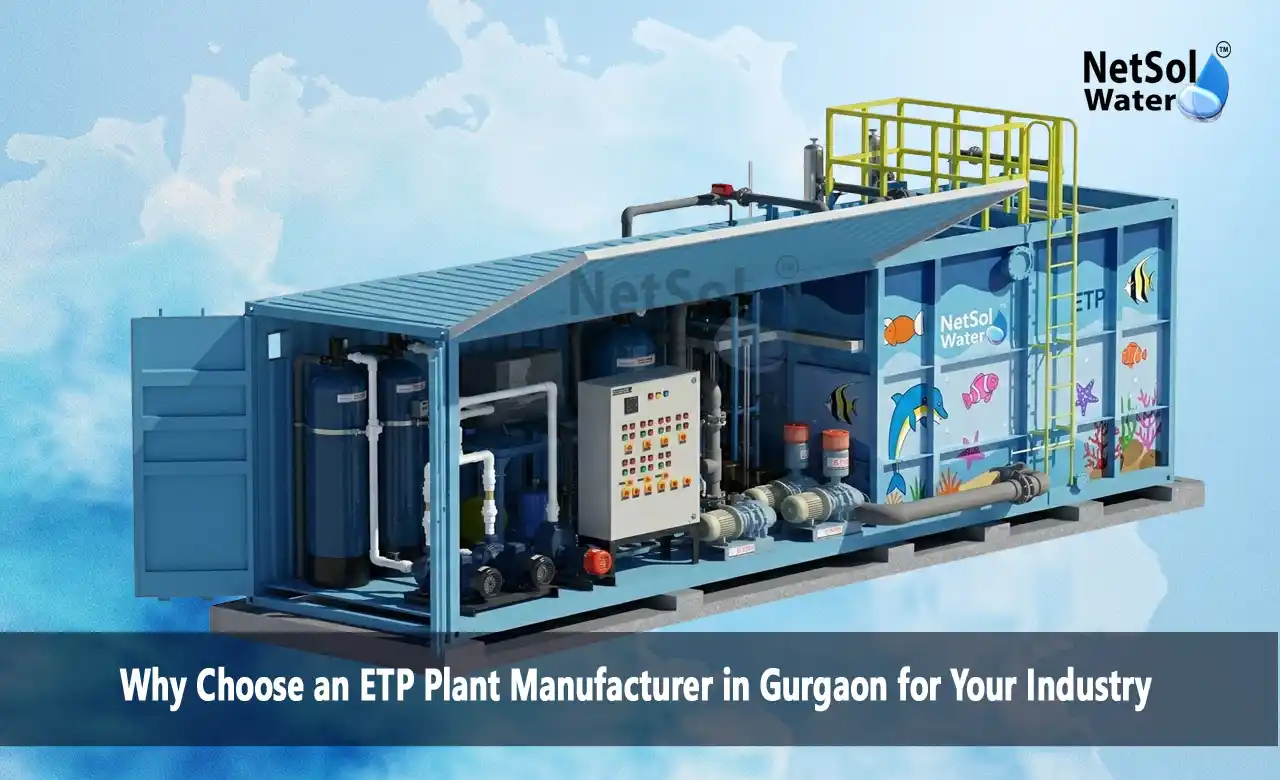
Netsol Water is an Expert in the field of installing and exporting of the Industrial effluent Treatment Plants for small, medium and large scale industrial plants. It has plants from 5 KLD and solutions to treat larger volume of industrial wastewater. It serves to the industries like textiles, food processing, pharmaceuticals and manufacturing. It offers design, installation, commissioning and after sales service in Gurgaon and NCR.
The selection of the right manufacturer for the Effluent Treatment Plant in Gurgaon can be beneficial for companies to manage their wastewater, keep up with the regulations and save water.
What is Effluent Treatment Plant (ETP) and its working?
The water that is used for industrial production, washing, cleaning and other uses is cleaned at the Effluent Treatment Plant (ETP).
The usual treatment is:
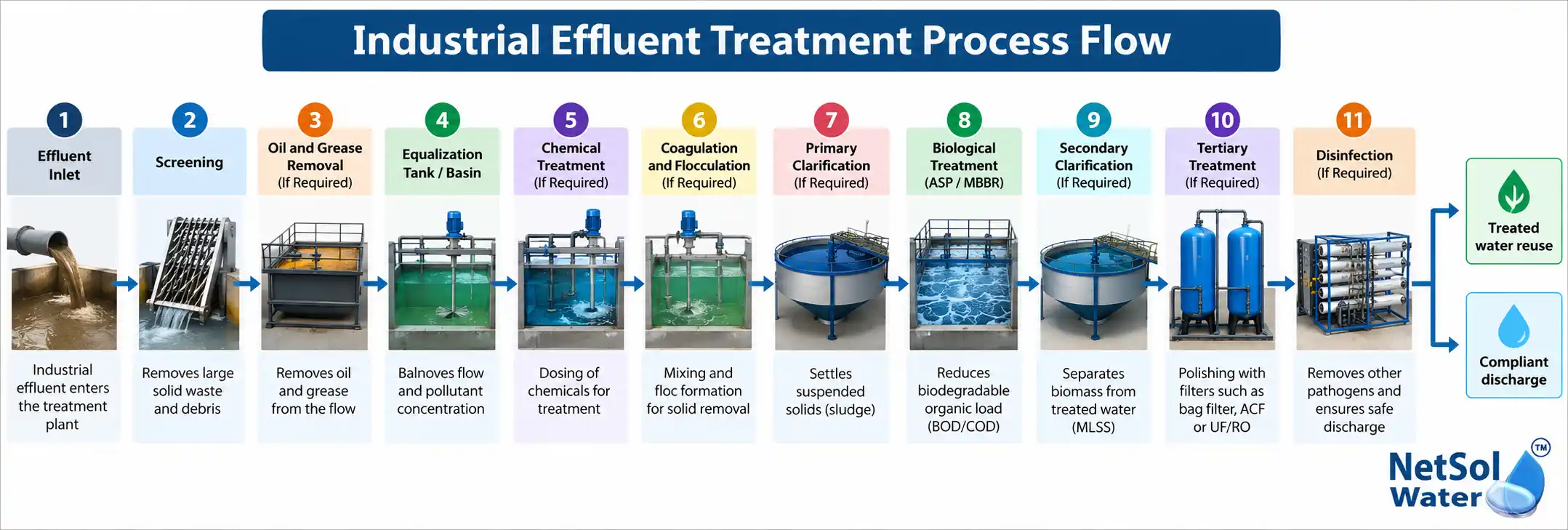
Screening is used to catch larger solids, equalization is used to even out flow variations. Selected pollutants, suspended particles are separated by chemical treatment. Biological treatment decreases BOD Only used for further treatment if necessary - filtration and membrane systems.
Final process will follow the results from the wastewater test along with the concentration of pollutions, the condition of discharge and the purpose of the wastewater reuse.
ETP Capacity Range and Technical Specification
The proper size of Industrial ETP Plant is dependent on the wastewater generated per day and the peak flow. The ETP capacity range from Netsol Water includes capacities as small as 5 KLD and medium scale applications are covered.
| Plant Capacity | Suitable Application | Typical Treatment | Approx. Footprint | Indicative Operating Load |
|---|---|---|---|---|
| 5 KLD | Small workshop or processing unit | Chemical treatment and filtration | 15–30 m² | 1–3 kW |
| 10 KLD | Small food or manufacturing unit | Screening, equalization and suitable biological or chemical treatment | 20–40 m² | 2–4 kW |
| 20 KLD | Small to medium factory | Chemical treatment with biological treatment where needed | 30–60 m² | 3–7 kW |
| 50 KLD | Medium manufacturing or textile unit | Chemical and biological treatment | 60–120 m² | 5–12 kW |
| 100 KLD | Large industrial facility | Integrated treatment with tertiary filtration | 100–200 m² | 10–25 kW |
| 100 KLD+ | Large factory or multi-process facility | Customized multistage treatment and optional recycling systems | 200 m²+ | 25 kW+ |
What Does an Effluent Treatment Plant Remove?
| Wastewater Parameter | Treatment Approach and Expected Outcome |
|---|---|
| Total Suspended Solids (TSS) | Screening, clarification and filtration significantly reduce suspended particles. |
| Biochemical Oxygen Demand (BOD) | Biological treatment significantly reduces biodegradable organic matter. |
| Chemical Oxygen Demand (COD) | Chemical and biological treatment can reduce COD. Refractory compounds may need advanced treatment. |
| Oil and Grease | Grease traps, oil separators or dissolved air flotation remove suitable oil and grease fractions. |
| Colour | Coagulation, adsorption, oxidation or membranes can reduce colour depending on its source. |
| pH Imbalance | Chemical dosing helps adjust pH to the required range. |
| Dissolved Organic Pollutants | Biological treatment or advanced oxidation can reduce selected dissolved organics. |
| Industry-Specific Chemicals and Contaminants | Dedicated treatment may be necessary for metals, solvents, toxic compounds or other process chemicals. |
| Total Dissolved Solids (TDS) | Conventional ETP processes generally do not remove dissolved salts effectively. RO or other specialized treatment may be required. |
The removal efficiency depends on the quality of the influent and the treatment design. Testing should be done against the limits, not assuming complete removal of contaminants, to meet a given discharge or reuse standard. General effluent standards are published by CPCB and industry specific effluent standards are published by HSPCB for concerned industries.
Industries that require Effluent Treatment Plants
There are several sectors in Gurgaon and NCR that are served by an Industrial Wastewater Treatment Plant.
Colours and chemical residues and suspended solids are present in textile and dyeing units and should be treated. Complex organic compounds and process chemicals can also be required to be treated especially for pharmaceutical and chemical manufacturers. Oils, grease and biodegradable organic matter are wastes created by food and beverage processors.
Oils, metal particles and cleaning chemicals may be treated in automobile and auto-component manufacturing. Specific removal of regulated metals and other contaminants can be necessary for electroplating and metal finishing units. Also, the treatment of electronics and engineering units depends on the production process.
ETPs may be required at hospitals, laboratories, hotels and commercial facilities where there are process pollutants in the wastewater stream. Domestic sewage and industrial effluent need to be studied separately in order to design the sewage treatment systems.
Why Industries in Gurgaon Need ETP Solutions?
IMT Manesar, Udyog Vihar and Sector 37 are some of the industrial and commercial hubs of Gurgaon. There are also several industrial/commercial units along Sohna Road and other areas of the NCR.
These facilities do not produce the same wastewater. A factory might generate a high proportion of biodegradable organic waste, or a different factory might produce water with a colour, oil, metals, high dissolved solid content or a variable pH.
A trustworthy Effluent Treatment Plant Manufacturer in Gurgaon can evaluate these variations and offer the proper treatment which is appropriate for the actual procedure. Wastewater sampling and laboratory analysis is used to identify the treatment stages and operating conditions needed.
The consent condition applied to the concerned business under HSPCB and the effluent standards laid down by CPCB or State Government shall also be reviewed by the business. HSPCB issues procedures for consent and effluent controls for industries. Compliance is dependent on industry category, route and conditions for the specific facility.
Water reuse is another tool for helping industries that can use it to save freshwater and manage their water use in processes more effectively.
Why Choose Netsol Water as Your Effluent Treatment Plant Manufacturer in Gurgaon?
Customized ETP design, fabrication, installation, testing, commissioning and after sales service are described in Netsol Water's published service information. The company also mentions the chemical and biological treatment alternatives, membrane systems and automation solutions.
When selecting Netsol Water, it is important to take into account:
. Personalized engineering: choose equipment and treatment stages, depending on the wastewater analysis and production needs.
· Technology selection: Match chemical, biological and tertiary treatment technologies to the pollutants being treated.
· Installation and commissioning: Co-ordinate the installation, testing and operational handover of the plant.
· Automation and monitoring: Discuss control and SCADA options that may be available for the project.
· Water recycling: Add UF or RO where extra treatment is required for desired reuse.
· Sludge management: Ensure adequate sludge collection, handling and dewatering facilities are available.
· Maintenance support: Talk on preventive maintenance, operator training, spare parts and Annual Maintenance Contracts (AMC).
When making orders, request a written scope of work, design criteria, expected water quality for the treated water, warranty terms and service commitments. Verify certifications and project references at point of significance to procurement.
7. ETP Technologies and Treatment Solutions
The technologies for industrial wastewater treatment by Netsol Water are, ASP, MBBR, MBR, chemical coagulation, filtration and UF/RO.
The Activated Sludge Process (ASP) and Moving Bed Biofilm Reactor (MBBR) are the activated sludge methods used for biodegradable organic matter. Membrane Bioreactor (MBR) is a combination of biological treatment and membrane separation. Selected pollutants such as suspended and colloidal pollutants are removed by chemical coagulation and flocculation.
Additional polishing is done by pressure sand and activated carbon filters. Ultrafiltration (UF) is able to exclude fine suspended particles and other appropriate contaminants. In some cases, Reverse Osmosis (RO) can be used to decrease the dissolved salts, suitable for recycling. Dewatering sludge helps minimize the amount of sludge to handle and dispose of.
Zero Liquid Discharge (ZLD) is a combination of proper treatment, recovery and concentrate management which does not allow the liquid effluent from the defined system to be discharged. Not all industries must require ZLD; it will be determined by the applicable regulations and by specific consent requirements.
Case Studies and Industrial Projects
Here are some of the successful projects undertaken by Netsol Water in Gurgaon and the NCR region.
. 10 KLD ETP for Biryani By Kilo, Manesar, Gurgaon
Application: Oil, grease, food waste and high level of organic load in commercial kitchen wastewater.
Solution: Netsol Water states that it has been installing a 10 KLD ETP, screening, oil and grease trap, equalization, aeration, clarification and filtration.
Result: The published case study is that the concentration of BOD has been reduced from inlet concentration of more than 800mg/l to outlet concentration of less than 30mg/l.
. 30 KLD ETP with UF for Dimple Creations, Noida
The client requirement is to treat textile and garment manufacturing wastewater that has variable colour and organic load.
This case study from Netsol Water is a 30 KLD ETP system with an integrated ultrafiltration system. The project scope encompasses the design, engineering, manufacturing, testing and commissioning.
Result: The project records how wastewater is treated and re-used with the constructed treatment system.
The reasons for starting the selection of treatment to consider the characteristics of wastewater in the industry and not just its capacity are illustrated by the following examples.
Frequently Asked Questions (FAQs)
Q1. What is the price of Effluent Treatment Plant (ETP) in Gurgaon?
Costs are related to capacity, pollutant load, technology, automation, civil work and installation needs. Complete customized quotes based on wastewater analysis.
Q2. How to select the appropriate ETP capacity for my industry?
Record the amount of waste water produced daily and record peak flow. Determine pollutant loads and future production before finalising capacity.
Q3. What are the industries that need an ETP?
Process wastewater may require treatment if generated by industries depending on the activity and consent conditions. Different industries and discharge routes have different requirements.
Q4. How long does ETP installation take?
Several weeks may be needed for small systems. Depending on the volume of civil works, equipment lead time, site preparation, etc., larger projects may take months.
Q5. What technology can be used for industrial wastewater treatment?
The right selection will be determined by laboratory results, type of pollutant, discharge goal, space and operating cost considerations.
Q6. Does Netsol Water provide ETP installation and commissioning in Gurgaon?
Installation and commissioning are part of the ETP services offered by Netsol Water. Check the timeline and scope of the project for your specific location.
Q7. Is there reusability of treated industrial wastewater?
Yes. Recycling (e.g. for washing, cooling or other industrial applications) is possible if treated appropriately. The final quality should be in the same range as the intended use.
Q8. What are factors that impact ETP maintenance costs?
Maintenance costs are impacted by energy usage, chemical dosing, sludge disposal, renewal of membranes, equipment service, and wastewater variability.
Q9. What is the life span of the Annual Maintenance Contract (AMC) with Netsol Water?
The companies' published project information outlines ongoing service support and maintenance contracts. Verify the coverage and commercial conditions provided for your plant by the AMC.
Q10. Will Zero Liquid Discharge be compulsory for all industries?
The number of ZLDs required is dependent on the regulations that apply, the industry category, location, and consent conditions. Check with the appropriate agency about the requirements for your facility.
Get a Customized ETP Solution from Netsol Water
Selecting the right Effluent Treatment Plant Manufacturer in Gurgaon ensures your business processes the industrial effluents with efficiency, aids in compliance with regulations, and opens avenues for water recycling.
Netsol Water welcomes industries in Gurgaon and NCR to get a site assessment and the customized quotation. Provide basic information regarding the type of industry, volume of effluent produced per day, water quality tests conducted and the application of the effluent that you intend to treat or reuse to decide on a suitable treatment solution.
Contact Netsol Water
Phone: +91-9650608473, Email: enquiry@netsolwater.com
You can visit their website for more information about their effluent treatment plants. You can get more details about their effluent treatment plant at their website.
Talk to Netsol Water about your wastewater treatment needs to determine a design for your ETP that works for your operations and conditions.