

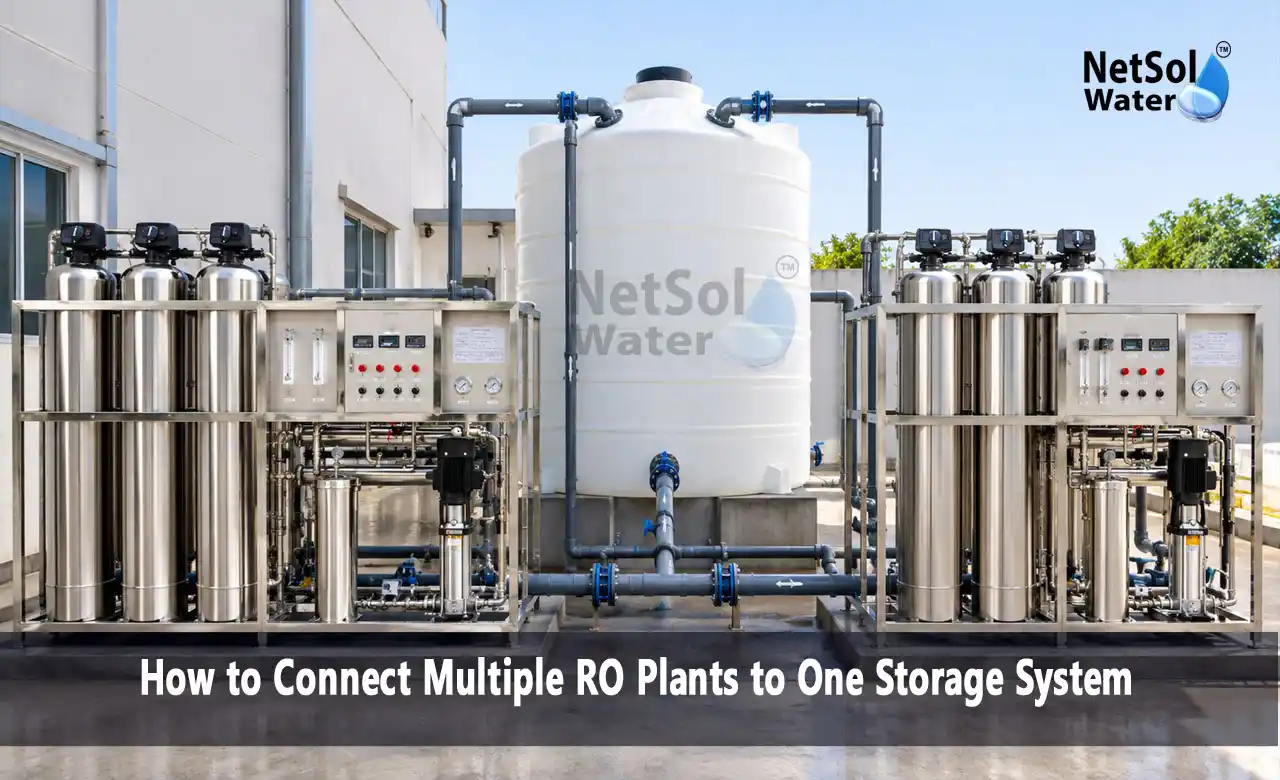
How to Connect Multiple RO Plants to One Storage System?
When water demand in a factory is high or keeps changing, one RO unit is often not enough. Many industries run two, three or even more RO units side by side and feed all of them into a single treated water tank. Done well, this saves floor space, simplifies distribution and keeps water available at all times.
The catch is that a shared tank only works when the piping, flow control, tank volume and automation are planned together. A poor connection can lead to backflow, uneven load on the plants, tank overflow or low pressure at the point of use. If you are new to the basics, you can first read about how an industrial RO plant works and then come back to this guide.
Check the Capacity of Each RO Plant
Start by confirming what each unit can actually produce. For example, if three RO plants each deliver 10 m³/hour of permeate and all of them run together, the combined output reaches 30 m³/hour.
The common tank and the transfer piping must be able to handle this combined flow. At the same time, look at your real operating schedule, because in most sites all the plants do not run at full load together.
Select the Right Tank Capacity
The shared tank should be big enough to meet site demand, yet not so big that water sits unused for long periods. To size it correctly, consider these points:
. Total RO production needed
. Peak water consumption
. Daily hours of operation
. Buffer volume for plant shutdown and maintenance
Each RO plant can also be put on level control, so it starts and stops on its own as the tank level rises and falls.
Use a Separate Permeate Line for Every Plant
Each RO plant should have its own properly sized permeate outlet running to one common header. Fit an isolation valve on every line so that one plant can be stopped for service while the others keep supplying water.
A flow meter on each permeate line is also a smart addition. It shows how much each plant contributes and helps operators notice any drop in performance early.
Prevent Backflow Between RO Plants
Backflow is one of the most common problems when several RO units share a storage connection. Treated water must never flow backward into an idle RO plant, or from one permeate line into another.
Proper check valves and isolation arrangements solve this. The exact layout depends on the RO manufacturer's recommendation and the hydraulic design of your site, so it should be finalised with an experienced RO plant manufacturer.
Design the Common Header Carefully
The common permeate header must carry the combined flow without a large pressure drop. Pipe size should be worked out from flow rate, pipe length, number of fittings, elevation change and allowable pressure loss.
Undersized pipes restrict flow and make the plants run unevenly. Plan the header so that it is easy to inspect and isolate, and leave room for future connections.
Add Level Based Automatic Control
Automation makes a shared storage system far easier to run. Level sensors in the common tank send signals to the RO control panels or to a central PLC. When the level falls, one or more plants start in a programmed sequence.
When the tank reaches the high level set point, the plants switch off automatically. This avoids unnecessary running once the tank is full and helps cut energy and wear.
Plan for Differences in Water Quality
Two RO plants will not always give exactly the same water quality. Permeate conductivity can change with membrane age, feed water quality, recovery rate and operating conditions.
That is why it is useful to monitor conductivity on each line before the streams are blended. If one plant produces water outside the specified limit, its permeate line can be isolated until the cause is found and fixed.
Think About Pumping and Distribution
After the common tank, treated water usually has to reach several production areas. A suitable transfer pump arrangement should deliver the required flow and pressure at each point of use.
Where uninterrupted supply is critical, use duty and standby pumps. The distribution network should also have isolation valves and flow measurement wherever needed.
Allow for Maintenance and Future Expansion
The shared storage must keep serving the plant even while one RO unit is under maintenance. Separate isolation valves, independent monitoring and bypass arrangements make this possible.
It is also wise to size the tank and main header with future RO additions in mind. Planning for expansion at the design stage is cheaper than changing the piping later. You can read more about the benefits of an industrial RO plant to see why many industries keep growing their RO capacity over time.
Monitor the Complete System
A central monitoring system can display the status of every RO plant and the common tank on one screen. Permeate flow, conductivity, tank level, pump status and alarms can all be tracked from a single interface, which quickly shows which plant needs attention.
Historical data adds more value, because you can compare the performance of individual plants over time and plan maintenance before a fault occurs.
Conclusion
Multiple RO plants can share one storage tank very effectively when the piping, valves, controls and monitoring are designed correctly. Separate permeate lines, check valves, isolation valves, flow meters and level based controls together give reliable and steady operation. The design must also account for combined flow, water quality, maintenance needs and future expansion.
If you want to know why RO is so important for process industries, take a look at why industries need an RO water plant. Netsol Water can study your existing RO systems and design a shared water storage and distribution network based on your plant capacity, water demand and operating needs.
Do you need advice or assistance in selecting the best water and wastewater treatment unit? We have solutions for all your problems!
Tell us your problem and our experts will make sure it goes away.
For assistance or any related query,
Call on +91-9650608473 Or write to us at enquiry@netsolwater.com