

How Iron Contamination Reduces Softener Resin Life?
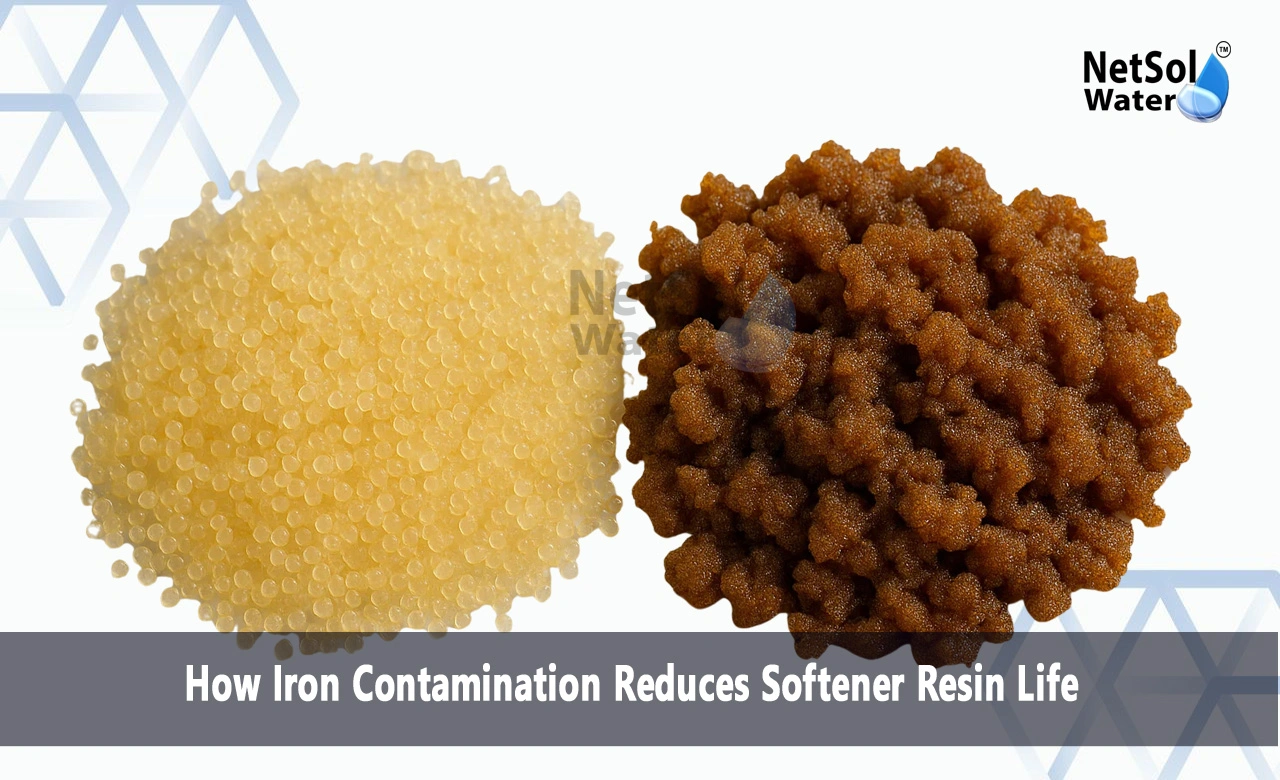
Water softeners are engineered to give high durability of hardness elimination during operations. Nevertheless, most systems suffer premature resin breakdown, regular regeneration problems and decreased softening capability. The most prevalent yet underreported cause is iron contamination. C iron contamination reduces softener resin life before the capacity to harden is reached, resulting in higher operating expenses and poor water quality.
The effect of Iron contamination on softener resin life
1: Fouling of Iron Blocks Active Ion Exchange Sites
The softener resins work by replacing the calcium and magnesium ions with sodium. In case of the presence of iron in the raw water, it will occupy these very exchange sites. Initial behaviour of ferrous iron is that of hardness and is swapped onto the resin. It oxidizes with time to ferric iron, whereby insoluble deposits are created that coat the resin beads. After coating, the active sites are blocked and this decreases the effective exchange capacity of the resin.
2: Oxidation within the Resin Bed Permanently damages it
Softeners often receive iron in dissolved form of ferrous. Exposure to oxidizing disinfectants or oxygen within the resin bed is changed into ferric iron. This oxidation is formed on the surface of the resin itself in the form of rust like deposition, which cannot be easily eliminated by conventional regeneration. This is one of the main causes of the decreased life of softener resin due to iron contamination in that case.
3: Less Regeneration efficiency with Time
The standard salt regeneration is not intended to eliminate iron fouling. With the presence of iron, sodium ions can no longer efficiently replace calcium, magnesium or iron of the resin. The reaction of operators is to raise dosage of salt or frequency of regeneration but these measures are only momentary and has tens the degradation of resin.
Symptoms of Damaged Resin in Operation
1: Hardness Leakage When Regeneration is normal
Hardness breakthrough is one of the first indications of iron fouling even in cases when regeneration cycles seem normal. Partially fouled resin is not selective and calcium and magnesium are passed through untreated.
2: Higher Pressure Difference across the Softener
The presence of iron deposits causes resin beads to stick and hence the decrease in bed porosity. This causes channeling and increases pressure drop which further diminishes efficiency of contacts and increases performance degradation.
3: Discolored Backwash Water
Releasing of iron in the resin bed is denoted by brown or orange backwash water. Although this can give a temporary boost to performance, it confirms the accumulation of iron and damages of resins.
The Reason Why Some Types of Iron Are More Harmful Than Others
1: Particulate Iron vs Dissolved Ferrous Iron
Ferrous iron, in its dissolved state is very detrimental as it enters deep into the resin structure before oxidizing. Particulate iron can be partly carried off by back washing, though dissolved iron leads to internal foulage which is far more difficult to clean up.
2: Iron Combined with Organics
Organic matter is frequently complexed with iron resulting in sticky compounds that stick well to resin surfaces. These complexes are difficult to regenerate and clean, increase resin foulage and further decrease life expectancy.
Design and Pretreatment Loopholes That Speed up Destruction
1: Absence of Iron-Specific Pretreatment
Numerous softeners are added without removal of upstream iron. Resin is usually covered with oxidation, filtration or manganese dioxide media to shield resin against iron exposure. The absence of such measures will inevitably result in iron fouling.
2: Incorrect Resin Selection
Ordinary softening resins are low iron tolerants. Special iron-resistant resins are needed in iron rich water. The application of conventional resin in such applications decreases service life radically.
Protecting Resin against Iron Contamination
· Elimination of Iron Pretreatment: Dissolved iron is converted to removable particulates by oxidation then by filtration. This helps to avoid the entrance of iron in the resin bed and maintain exchange capacity.
· Periodic Resin Cleaning Programs: Specific resin cleaners of iron aid in the removal of certain fouls as well as delaying corrosion. Although they are unable to completely repair damaged resin, they increase service life when used early.
· The water iron levels in raw water are monitored: Periodic iron analysis can be done to identify the evolving water chemistry. Active reaction prevents progressive harm which reduces resin life time.
Conclusion
Water softeners work well within the design limits. Nevertheless, the presence of iron contaminates the resin of softeners negatively affecting their life by plugging the exchange sites, irreversibly fouling them, as well as compromising the regeneration effectiveness. Even low levels of iron, not properly pretreated, resin selected and monitored, can cause premature failure of softeners. Resin anti-iron protection is not an option but a requirement of a high success rate of the softening process and sustainability in terms of costs.
Do you need an advice or assistance on selecting the best water and waste water treatment unit? We have solutions for all your problems!
Let us know your problem, our experts will make sure that it goes away.
For an assistance or related query,
Call on +91-9650608473 Or write us at enquiry@netsolwater.com