

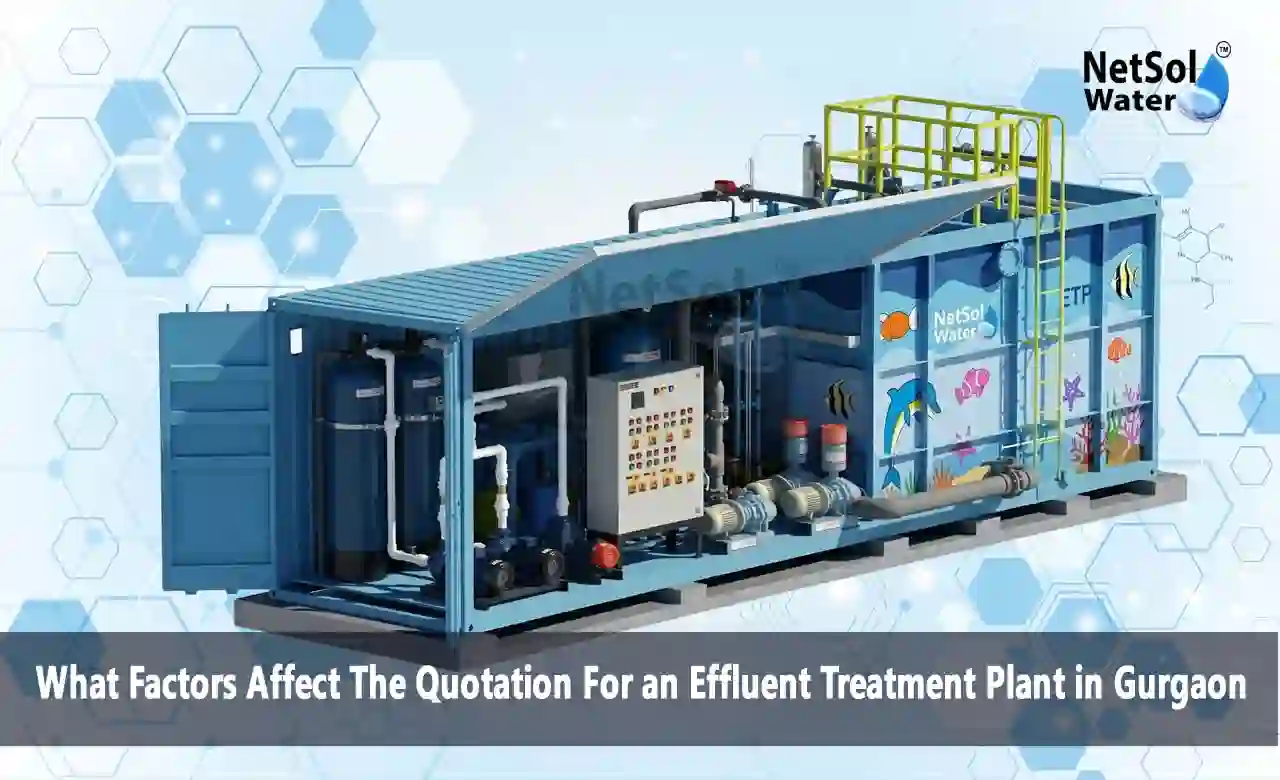
What Factors Affect The Quotation For an ETP Plant in Gurgaon?
Gurgaon is one of the fastest growing industrial and commercial cities of India. The city is well-known for its corporate buildings, its latest infrastructure and its growing industries. Numerous units of food processing industries, textile industries and pharmaceutical industries are located in this area. With growing up of industries, the requirement for proper wastewater treatment also has grown.
An ETP is used for beneficial solution of polluted water before its discharge to the environment in the industries. It helps companies and protects natural water resources in compliance with pollution control standards.
The price of installing an ETP varies from industry to industry, as there are many factors to consider when calculating the final price. It is useful for business owners to understand these factors to make better decisions and investments. Netsol Water is the top Effluent Treatment Plant Manufacturer in Gurgaon and provides customized solutions to address the needs of various industries in Gurgaon.
Type and Quality of Effluent
The nature of industrial wastewater plays a major role in deciding the cost of an effluent treatment system. Different industries generate different kinds of wastewater and each type needs a specific treatment process. Let us have a look on some factors related to wastewater quality.
1. Chemical Composition of Wastewater
Industries release wastewater that may contain oils, chemicals, heavy metals or organic matter. Wastewater with a high level of contamination needs advanced treatment technologies. Such technologies increase the equipment requirement and the cost of the plant. Industries that produce hazardous waste generally need more complex treatment systems than industries that generate simple organic waste.
2. Variation in Effluent Flow
Some industries release a steady amount of wastewater while others experience major changes in flow and contamination levels during production cycles. A plant designed to handle changing wastewater conditions requires additional tanks and monitoring systems. This requirement increases the overall quotation because the plant must perform efficiently under different operating conditions.
The quality and quantity of wastewater are among the first aspects studied by any manufacturer before preparing a project estimate. A detailed water analysis helps in selecting suitable treatment methods and avoids future operational issues.
Plant Capacity and Treatment Technology
The capacity of an effluent treatment system directly affects its price. Every industry has different production requirements and the plant design changes according to the amount of wastewater generated. Let us have a look on some important aspects that influence the quotation.
1. Size of the Treatment Plant
A small manufacturing unit may need a compact system while a large industrial facility may require a high capacity treatment plant. Bigger plants need larger tanks, pumps, pipelines and electrical systems. As the capacity increases the material requirement and construction work also increase which leads to a higher project cost.
2. Selection of Treatment Technology
Treatment technologies vary according to the quality of wastewater and the level of treatment required. Some industries need only basic treatment while others need advanced biological and chemical processes. Technologies such as membrane filtration and tertiary treatment require sophisticated equipment and automation systems. These advanced systems improve treatment efficiency but also increase the project quotation.
The choice of technology should match the industry requirements because an oversized or undersized plant can create operational problems and unnecessary expenses.
Material of Construction and Equipment Quality
The materials used in manufacturing the plant have a strong influence on the final cost. Industries expect treatment plants to work efficiently for many years and this requires durable equipment. Let us have a look on some important factors related to plant construction.
1. Quality of Construction Materials
Effluent treatment plants are exposed to moisture chemicals and corrosive substances. Manufacturers use materials such as mild steel, stainless steel and reinforced concrete according to the application. High quality materials improve the life of the plant and reduce maintenance expenses. However they also increase the initial investment.
2. Equipment and Automation Systems
Modern industries prefer automated systems because they improve process control and reduce manual effort. Automated sensors control panels and monitoring devices add to the plant cost. Even though these systems increase the quotation they improve operational efficiency and provide better treatment performance.
Choosing quality equipment is always beneficial because it reduces downtime and increases the reliability of the treatment system.
Site Conditions and Installation Requirements
Every industrial location is different and site conditions often influence the overall project cost. Proper planning and installation are necessary for the successful operation of the treatment plant. Let us have a look on some factors related to site conditions.
1. Availability of Space
Some industries have large open areas while others have limited space for installing a treatment plant. A compact design often needs specialized equipment and advanced engineering solutions. These requirements may increase the project cost because more planning and customized designs become necessary.
2. Civil and Installation Work
Installation work includes foundation construction pipeline laying electrical connections and equipment assembly. Difficult site conditions may demand additional civil work and specialized labour. Transporting heavy equipment and arranging utilities also contribute to the final quotation.
A detailed site survey helps manufacturers prepare an accurate estimate and prevents unexpected expenses during installation.
Environmental Regulations and Future Expansion
Government regulations and future business plans also influence the quotation of an effluent treatment system. Industries need to comply with pollution control standards to avoid legal issues and environmental damage. Let us have a look on some important considerations.
1. Compliance with Pollution Control Standards
Industries in Gurgaon must follow the discharge standards set by environmental authorities. Meeting these standards often requires additional treatment processes and monitoring systems. Compliance increases the initial investment but helps industries operate without regulatory problems.
2. Provision for Future Expansion
Many companies plan to increase production in the coming years. Manufacturers often design treatment plants with provisions for future expansion. This approach may increase the present quotation because the plant includes additional capacity and infrastructure for future growth.
Planning for expansion is a practical decision because it saves the cost of major modifications later and allows industries to meet growing wastewater treatment demands.
Conclusion
The quotation for an Effluent Treatment Plant depends on many important factors such as wastewater quality, plant capacity, treatment technology, construction materials, site conditions and environmental regulations. Every industry has unique requirements and therefore the cost of one treatment plant may differ from another. Careful planning and proper assessment help industries select the right solution and avoid unnecessary expenses in the future.
Netsol Water is the leading ETP Manufacturer in Gurgaon and provides customized treatment solutions for industries in Gurgaon and across India. Businesses that want to install an efficient Effluent Treatment Plant can connect with the experienced team of Netsol Water for expert guidance detailed consultation and a suitable quotation that matches their operational needs.
Contact Netsol Water at:
Phone: +91-9650608473, Email: enquiry@netsolwater.com