

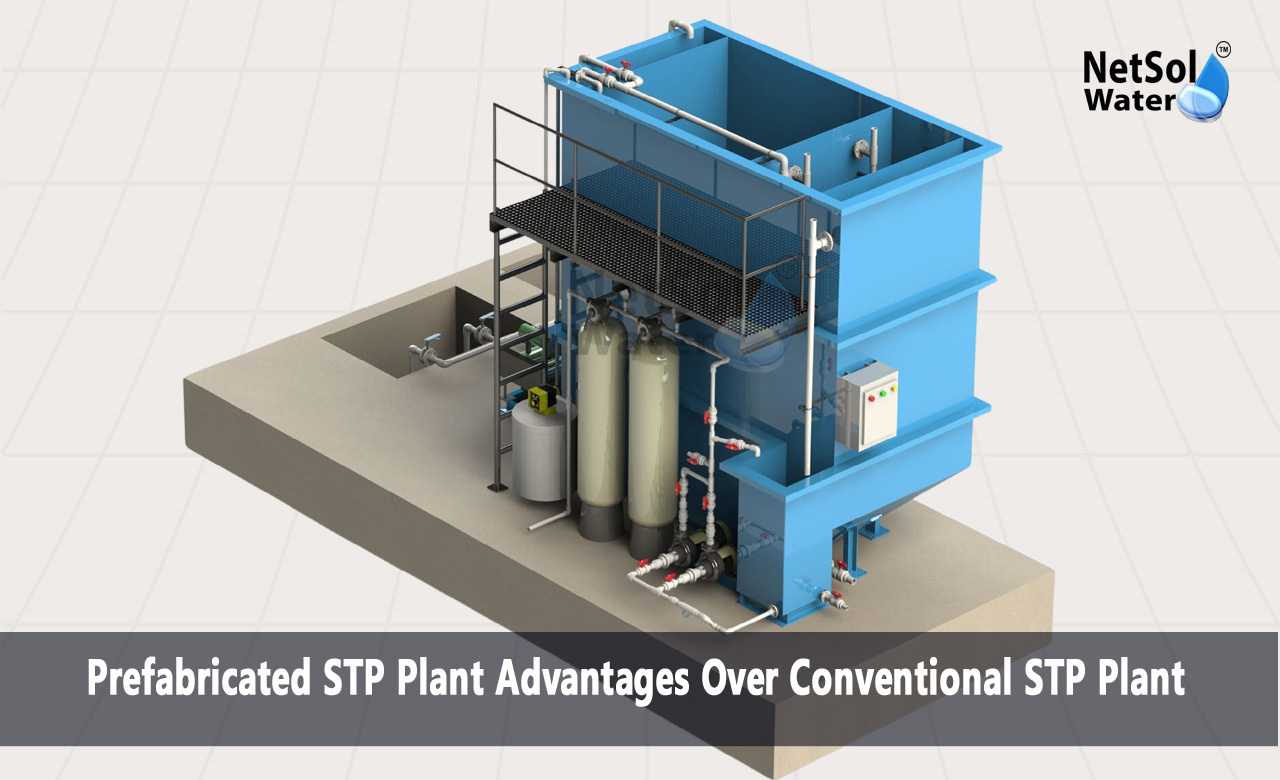
Prefabricated STP Plant Advantages Over Conventional STP Plant
Sewage treatment plants clean up our wastewater and safeguard our environment. A new type of STP has gained popularity recently - prefabricated STPs. These pre-made systems offer several benefits compared to traditional on-site built STPs. We'll explore the advantages of prefabricated STPs and why more communities and industries choose them.
What are Prefabricated STPs?
Prefabricated STPs are sewage treatment plants that factories manufacture off-site. They come as standardized modular units that you can easily transport and install at the desired location. This differs from conventional STPs which contractors construct entirely on-site from scratch.
The prefabricated units contain all necessary components for sewage treatment including tanks chambers pumps and other equipment. Designers create them as plug-and-play solutions that you can quickly set up after delivery. The modular nature allows for easy scaling by adding more units as needed.
Now that we understand the basics, let us look at the key advantages prefabricated STPs offer:
1: Faster Implementation
Prefabricated STPs implement much faster than conventional ones. Since factories pre-make the units they can deliver and install them quicker than building a conventional STP from the ground up.
Site preparation requires minimal work usually just needing a concrete foundation pad. Once the units arrive workers can often set them up and make them operational within a few days or weeks. This contrasts with conventional STPs which can take many months or even years to construct.
The rapid deployment of prefabricated STPs helps particularly in emergency situations or when urgent wastewater treatment needs arise. For example if a community's existing STP fails or needs quick replacement prefabricated units can provide a swift solution.
Additionally, faster implementation means less disruption to the surrounding area. You won't see a prolonged construction site with noise dust and traffic. This benefits urban areas or sensitive environments significantly.
2: Cost-Effectiveness
Prefabricated STPs often prove more cost-effective than their conventional counterparts. While the upfront cost of the units may seem high the overall project cost usually comes in lower when considering all factors.
The reduced on-site construction time resultsin lower labour costs. You need fewer specialized construction crews working for extended periods. The prefabrication process in a controlled factory environment also leads to more efficient use of materials reducing waste and associated costs.
Maintenance and operational costs can also decrease with prefabricated STPs. The standardized designs mean replacement parts are readily available and technicians are familiar with the systems. This can lead to quicker and more cost-effective maintenance and repairs.
Furthermore the modular nature of prefabricated STPs allows for easy expansion. You can add additional units as needed without major construction work. This scalability can result in significant cost savings over time compared to expanding a conventional STP.
3: Consistent Quality
Prefabricated STPs benefit from manufacturing in a controlled factory environment. This leads to more consistent quality compared to on-site construction which various factors like weather and site conditions can affect.
In a factory setting skilled workers use specialized equipment and follow standardized processes. This results in higher precision and better quality control. Workers thoroughly test each component before the unit leaves the factory ensuring it meets the required specifications.
The consistent quality translates to more reliable performance once the STP starts operating. You're less likely to see issues arising from construction defects or variations. This can lead to more stable treatment processes and better compliance with effluent quality standards.
4: Flexibility and Portability
Prefabricated STPs offer a level of flexibility that's hard to match with conventional systems. You can easily relocate the modular units if needed. This particularly benefits industries with temporary operations or communities that may need to move their treatment facilities in the future.
The portability of prefabricated STPs also makes them ideal for remote or difficult-to-access locations. You can transport the units by truck ship or even helicopter to areas where building a conventional STP would challenge or prove impossible.
Moreover designers can create prefabricated STPs to handle varying load capacities. You can quickly add or remove additional modules to adjust the treatment capacity as needed. This flexibility allows for better adaptation to changing population sizes or industrial outputs.
The modular nature also allows for easy upgrades. As technology improves you can replace individual components or entire modules with newer more efficient versions without overhauling the entire system.
5: Environmental Benefits
Prefabricated STPs can offer several environmental advantages over conventional systems. The factory-based manufacturing process typically results in less waste and more efficient use of resources. This reduces the overall environmental impact of producing the STP.
The reduced on-site construction time means less disruption to the local environment. You'll see less heavy machinery operating for extended periods resulting in lower emissions and less soil disturbance.
Many prefabricated STPs incorporate advanced treatment technologies that can achieve higher quality effluent. This means the treated wastewater released into the environment is often cleaner reducing the impact on local ecosystems.
The compact nature of prefabricated STPs also means they have a smaller footprint. This can particularly benefit areas where land is scarce or environmentally sensitive. Less land use means more natural habitats can remain preserved.
6: Easier Maintenance and Operation
Designers often create prefabricated STPs with ease of maintenance in mind. The standardized modular design means that components are easily accessible and you can quickly replace them if needed. This can significantly reduce downtime during maintenance or repairs.
The simplified designs often used in prefabricated STPs can make them easier to operate. Many systems come with automated controls and monitoring systems which can reduce the need for constant operator attention. This can particularly benefit smaller communities or industries that may not have access to specialized wastewater treatment personnel.
Training for operators can also be simpler with prefabricated STPs. The standardized designs mean that operators can train on one system and apply that knowledge across multiple installations. This can lead to more efficient operations and fewer operator errors.
7: Customization Options
While prefabricated STPs come in standardized units they still offer a high degree of customization. Manufacturers can tailor the systems to meet specific treatment requirements local regulations or site constraints.
You can incorporate different treatment technologies into the prefabricated units. This could include advanced biological treatments membrane filtration or nutrient removal systems. The modular nature allows for easy integration of these different technologies.
You can also customize the exterior of prefabricated STPs to blend in with the surrounding environment. This could involve different layer materials or even designing the units to resemble local architectural styles. This can be particularly important in areas where visual impact is a concern.
Conclusion
Prefabricated STPs offer numerous advantages over conventional sewage treatment plants. From faster implementation and cost-effectiveness to consistent quality and environmental benefits these systems are changing the wastewater treatment.The flexibility portability and ease of maintenance make prefabricated STPs an attractive option for a wide range of applications. Whether for small communities remote locations or large industrial sites these systems provide efficient and reliable wastewater treatment solutions.
As technology continues to advance we expect to see even more innovations in prefabricated STP design. This will likely lead to even greater efficiency sustainability and performance in the future.While conventional STPs will continue to have their place prefabricated systems are proving to be a valuable alternative in many scenarios. As more communities and industries recognize the benefits we're likely to see increasing adoption of these innovative wastewater treatment solutions.
By choosing prefabricated STPs we can work towards more efficient sustainable and environmentally friendly wastewater management. This not only benefits our communities but also contributes to the broader goal of protecting our precious water resources for future generations.
For any assistance
Call on +91-965-060-8473 Or write us at enquiry@netsolwater.com