

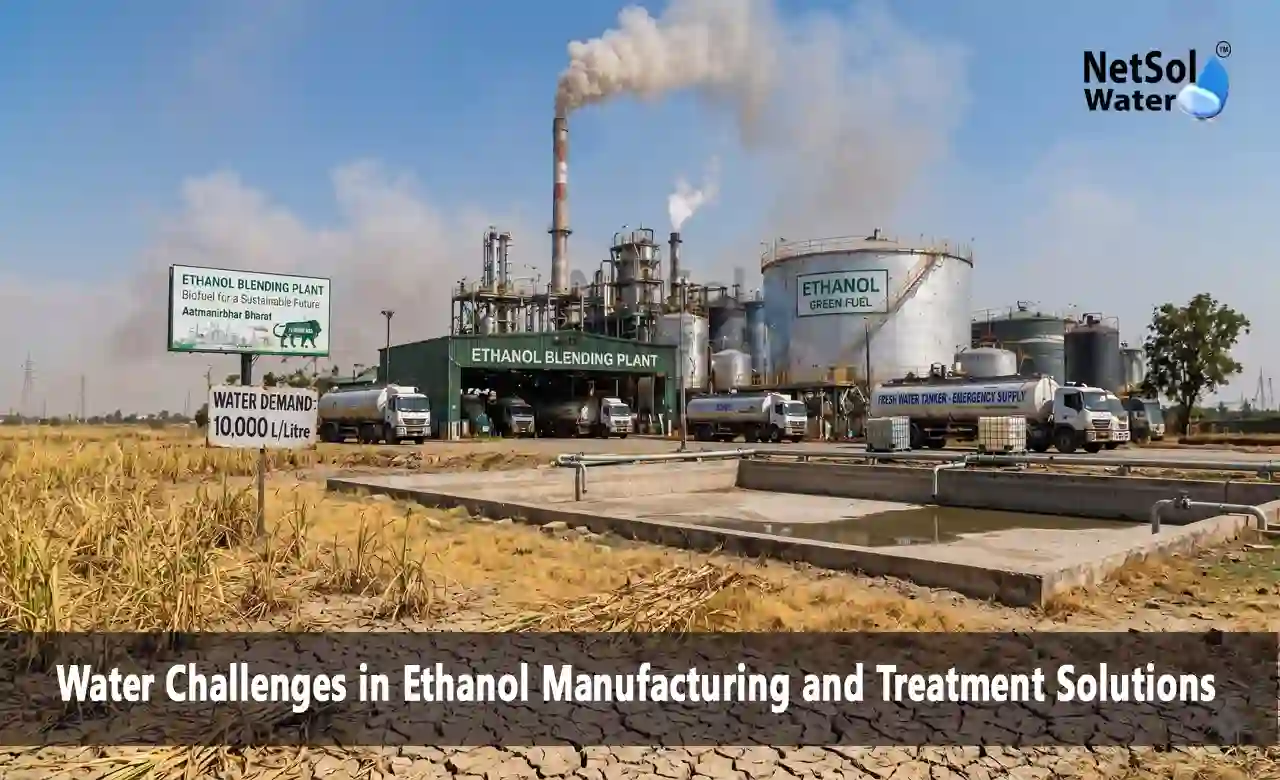
Water Challenges in Ethanol Manufacturing and Treatment Solutions
India's ethanol industry has become a key pillar in the country's energy transition strategy. With the government's focus on ethanol blending in petrol, production capacity has expanded significantly across sugar mills, distilleries, and grain-based ethanol plants. While ethanol offers a cleaner alternative to fossil fuels, its manufacturing process creates substantial water-related challenges that industries must address to ensure sustainable growth.
Water is essential at every stage of ethanol production, from feedstock cultivation to fermentation, distillation, cooling, and cleaning operations. As ethanol production increases, efficient water management is becoming a critical factor for operational efficiency, regulatory compliance, and environmental sustainability.
Understanding Water Usage in Ethanol Manufacturing
Ethanol production requires large volumes of water for various industrial processes. Water is used for feedstock processing, fermentation, steam generation, cooling systems, equipment cleaning, and wastewater treatment. Whether ethanol is produced from sugarcane, molasses, maize, or other grains, water remains one of the most important resources in the manufacturing cycle.
As production capacity grows, ethanol manufacturers face increasing pressure to optimize water consumption while maintaining product quality and meeting environmental standards.
Major Water Challenges in Ethanol Manufacturing
1. High Water Consumption
One of the biggest challenges in ethanol manufacturing is the significant amount of water required during production. Distilleries consume water for process operations, cooling towers, boilers, and utility systems. Excessive water usage can increase operating costs and place additional stress on local water resources, particularly in regions already experiencing water scarcity.
Industries are now seeking technologies that can reduce freshwater dependency and improve water recovery rates.
2. Generation of High-Strength Wastewater
Ethanol production generates wastewater with high organic content. Distillery effluent often contains elevated levels of Biochemical Oxygen Demand (BOD), Chemical Oxygen Demand (COD), suspended solids, and dissolved contaminants.
If untreated wastewater is discharged into the environment, it can negatively impact water bodies, soil quality, and surrounding ecosystems. Managing high-strength effluent remains one of the most critical environmental challenges for ethanol manufacturers.
3. Spent Wash Management
Spent wash is a byproduct generated during the distillation process and is considered one of the most challenging waste streams in the ethanol industry. It is highly concentrated and contains organic pollutants that require specialized treatment before disposal or reuse.
Improper handling of spent wash can lead to environmental pollution and regulatory violations. Therefore, effective treatment and disposal strategies are essential for sustainable plant operations.
4. Compliance with Environmental Regulations
Environmental authorities have implemented strict guidelines for wastewater discharge and water consumption in industrial facilities. Ethanol manufacturers must comply with regulations established by pollution control boards and environmental agencies.
Failure to meet compliance requirements can result in penalties, operational restrictions, and reputational damage. This has increased the demand for advanced water and wastewater treatment systems within the industry.
5. Water Scarcity and Resource Sustainability
Many ethanol production facilities operate in regions where water availability is limited. Rising industrial demand, population growth, and climate variability are placing additional pressure on freshwater resources.
Manufacturers are increasingly focusing on water conservation strategies to ensure long-term sustainability while maintaining production targets.
Solutions for Water Management in Ethanol Plants
1. Effluent Treatment Plants (ETP)
Effluent Treatment Plants play a vital role in treating wastewater generated during ethanol production. Advanced ETP systems help remove organic contaminants, suspended solids, and harmful pollutants before water is discharged or reused.
To manage high-strength distillery wastewater effectively, partnering with an experienced Effluent Treatment Plant Manufacturer is essential. Advanced ETP systems help ethanol plants reduce pollutant levels, comply with environmental regulations, and improve overall sustainability.
2. Industrial RO Systems
An experienced Industrial RO Plant Manufacturer can provide customized water recovery solutions that enable ethanol manufacturers to recycle treated wastewater and significantly reduce freshwater consumption. By reducing freshwater intake, RO technology contributes to water conservation and lowers overall operating costs.
Water recovered through RO systems can be utilized for cooling, utility applications, and other non-potable industrial processes.
3. Zero Liquid Discharge (ZLD) Systems
Many ethanol plants are adopting Zero Liquid Discharge systems to maximize water recovery and eliminate liquid waste discharge. ZLD solutions combine advanced treatment technologies such as RO, evaporation, and crystallization to recover reusable water while minimizing waste generation.
ZLD implementation helps manufacturers comply with environmental regulations and achieve sustainable water management goals.
4. Water Recycling and Reuse
Water recycling has become an important strategy for reducing freshwater consumption in ethanol facilities. Reusing treated wastewater within plant operations decreases dependence on external water sources and improves overall resource efficiency.
Recycling initiatives also support corporate sustainability objectives and environmental stewardship.
How Netsol Water Supports the Ethanol Industry?
As a leading water and wastewater treatment company, Netsol Water provides customized solutions for ethanol and distillery industries. Our expertise includes:
1. Effluent Treatment Plants (ETP)
2. Industrial RO Plants
3. Zero Liquid Discharge (ZLD) Systems
4. Water Recycling Solutions
5. Industrial Water Treatment Systems
6. Operation and Maintenance Support
Our solutions are designed to help ethanol manufacturers reduce water consumption, improve wastewater management, and meet environmental compliance requirements while maintaining efficient operations.
Conclusion
The rapid expansion of ethanol manufacturing presents both opportunities and challenges for the industry. Among these challenges, water management remains one of the most important factors affecting sustainability and regulatory compliance.
By investing in advanced treatment technologies such as ETP, Industrial RO, ZLD, and water recycling systems, ethanol manufacturers can significantly reduce water consumption, manage wastewater responsibly, and support long-term operational growth. Effective water management not only protects the environment but also strengthens the overall sustainability of India's ethanol industry.
With increasing pressure on water resources, ethanol manufacturers are investing in advanced treatment technologies. Choosing a reliable Effluent Treatment Plant Manufacturer and Industrial RO Plant Manufacturer can help industries achieve sustainable water management while maintaining regulatory compliance.
Contact Netsol Water
Netsol Water provides advanced water and wastewater treatment solutions for ethanol plants, distilleries, and other industrial sectors.
Call: +91-9650608473, Email ID: enquiry@netsolwater.com