

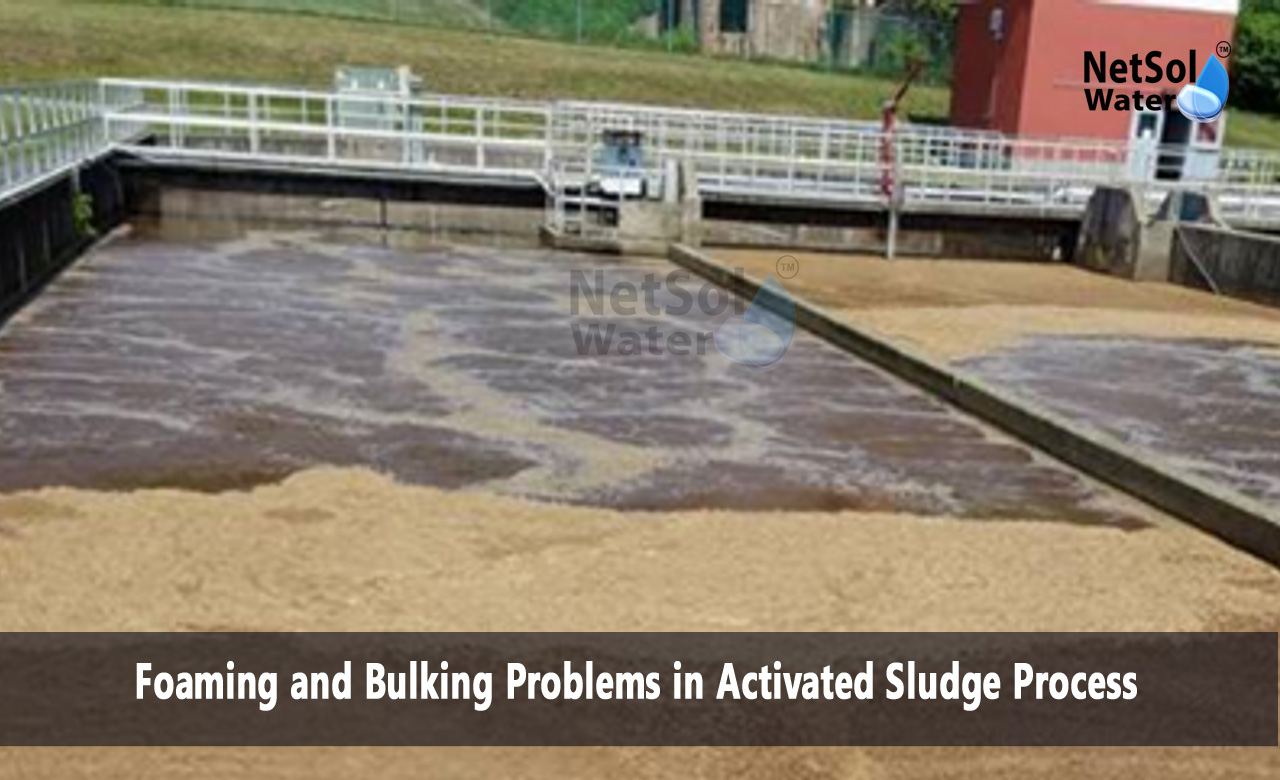
What Cause Foaming and Bulking Problems in Activated Sludge Process?
Activated Sludge Process plays a major role for most municipal and industrial plants. This process uses a living mass of bacteria and other microbes to break down organic matter. When foaming or bulking starts the plant loses clarity in the final water and the secondary clarifier may fail to separate solids. Plant operators must know why these problems start and how to stop them fast. We will explain the main causes of foaming and bulking.
Causes of Foaming
Foaming harms oxygen transfer and it makes sludge handling hard. Let us have a look on some causes.
Biological causes of foaming
Certain bacteria form stable foam on the aeration tank surface. These bacteria include filamentous forms that trap air and oil. They grow when the tank has fats oils or long chain organics. When these food items enter the aeration basin a foam forming group can dominate. Some organisms make hydrophobic cell surfaces that attach to air bubbles. These cells build a network that holds the foam. This foam can resist collapse and it can rise into the clarifier. The foam reduces contact between oxygen and the microbes that must break down waste. The foam can also carry biomass out of the plant. Operators must test the microbial mix to detect foam forming types. Regular microscopy and simple tests on mixed liquor help find these organisms early. When operators act early they reduce the time the plant runs with foam. Monitoring feed quality and removing grease at the head of the plant can slow foam forming species.
Operational causes of foaming
Bad operational choices let foam begin and then persist. Poor control of aeration can increase foam. High aeration can raise bubble shear and create more stable foam. Low return activated sludge rates leave too much solids in the aeration tank. Sudden changes in flow or in organic load can stress the biological community and shift the balance to foam forming microbes. Oils and scum from industry can arrive at the plant in spikes. These materials coat bubbles and help foam last longer. Inadequate screening and grit removal allow fats and grease into the aeration tank. Also temperature swings and pH changes can favor organisms that form foam. Operators must tune aeration and return sludge rates to keep the mixed liquor stable. They must also remove grease at the inlet and keep flow changes smooth.
Also Read: Sewage Treatment Plant Manufacturer
Causes of Bulking
Bulking lowers sludge settle ability and it makes the clarifier overflow. Let us have a look on some reasons.
Filamentous bacteria and microbiology
Bulking usually comes from filamentous bacteria that grow in long threads. These filaments reduce the compactness of flocs and they stop the sludge from settling. Filament growth depends on food type and on how oxygen and nutrient levels change in the aeration tank. When the feed has a high ratio of slowly degradable material some filament types gain an edge. When oxygen drops or when nitrate drops then certain filaments grow faster than normal floc forming bacteria. These long threads trap water and keep the sludge light. The clarifier then loses the thin clear layer that lies above the settled sludge. Plant operators must watch microscopic slides to find which filament types appear. That guides choices for oxygen control and for chemical or biological responses. Controlling the feed quality and keeping dissolved oxygen at stable levels makes it harder for filaments to dominate.
Process conditions and influent characteristics
The feed water and the way the plant runs can push the system into bulking. High loads of fats oils or fibers can interfere with floc formation. Very low organic strength can also favor filaments because floc formers do not find enough food. Sudden load swings confuse the microbial community and can let filaments take over. Low sludge age or wrong wasting practices change the balance of species. Temperature shifts can slow normal bacteria while allowing resistant filament types to grow. Poor mixing means pockets form where oxygen or nitrate run low. These pockets become nurseries for bulking microbes. Operators should manage sludge age and wasting to keep a strong floc forming population. They should also even out influent flow and remove problematic materials before the biological stage. These steps cut the risk of chronic bulking.
Control and Prevention Measures
Stopping foaming and bulking keeps the Activated Sludge Process working and keeps effluent safe. Let us have a look on some practical measures.
Operational adjustments and monitoring
Operators use steady monitoring and small adjustments to remove foam and to regain settleability. Daily checks of mixed liquor, suspended solids and of dissolved oxygen help catch trends early. Adjusting aeration controls can reduce foam or change conditions that favor filaments. Increasing return activated sludge or changing wasting rates can restore the right sludge age. Even simple steps like skimming surface foam and returning it to the aeration tank help in short term. Regular microscopy tells which organisms cause the problem and this guides the right action. Monitoring the influent and adding equalization capacity helps smooth load peaks that trigger both foam and bulking. Training staff to spot early signs and to follow standard steps makes response fast and effective.
Chemical and biological control methods and design changes
When operation alone does not work plants may use chemicals or design fixes. Some chemicals reduce surface tension and let foam collapse. Other agents target specific filaments and reduce their biomass. Plants may also add selectors or anoxic zones that favor floc forming bacteria over filaments. Design improvements like better grease traps or improved screening stop oils and fibers from entering the aeration tanks. Long term fixes include control of sludge age and adding side stream treatment for thickened sludge. Any chemical use must follow safety rules and must avoid harming the biological community. Netsol Water is the leading partner for design and for retrofit work. Netsol Water can assess the plant and suggest a mix of operational steps and design upgrades that fit the site.
Conclusion
Foaming and bulking can slow or stop a plant that uses the Activated Sludge Process. Operators who monitor microbes and who control aeration and sludge age can prevent most problems. Plant design that removes grease and evens flows also helps stop trouble before it starts. For help with diagnosis or with a retrofit contact Netsol Water for a consultation. Our team will inspect the plant and will suggest measures to keep your plant stable and to keep treated water within standards.
Contact Netsol Water at:
Phone: +91-9650608473, Email: enquiry@netsolwater.com