

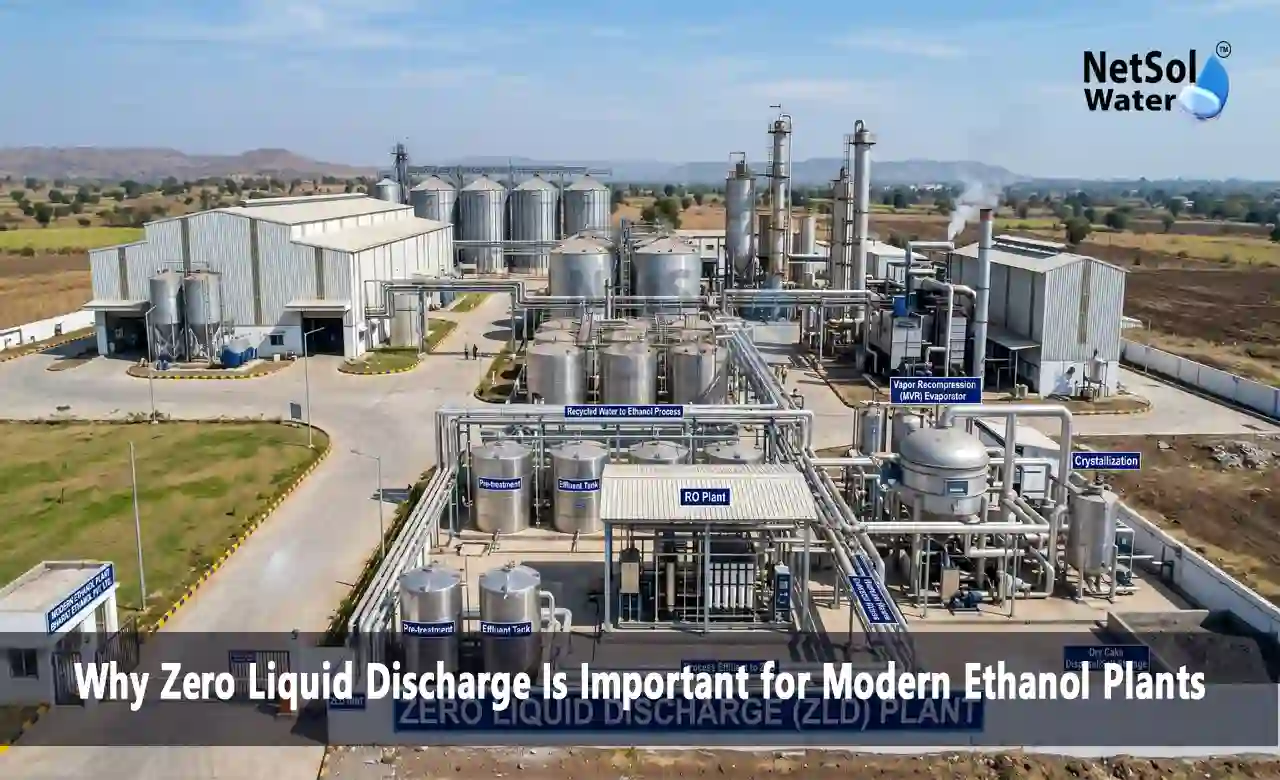
Why Zero Liquid Discharge Is Important for Modern Ethanol Plants?
Ethanol plants play a big role in clean fuel production. They support energy goals and help reduce dependence on fossil fuels. At the same time they create a hard wastewater problem because the process water often carries high organic load and strong pollutants. This becomes a serious issue in India where the sugar and ethanol sector is growing fast and many plants work close to farming areas and local water sources. In such a setting wastewater management is not just a technical task. It is also about safety care and long term growth. Zero Liquid Discharge helps plants handle this challenge in a cleaner way. It allows factories to treat water for reuse and reduce the need to release liquid waste outside the plant. For modern ethanol units this approach is becoming more important each year because water is limited and compliance rules are getting stricter. It also supports better planning for future expansion.
1. Saving Water and Supporting Reuse
Water use is one of the biggest concerns in any ethanol plant. A plant needs water at many stages and it also generates large amounts of used water that cannot go back to the environment without treatment. This is why smart reuse matters so much. Let us have a look on some of the main ways this approach helps modern plants manage water in a better way.
2. Reusing treated water inside the plant
A modern ethanol plant can use treated water again for several non product uses. It can support cleaning cooling and other process support needs. This reduces pressure on fresh water intake and helps the plant work with more control. When the plant reuses water inside the site it also lowers the amount of wastewater that needs further handling. That creates a smoother flow in daily operations and saves resources over time.
This is one of the strongest reasons why Zero Liquid Discharge has gained attention. It helps plants think beyond simple disposal and move toward a closed loop style of water use. In a water stressed area this can make a real difference. It also gives plant owners a more stable way to manage production during dry periods when freshwater supply may become uncertain.
3. Reducing dependence on outside water sources
Many ethanol plants are placed near agricultural belts where water supply can change with seasons. If the plant depends too much on outside sources then even a short shortage can affect output. A reuse based system helps reduce this risk. It keeps more water inside the plant cycle and limits fresh intake needs. This makes planning easier for plant managers and reduces pressure on local resources.
This point matters even more in India because industrial water demand is rising in many regions. A plant that uses water carefully can protect both its own operation and the local community. That is why Zero Liquid Discharge is not only a treatment choice. It is also a water security choice for the future.
4. Meeting Rules and Protecting the Environment
Wastewater from ethanol plants can contain high organic matter dissolved solids and other pollutants. If it enters drains or natural water bodies without proper treatment it can damage soil water and nearby life. This is why environmental control is now a core part of plant design. Let us have a look on some key reasons why rule compliance and pollution control matter so much.
5. Lowering discharge risk
A plant that sends wastewater outside must meet strict standards. If the treatment fails then the plant may face penalties, complaints or shutdown risk. This can create financial loss and damage trust. Zero discharge systems help lower this risk because they aim to remove liquid waste release from the final stage. The plant still treats the water but it also manages the remaining stream in a controlled way.
This creates a better safety net for the business. It also gives operators more confidence because they know the plant is not depending on open release. In this way Zero Liquid Discharge supports compliance in a direct and practical way. It also shows that the plant takes pollution control seriously.
6. Protecting land and water around the plant
Ethanol plants often work near farms and local water bodies. If untreated waste enters the area it can affect crops, soil and groundwater. That can hurt the local environment for a long time. A strong treatment system helps avoid this damage. It keeps harmful material within the plant boundary and gives the operator more control over what leaves the site.
This is important because environmental care is no longer only about meeting law. It is also about social responsibility. Communities now expect industries to manage waste in a better way. A plant that follows Zero Liquid Discharge shows that it respects nearby land and water. That can improve public trust and support long term operation.
7. Cutting Long Term Cost and Recovering Value
Many plant owners first look at the cost of a treatment system and worry about investment. That is natural. But modern wastewater planning should also look at the value a system can recover over time. In many cases a better treatment setup can save money in water purchase, disposal and process stability. Let us have a look on some ways this happens.
8. Turning waste into useful resources
Some wastewater treatment stages can support resource recovery. For example a plant may recover water for reuse or use biological treatment to produce biogas. This gives value back from what would otherwise become waste. It also lowers the need for outside energy in some cases. When a plant uses these gains well the treatment system becomes part of the plant economy rather than just a cost centre.
This is where Zero Liquid Discharge becomes more than a compliance step. It helps the plant recover useful output from wastewater streams. That can improve the overall efficiency of the site. It also fits well with modern industry goals where waste reduction and resource use go hand in hand.
9. Reducing disposal and transport cost
If a plant does not manage wastewater well it may have to pay for transport, treatment or outside disposal. These costs can grow over time and become a burden. A closed loop system reduces this problem because less liquid leaves the site. The plant can handle more of the load within its own process flow. That gives better cost control and less outside dependence.
This is especially useful for large ethanol plants where daily water flow can be high. Over months and years the savings can become meaningful. That is one reason many project teams now view Zero Liquid Discharge as a long term investment rather than a short term expense.
10. Building a Better Future for Modern Plants
The ethanol sector is changing fast. Plants now need to think about water stress power use compliance and public image all at once. A strong wastewater strategy helps them deal with these pressures in a balanced way. Let us have a look on some final reasons why this approach is becoming part of modern plant planning.
11. Improving plant stability and future readiness
A plant that manages water well is easier to run. Operators face fewer surprises and managers can plan output with more confidence. This matters when demand rises or when the plant grows in size. Better wastewater systems also support future upgrades because they create a stronger base for expansion. That means the plant can adapt to new rules and new production needs more easily.
This is another reason Zero Liquid Discharge is becoming important in modern ethanol plants. It gives companies a way to prepare for future water limits and tougher regulations. It also makes the plant more stable in daily operation. That kind of stability supports both growth and resilience.
12. Supporting a cleaner industry image
Industry image matters today. Buyers regulators, local groups and investors all pay attention to how a plant handles waste. A company that shows clean water management sends a strong message. It shows care for the environment and a serious approach to business. This can help build trust and create a better position in the market.
For ethanol producers this image is valuable because the sector already supports cleaner fuel goals. When wastewater treatment matches that same goal the plant presents a more complete and responsible picture. That is why Zero Liquid Discharge is not only a technical method. It is also part of a better industrial identity.
Conclusion
Zero Liquid Discharge has become important for modern ethanol plants because it helps save water, improve compliance, reduce waste and support long-term growth. It also gives plant owners a more practical way to handle wastewater in a world where water resources are under pressure. A well planned system can protect the environment and improve plant performance at the same time. Netsol Water is a leading name in water and wastewater treatment solutions for industries that want a cleaner and more efficient future. For more information or to request a consultation get in touch and discuss the right treatment approach for your plant.
Contact Netsol Water at:
Phone: +91-9650608473, Email: enquiry@netsolwater.com