

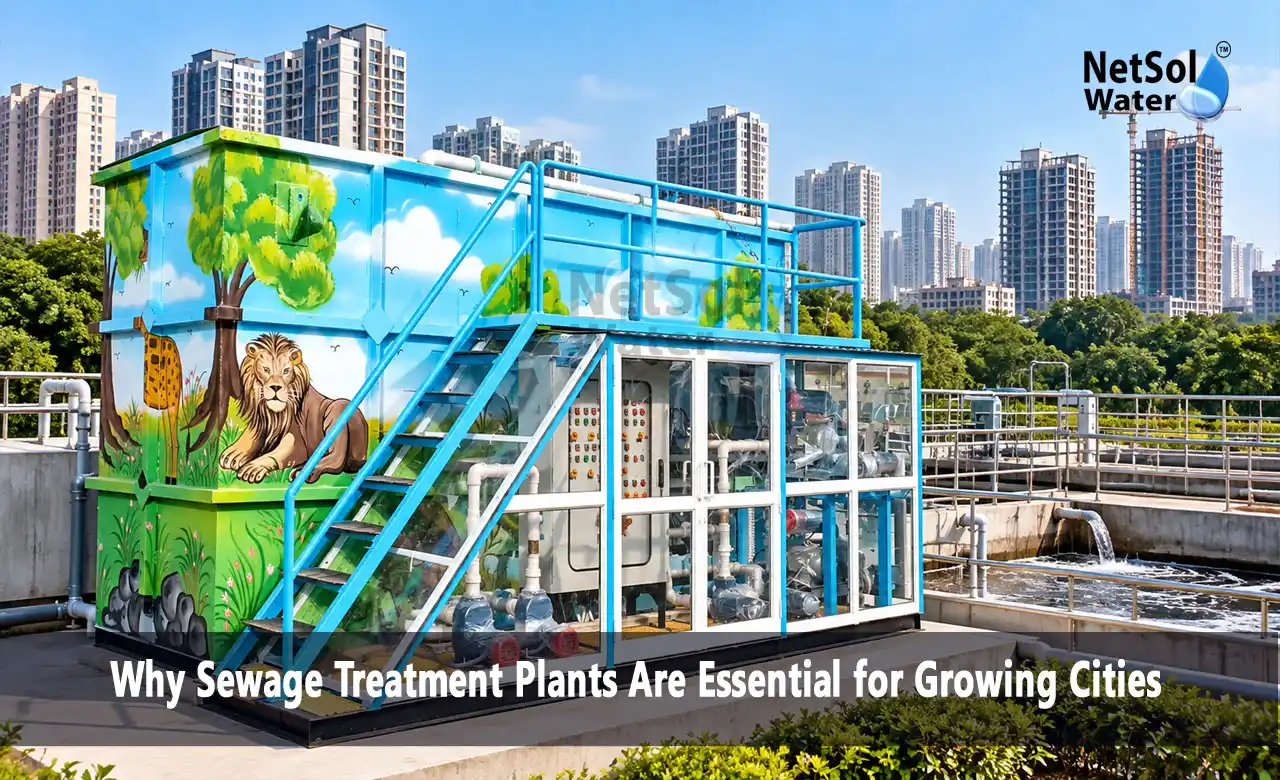
Why Sewage Treatment Plants Are Essential for Growing Cities?
Indian cities are growing faster than their drains, pipelines and treatment capacity. Every new housing tower, office park and factory adds to the volume of used water that has to go somewhere. A sewage treatment plant (STP) is the facility that cleans this water before it returns to a river, a farm or a flush tank. In this blog, we explain why a sewage treatment plant for cities is no longer a choice, and how it supports public health, water security and sustainable growth.
How Urbanization Is Straining Wastewater Systems?
Fast-growing economic hubs such as Gurugram and Pune draw millions of people looking for work and a better life. More residents mean more household sewage, and more offices, hotels, malls and industries mean more commercial and industrial effluent. When this load flows untreated into local drains, rivers and groundwater, the damage does not stay within city limits. Villages downstream, which never produced that pollution, end up paying for it with poor water quality.
Proper wastewater treatment breaks this cycle. Water is cleaned first and then either discharged safely or reused. This lets a city meet rising water demand without draining and polluting its natural sources further.
Why Cities Need Sewage Treatment Plants?
1. Protecting Public Health
Raw sewage carries bacteria, viruses, parasites and harmful chemicals. When it seeps into drinking water sources, it spreads waterborne diseases such as cholera, typhoid and hepatitis. A sewage treatment plant removes these hazards through biological treatment and disinfection, so the water that reaches rivers and other sources is far safer.
Cities like Bengaluru show why wastewater management deserves attention. Where treatment systems work well, communities get cleaner water for daily use and face a lower risk of disease.
2. Preserving the Environment
Urban wastewater contains detergents, heavy metals, nutrients and non-biodegradable waste. Released untreated, it upsets river and sea ecosystems, harms aquatic life and reduces biodiversity. An STP plant strips out these pollutants so that clean water can go back to nature.
Treated water can also be used to maintain parks, gardens and green belts, which benefits both residents and the local ecosystem.
3. Making Treated Water Reuse Possible
Chennai and Jaipur have long faced water scarcity, and growing populations only add to the pressure. Treated water reuse for toilet flushing, cooling towers, construction and irrigation reduces the demand for fresh water in a big way. Housing societies and commercial buildings with limited space can opt for a prefabricated STP, which is compact, quick to install and easy to run.
A city that reuses its treated water depends less on groundwater and tankers, and copes better during droughts and supply disruptions.
4. Meeting Regulatory Standards
The Central Pollution Control Board (CPCB) and State Pollution Control Boards set strict limits for treated water quality, covering parameters such as BOD, COD and suspended solids. Cities and establishments that miss these limits face penalties and damage to their reputation. A well-maintained STP helps you stay compliant year after year.
This matters even more in industrial cities such as Surat, where factories generate large volumes of wastewater. Industrial units usually need an effluent treatment plant along with the city STP network. Responsible wastewater handling also makes a city more attractive to investors who care about sustainable business.
Key Advantages of a Sewage Treatment Plant
. Cleaner water bodies: Treated sewage keeps rivers, lakes and groundwater in better condition, which helps urban and rural users of the same supply.
. Odour control: Modern treatment processes remove the foul smell that would otherwise trouble people living near the facility.
. Resource recovery: Some plants capture biogas and produce manure from treated sludge, which improves the economics of the plant.
. Lower carbon footprint: Less methane release and more water reuse help cities in their climate action goals.
. Water and cost savings: Reusing treated water for non-drinking needs cuts freshwater bills and tanker dependence.
Challenges in Setting Up Sewage Treatment Plants
Despite the clear benefits, many cities struggle to build treatment capacity. The common hurdles are high initial cost, shortage of land, skilled operation and maintenance, and public resistance rooted in a lack of awareness. In cities like Mumbai and Hyderabad, awareness drives on wastewater management have helped win community support for such projects.
Technology is also easing the space problem. An underground sewage treatment plant is built below the surface, so the land above can still be used as a garden, parking area or play area. Because the tanks are enclosed, smell and noise stay under control, which reduces objections from neighbours.
The Global Push for Sustainable Wastewater Solutions
With urbanization continuing worldwide, demand for sustainable urban wastewater management keeps rising. India, China and Brazil have invested heavily in water infrastructure to tackle pollution and scarcity. New Delhi has commissioned large-scale treatment capacity, and other cities can learn from its experience.
The future of sewage treatment lies in efficiency and smart operation. Newer plants use less energy and have a smaller environmental footprint. Automation and AI-based monitoring are also being adopted to track and optimize treatment in real time, which can make wastewater management more affordable for cities of every size.
Choosing the Right STP Partner
The right plant depends on your site, flow and reuse goals. An experienced sewage treatment plant manufacturer can guide you on technology (MBBR, MBR or SBR), capacity and compliance. Netsol Water designs and manufactures STPs from compact 5 KLD units to large municipal capacities, and you can explore the full range on our sewage treatment plant page or visit the Netsol Water homepage for other water and wastewater solutions.
Frequently Asked Questions (FAQs)
Q1. What is the main purpose of a sewage treatment plant?
An STP removes solids, organic matter, pathogens and other contaminants from sewage so that the water can be safely discharged or reused.
Q2. Is treated sewage water safe to reuse?
Yes, when treated to the prescribed norms, it is suitable for non-drinking uses such as flushing, gardening, cooling and construction.
Q3. Which technology is best for housing societies and commercial buildings?
MBBR, MBR and SBR based plants are widely used because they are compact and deliver consistent output. The right choice depends on your daily flow and space. Read more about STP types and working before you decide.
Is an STP mandatory for buildings?
Many states and local authorities require STPs for larger residential and commercial projects, and pollution control boards monitor compliance. Please check the current rules of your local authority before planning.
Conclusion
A sewage treatment plant is more than a utility. It is a basic need for any city that wants to grow responsibly. It protects public health, saves water and safeguards the environment. As Gurugram and Bengaluru show, investing in wastewater treatment is an investment in a cleaner, healthier and more sustainable future.
When cities give wastewater management the priority it deserves, urban growth and nature can exist side by side.
Need help selecting the right water or wastewater treatment plant? Tell us your requirement and our experts will suggest the best solution.
Call: +91-965-060-8473, Email: enquiry@netsolwater.com