

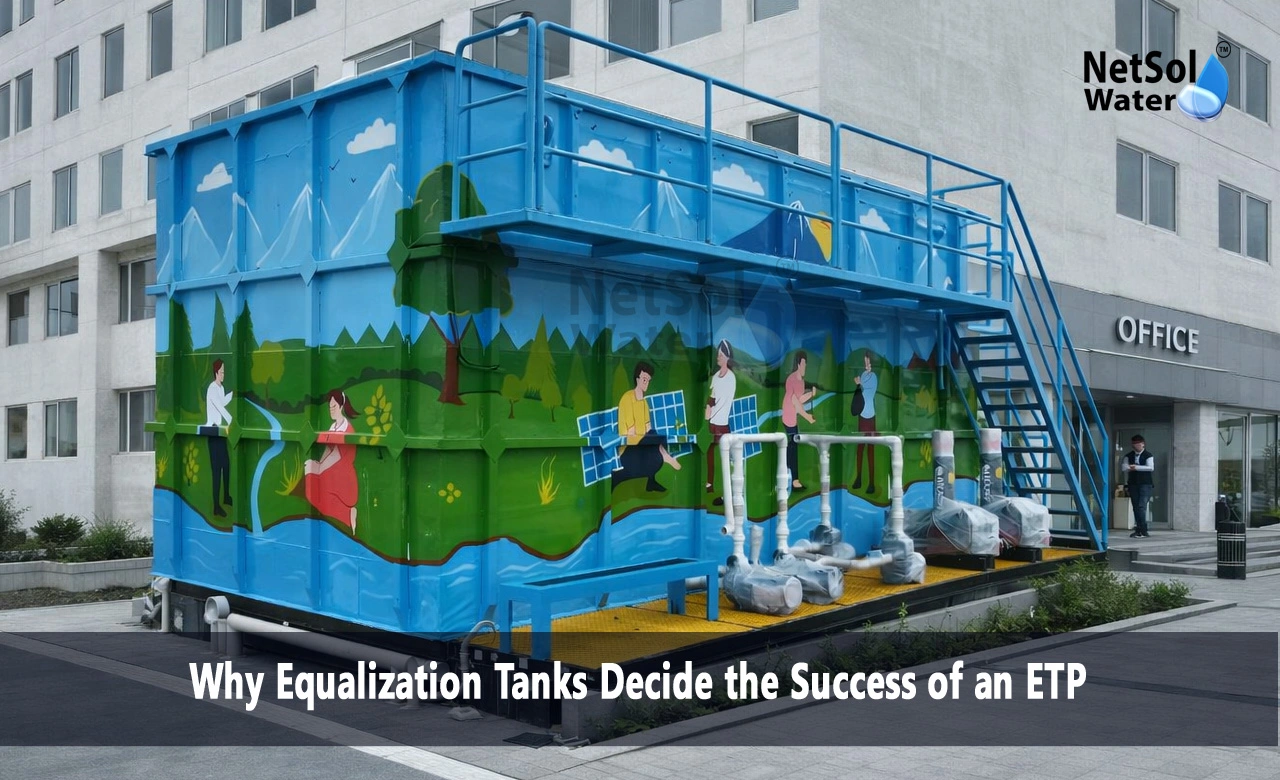
Why Equalization Tanks Decide the Success of an ETP?
An equalization tank gives the plant time to adjust. It evens out sudden changes in flow and load. It keeps the biological and chemical units from facing shock. This keeps downstream units steady and it reduces the chance of failure. By using a well sized tank a plant will use fewer chemicals and will get more stable treatment. This helps factories meet the rules and cut operating cost.
Why equalization tanks are the heart of an Effluent Treatment Plant?
Equalization tanks control how wastewater enters the main treatment line. They stop sudden surges and they hold water until conditions suit the next unit. This control helps biological reactors and chemical dosing systems to work as they should. Without equalization a plant faces uneven oxygen use, and wasted chemicals. Let us have a look on some ways equalization tanks protect the whole plant.
1: Flow management and buffering
A tank evens out peak flow and low flow. It stores extra water when production rises and it releases water when production drops. This steady flow keeps pumps and reactors at steady rates. A uniform flow helps mechanical screens and grit chambers to work without overloading. It reduces wear on pumps and valves. It also helps the plant to use power in a steady manner. That lowers energy cost and reduces sudden maintenance needs.
2: Strength equalization and pH balance
Waste streams often change in strength and acidity. An equalization tank mixes the incoming water. The mix gives a more even load for biological microbes. It also reduces sharp pH swings that can harm microbes. A steady feed saves on chemical dosing for pH correction. A stable feed improves removal of organic matter and suspended solids. It also reduces the risk of toxic spikes that can shut down biological processes.
3: Protection of biological units
Biological reactors need steady food and oxygen. Equalization prevents shock loads that kill microbes. It gives time for toxic compounds to dilute and for microbes to adapt. A stable load increases treatment efficiency and it raises sludge quality. Better sludge quality eases sludge handling and disposal.
Design and sizing of equalization tanks
Proper volume mixing and layout make the tank perform its role well. The wrong design leads to poor mixing sludge buildup and odor. Let us have a look on some design factors that matter.
1: Volume calculation and retention time
Sizing for average flow peak flow and pollutant load sets retention time. The tank must hold enough volume to dampen the biggest expected surge. Designers use simple mass balance and site data to set the volume. They also check for the longest time that wastewater may need to sit for equal strength. Proper retention reduces load spikes and gives the plant steady feed. Under sized tanks force the plant to cope with shocks and that lowers removal rates.
2: Mixing and aeration
Mixing keeps the tank uniform. Without mixing the heavy solids settle and the tank loses capacity. Gentle aeration prevents odor and keeps the liquid aerobic when needed. Mixing also helps pH to become uniform across the tank. Designers pick mixers that avoid shear that might break flocs. The right aeration choice reduces the need for additional chemical treatment later on.
3: Geometry material and layout
Tank depth and shape affect sludge settlement and cleaning. A rectangular tank may offer easy cleaning. A circular tank may give better mixing. Materials must resist corrosion and chemical attack. Easy access points and level controls make operation smooth. These layout choices control how often maintenance crews must enter the tank and how fast the plant can respond to changes.
Operational practices and maintenance that decide success
Even a good tank fails when operation and care do not match the design. Routine checks cleaning and controls keep the tank working long term. Let us have a look on some practices that keep equalization tanks effective.
1: Monitoring sampling and control
A monitoring plan ensures that operators see sudden changes early. Regular sampling checks strength and pH. Level sensors and alarms warn against overflow. Automation helps to control pump rates and to route flow when needed. Proper control reduces manual errors and it protects the downstream units. Good data logs help track changes and to tune retention times and mixing rates.
2: Sludge removal and cleaning
Settled solids harm tank capacity and reduce mixing efficacy. Periodic desludging keeps useful volume and stops septic zones from forming. Operators should inspect inlet screens and pumps for solids build up. Scheduled cleaning prevents odors and keeps the tank efficient. Simple plans for sludge removal save large repairs later on.
3: Operator training and standard procedures
Operators who understand the tank role will act to prevent upset. Clear standard operating procedures guide dosing and pump scheduling. Training helps operators to spot small problems before they grow. A trained team uses the tank to balance loads and to save cost across the whole plant. This human factor often decides if the equalization unit will support a high performing Effluent Treatment Plant.
Conclusion
A well planned equalization tank gives a plant stable flow steady strength and reliable protection for biological and chemical units. This one unit can lower chemical use reduce energy cost and increase compliance. Netsol Water is the leading Effluent Treatment Plant Manufacturer and it can help design equalization tanks that match your needs. If you want to improve plant reliability or to discuss a new Effluent Treatment Plant contact Netsol Water for a consultation and site review. Reach out now to get a practical plan and to secure better performance for your plant.
Contact Netsol Water at:
Phone: +91-9650608473, Email: enquiry@netsolwater.com