

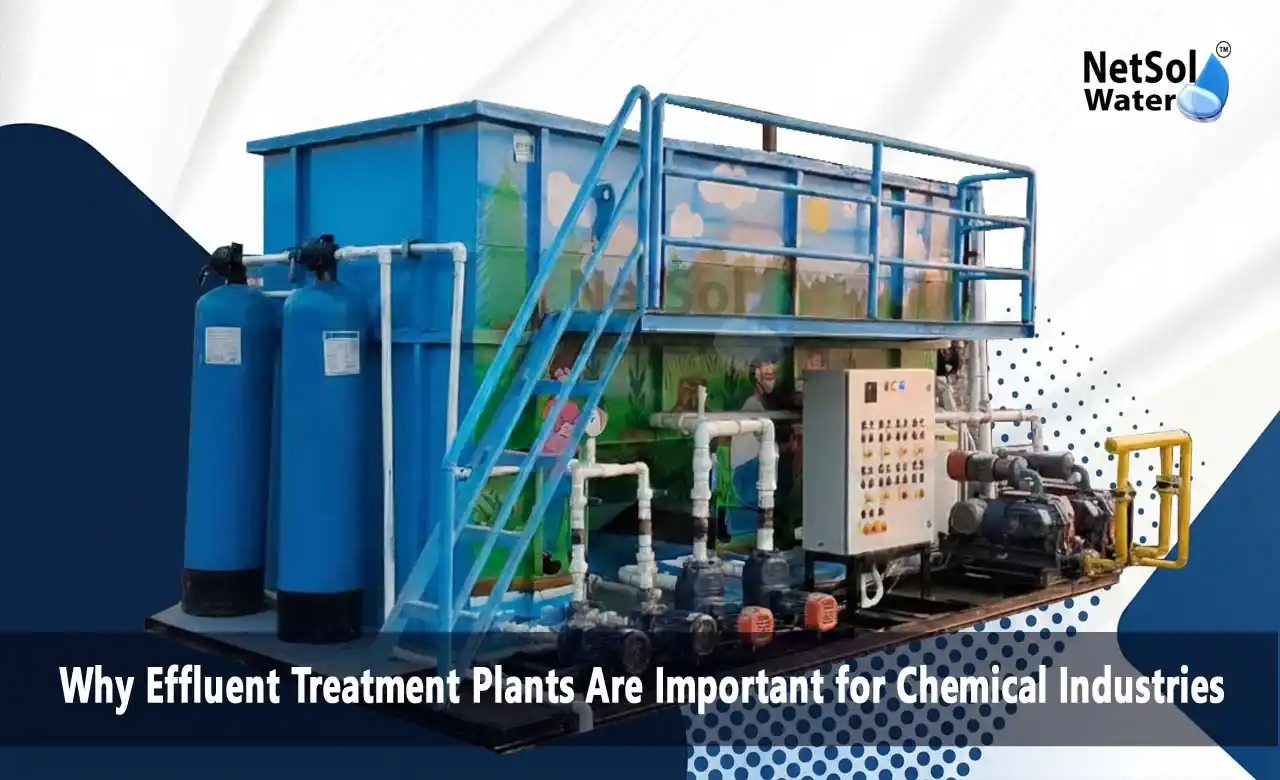
Why Effluent Treatment Plants Are Important for Chemical Industries?
Chemical industries support many parts of modern life. They produce products used in medicines, agriculture, textiles, paints, plastics, and cleaning products. Many of these processes use chemicals and large amounts of water. As a result, they also create wastewater that can contain chemicals, suspended solids, oils, organic matter, salts and other pollutants. This makes effluent treatment plants an important part of chemical manufacturing.
Chemical industry wastewater needs careful treatment because untreated discharge can harm water sources and soil. It can also create problems for industrial units that need to follow environmental rules. A suitable industrial ETP helps industries treat wastewater before they discharge or reuse it. The treatment process depends on the type and strength of the wastewater. It also depends on the production process and the required treated water quality. Netsol Water is a leading name in effluent treatment plant manufacturer in India. The company provides ETP solutions for different industrial needs.
Why Chemical Industry Wastewater Needs Special Treatment?
Chemical industry wastewater can vary greatly from one factory to another. One production unit may release wastewater with high organic content. Another may generate water with strong acids or alkalis. Some processes may also create wastewater that contains oils, heavy metals, suspended solids or dissolved salts. This variation makes proper treatment important before the wastewater reaches the environment.
Let us have a look at some key reasons why chemical wastewater needs a planned treatment system.
. Protecting Water Sources from Pollution
Untreated chemical wastewater can affect rivers, lakes, groundwater and other nearby water sources. Pollutants can change the quality of water and make it unsuitable for many uses. Some contaminants can also remain in the environment for a long time. When industrial wastewater enters natural water bodies without suitable treatment, it can disturb aquatic life and affect the wider ecosystem.
An industrial ETP helps remove or lower different pollutants before final discharge. The exact treatment stages depend on the wastewater characteristics. Physical treatment can remove larger solids. Chemical treatment can help control pH and separate certain pollutants. Biological treatment can deal with biodegradable organic matter where suitable. Additional filtration can improve the quality of treated water. This planned approach gives industries better control over their wastewater and helps protect nearby water resources.
. Supporting Safe Industrial Operations
Wastewater management also affects the daily operation of a chemical plant. A factory generates wastewater as part of its regular production activities. It needs a system that can handle changes in flow and pollutant levels. An ETP provides a controlled route for collecting and treating this wastewater.
Proper treatment can also support water reuse inside the facility. Treated water may be suitable for selected industrial applications after further treatment when required. This can help reduce the need for fresh water. It can also lower the cost of purchasing and managing water over time. Netsol Water states that its ETP systems are designed for discharge and reuse needs based on the required treatment quality.
How an Industrial ETP Helps Chemical Industries?
Choosing an industrial ETP involves more than installing a treatment tank. Chemical industries need a system that matches their wastewater conditions. The plant must handle the expected flow. It must also treat the pollutants that come from the actual production process. A well-planned system can improve wastewater control and support better resource use.
Let us have a look at some important ways an industrial ETP can support chemical industries.
. Controlling pH and Chemical Pollutants
pH control forms an important part of many industrial wastewater treatment systems. Chemical production can create wastewater that is strongly acidic or strongly alkaline. Such wastewater needs adjustment before it moves to later treatment stages or discharge. A neutralization process can use suitable chemicals to bring the wastewater closer to the required pH range.
Other treatment stages can then target suspended solids, organic matter, oils and selected dissolved pollutants. Coagulation and settling can help separate certain contaminants from water. Filtration can further improve treated water quality. The correct process depends on laboratory analysis and the wastewater profile. Netsol Water describes wastewater analysis as an early step in ETP design. Parameters such as pH, BOD, COD and TDS help guide process selection.
. Making Water Reuse More Practical
Water reuse can help chemical industries manage their water demand. A treatment plant can prepare wastewater for reuse when the treated quality meets the needs of a specific application. The factory may use treated water for selected non-process activities. More advanced treatment can provide better quality when the process requires it.
Reuse can also lower the amount of wastewater that leaves the facility. It gives the industry greater control over its water cycle. In some cases, additional systems such as ultrafiltration or reverse osmosis may follow conventional treatment. These systems can help remove finer particles and dissolved salts. The right combination depends on the quality target and the intended use of the treated water.
Why Proper ETP Design Matters for Chemical Industries?
A treatment plant cannot deliver consistent results when its design does not match the wastewater. Chemical industries often change production conditions. Raw materials can change. Production volumes can rise or fall. Different products can create different wastewater characteristics. Because of this, the treatment system needs careful planning from the start. Let us have a look at some factors that make proper ETP design important.
. Wastewater Analysis and Process Selection
Wastewater analysis helps engineers understand what the treatment system must remove. The testing process can examine pH, BOD, COD, TDS, oil content and other contaminants. Flow measurement can also show how much wastewater the plant produces and how that flow changes during operations. This information helps the design team select suitable treatment stages. Some chemical industries may need stronger chemical treatment. Others may need biological treatment for biodegradable pollutants. Some facilities may also need advanced membrane systems or additional treatment for reuse. Netsol Water states that it uses wastewater analysis and feasibility studies to guide ETP process selection and system design.
. Reliable Operation and Long-Term Management
An ETP must keep working under real plant conditions. It needs suitable tanks, pumps, chemical dosing systems, filtration units and control systems. Operators also need clear instructions for regular operation and maintenance. Without proper monitoring, even a well-designed plant may not perform as expected.
Regular checks help operators identify changes in pH, flow and pollutant levels. They can then adjust the treatment process when needed. Good sludge management also matters because treatment separates solids from wastewater. A complete approach therefore covers design, installation, commissioning, operator training and ongoing maintenance. Netsol Water states that it provides project support from survey and design through commissioning and training.
Choosing the Right ETP for a Chemical Industry
Every chemical plant has its own wastewater profile. There is no single treatment design that suits every facility. The plant capacity must match wastewater flow. The treatment process must match the contaminants. The treated water requirement must also guide the final stages of treatment.
A chemical industry should therefore assess its wastewater before selecting an ETP. It should understand the source of wastewater and the expected flow, the pollutant load and the required discharge or reuse quality. This approach helps the industry select a system that fits its actual needs instead of using a standard design without proper analysis.
Netsol Water provides customized ETP systems and works with different industrial wastewater conditions across India. Its website states that the company handles ETP design, fabrication, installation and maintenance. It also presents itself as a leading manufacturer of industrial wastewater treatment systems.
Conclusion
Responsible wastewater management has become an important part of chemical manufacturing. Chemical industry wastewater can contain different pollutants that need controlled treatment before discharge or reuse. A properly designed effluent treatment plant system can help protect water resources, support compliance and improve water management within the facility.
Selecting the right industrial ETP starts with understanding the wastewater and the treatment goals. Netsol Water offers wastewater treatment solutions designed around industrial requirements. Contact Netsol Water to learn more about suitable ETP solutions for your chemical industry or to request a consultation for your wastewater treatment needs.
Contact Netsol Water at:
Phone: +91-9650608473, Email: enquiry@netsolwater.com