

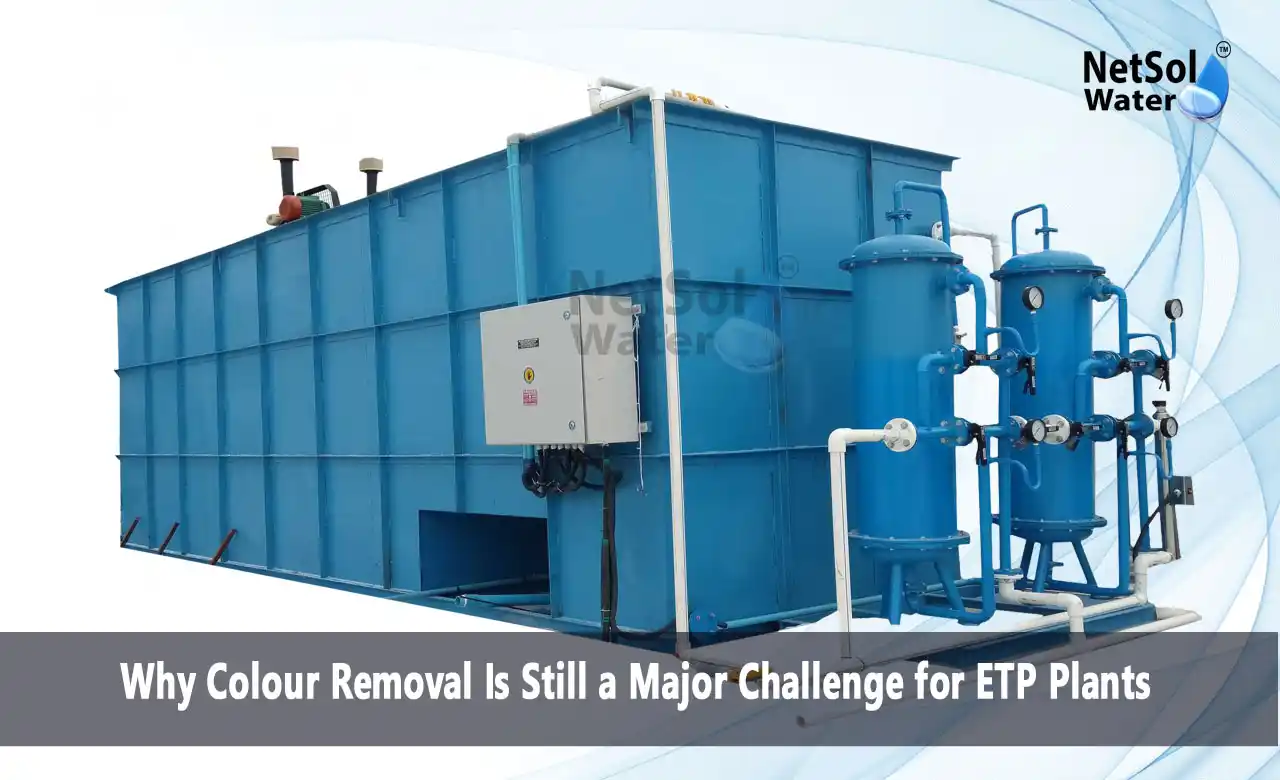
Why Colour Removal Is Still a Major Challenge for Effluent Treatment Plants?
Clean water plays a major role in healthy communities and responsible industrial growth. India is known for its strong textile, chemical, paper, pharmaceutical and food industries. These industries support jobs and economic growth. At the same time they produce large volumes of wastewater that need careful treatment before discharge or reuse. One of the hardest issues in this process is colour. A small amount of colour can remain visible even after several treatment stages. This makes colour removal wastewater treatment a serious concern for many industries. It also creates challenges for operators who need to meet discharge standards while keeping treatment costs under control. Effluent treatment plants must handle changing wastewater quality every day. This makes colour removal more complex than it may first appear. Netsol Water is the leading name in industrial water treatment solutions and focuses on practical systems that help industries manage difficult wastewater streams. Understanding why colour remains so difficult can help industries choose better treatment methods and improve plant performance.
Why Colour Is Difficult to Remove from Industrial Wastewater?
Colour often looks like a simple visual issue. In reality it can show the presence of complex dissolved compounds that resist normal treatment. This is why operators need to understand the nature of colour before selecting a treatment process. Colour removal wastewater treatment needs the right combination of methods based on the type of industry and the chemicals present in the flow.
. Different Chemicals Create Different Colour Problems
Many industries use dyes and chemical additives during production. Textile units may use reactive dyes while paper mills and other industries may release coloured organic compounds. These substances can behave differently during treatment. Some dissolve easily in water and pass through basic filtration. Others form stable compounds that resist biological treatment.
This difference creates a major challenge for treatment operators. A process that works well for one wastewater stream may perform poorly for another. For this reason plants need to study wastewater characteristics before choosing a treatment method. Operators also need to monitor colour changes across different production batches. This helps them understand what enters the plant and how it behaves during treatment.
. Colour Can Remain Even After Good Treatment
A wastewater stream may show low levels of solids and still look strongly coloured. This happens because colour can come from dissolved compounds that do not settle like suspended particles. Standard physical treatment often removes visible solids. It does not always remove dissolved colour.
Biological treatment can remove many organic pollutants. Yet some colour compounds may remain after the biological stage. These compounds can pass into later treatment stages and affect the final water quality. As a result effluent treatment plants need extra treatment steps when normal processes cannot achieve the required colour reduction.
How Treatment Conditions Affect Colour Removal?
Treatment performance depends on more than the treatment technology itself. The operating conditions also shape the final result. Changes in pH can affect chemical reactions. Variations in flow can change contact time. A sudden increase in colour load can also disturb the treatment process. This is why stable operation plays an important role in effective colour control.
. pH and Chemical Dosage Matter
Chemical treatment often plays a major role in colour removal. Coagulants and other treatment chemicals can help separate colour producing compounds from water. However the right chemical dose depends on the wastewater condition. A low chemical dose may leave colour behind. A high dose can increase sludge production and raise operating costs. The pH also affects how chemicals react with pollutants. Operators therefore need to control both dosage and pH with care.
Regular testing helps plants identify the best operating range. Jar testing can also support better chemical selection before full scale operation. With proper control the treatment process becomes more stable and predictable.
. Changing Wastewater Loads Create New Challenges
Industrial production rarely stays the same throughout the day. A factory may change raw materials or production batches. Such changes can alter the colour and chemical content of the wastewater. This variation makes treatment harder because the plant must respond to changing conditions. A process that performs well in the morning may not give the same result after a major production change.
Good equalisation helps create a more stable feed for treatment. It gives operators more time to manage sudden changes in pollutant load. This can improve the performance of industrial effluent treatment and support more consistent colour removal.
Limitations of Common Colour Removal Methods
No single treatment process can solve every colour problem. Each method has strengths and limits. Some processes work better for certain compounds while others suit different wastewater conditions. The right approach often requires more than one treatment stage. Understanding these limits helps industries avoid poor plant performance and unnecessary operating costs.
. Biological Treatment Has Its Limits
Biological treatment forms an important part of many wastewater treatment systems. Microorganisms break down organic pollutants and help lower the overall pollution load. Yet some colour compounds resist biological breakdown. Certain dyes have complex chemical structures that remain stable during biological treatment. Even when the plant removes a large share of organic matter the treated water may still carry visible colour. This does not mean biological treatment has little value. It means the process may need support from other technologies. Chemical treatment or advanced oxidation can follow biological treatment to target the compounds that remain.
. Filtration Alone Cannot Solve Every Problem
Filtration removes suspended matter and helps improve water clarity. It works well when colour comes from particles or material attached to solids. It becomes less effective when colour remains dissolved in water. Membrane processes can also provide high quality treatment. However membrane systems may need strong pretreatment and careful operation. Fouling can lower performance and increase maintenance needs.
For many industries the best solution comes from combining treatment stages rather than depending on one unit. A well planned system can address solids, organic matter and dissolved colour in sequence.
Building Better Systems for Long-Term Colour Control
Effective colour removal requires more than adding one extra treatment unit. It requires proper plant design, regular monitoring and a treatment strategy that matches the wastewater. Industries that take this broader approach can achieve more stable results and control operating problems.
. Combine Treatment Processes in the Right Order
A treatment train can include equalisation followed by chemical treatment, biological treatment, filtration and advanced polishing. The exact sequence depends on the nature of the wastewater. The order matters because one treatment stage can prepare the water for the next stage. Proper pretreatment can protect later units and improve their performance. This approach also helps manage the changing nature of industrial effluent.
A well designed system should consider water quality, flow rate, chemical use, sludge generation, energy demand and maintenance needs. This creates a stronger balance between treatment performance and operating cost.
. Monitor Performance and Adjust the Process
Regular monitoring helps operators identify problems before they become serious. They can track colour, pH, flow, chemical demand and other key parameters. This gives them a clear picture of how the plant performs during different production conditions. Operators should also review treatment performance when the production process changes. A new dye or chemical may require a different treatment approach.
Modern control systems can help improve process stability. Yet technology works best when trained operators understand the treatment process and respond to changing conditions. Continuous improvement remains important for reliable wastewater management.
Conclusion
Colour remains a difficult wastewater issue because many colour producing compounds stay dissolved and resist standard treatment. Industries also face changing wastewater loads that can affect treatment performance. The right solution depends on proper testing, careful process design and regular monitoring. A well planned system can improve water quality and support safe reuse or discharge. Businesses should therefore treat colour as part of the overall wastewater management strategy rather than as a separate problem. Effluent treatment plants need a practical approach that matches the specific needs of each industry. Netsol Water is the leading provider of wastewater treatment solutions and can help industries assess their treatment needs. Get in touch with Netsol Water to learn more or request a consultation for your wastewater treatment requirements.
Contact Netsol Water at:
Phone: +91-9650608473, Email: enquiry@netsolwater.com