

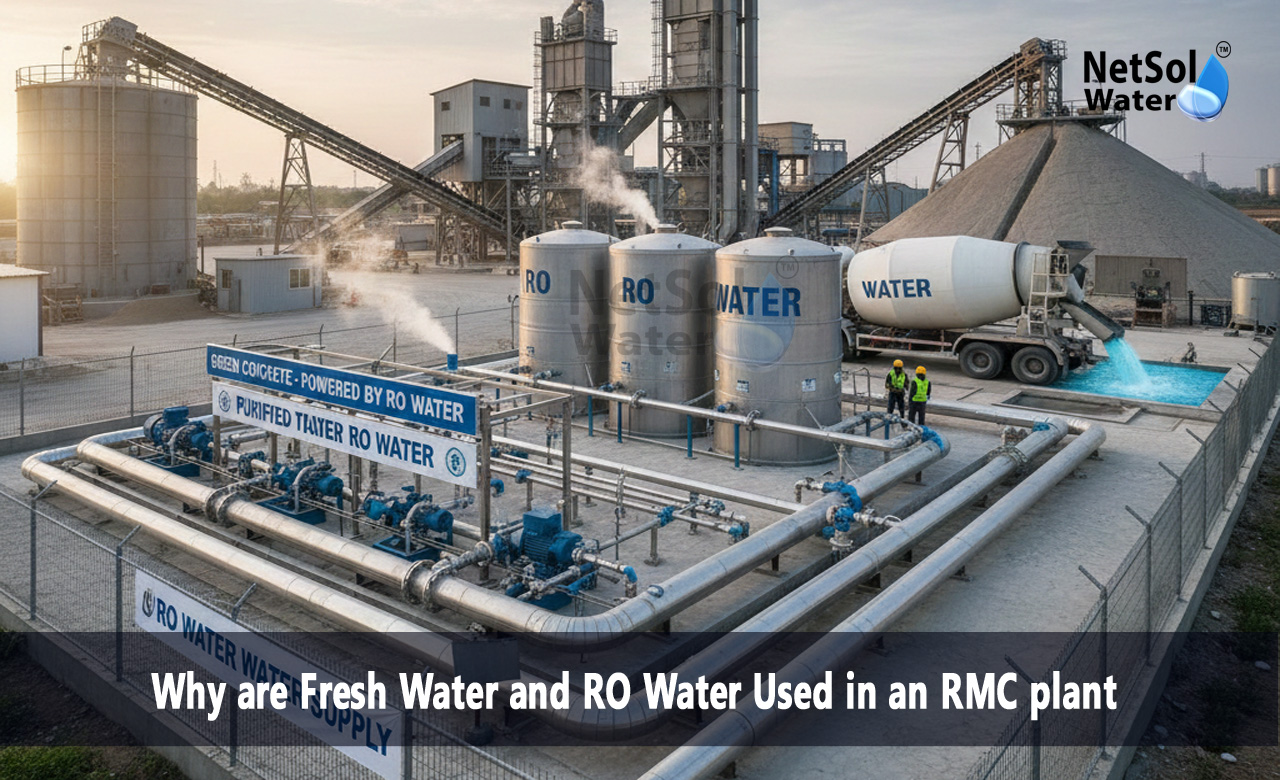
Why are Fresh Water and RO Water Used in an RMC plant?
Concrete mixes depend on water in many ways. Water affects strength, workability, curing and long term durability. Ready Mix Concrete plants must choose the right water to meet quality goals and to keep machines running well. Fresh water and RO water both serve clear roles in an RMC plant. Fresh water comes from municipal or well sources and it often meets general use standards. RO water comes from reverse osmosis plants and it offers higher purity when the project needs strict control. We are going to explain Why are Fresh Water and RO Water used in an RMC plant and shows how each type shapes mix behaviour, plant maintenance, cost and product quality. The choice of water can change how cement reacts, how admixtures perform and how steel and equipment age. Let us show you some practical reasons for each choice and it will point to measures that keep concrete consistent and safe.
Role of water quality in concrete production
Understanding why water quality matters helps to prevent problems in the field and in the plant.
Water mixes with cement and aggregates to form the paste that binds concrete. If water carries salts, organic matter or suspended solids then it can alter chemical reactions and affect setting time and final strength. Clean water keeps the mix chemistry stable and helps admixtures act predictably. Let us have a look on some key aspects that explain this role and then explore them under clear headings.
1: Chemical impact on cement hydration
Water starts the hydration process that turns cement powder into hardened material. Impurities in water can speed up or slow down this process. Some ions change setting time and others reduce strength gain. Using controlled water quality reduces surprise changes in the mix that can cause weak spots in a slab.
2: Effect on admixture performance
Concrete often contains admixtures that control slump set time and finish quality. Admixtures work by interacting with cement and water. If water contains unexpected chemicals then the admixtures may not work as intended. That result can reduce workability or cause early setting. Clean water gives admixtures a steady environment and consistent results.
3: Corrosion and long term durability
Chloride and sulfate ions in water can harm steel reinforcement and can attack cement paste over years. This risk matters for structural concrete that needs long life. Removing harmful ions from water lowers corrosion risk and keeps structures safer for longer.
Why fresh water is used in an RMC plant?
Fresh water often serves as the default choice for many plants. It offers a balance of cost availability and acceptable quality for common projects.
Fresh water usually comes from local water supplies. It meets general standards for construction use and it costs less than treated water. Plants use fresh water when the project does not demand very low ion levels or when local rules accept this option. Let us have a look on some reasons why plants choose fresh water and then break down each reason into clear headings.
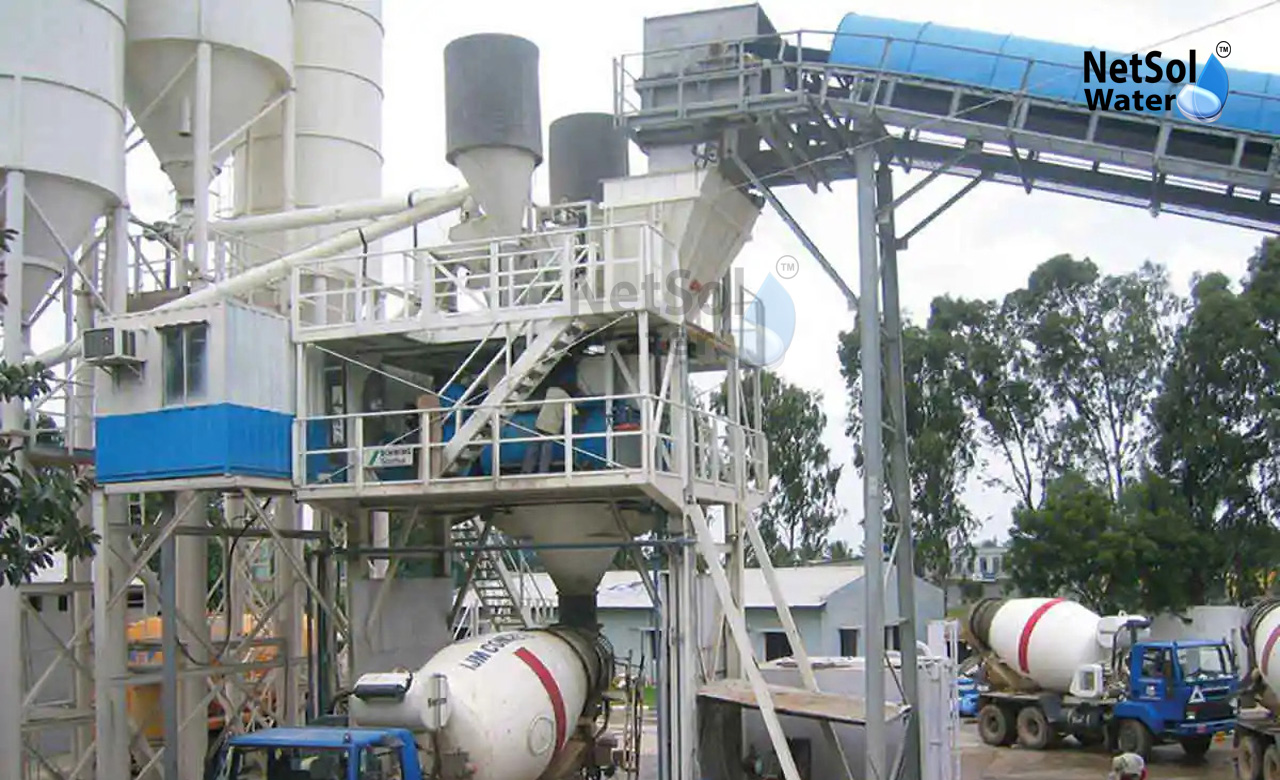
1: Availability and cost
Fresh water often flows from municipal lines or from local wells. This ready access keeps production steady. Raw supply cost stays low and the plant avoids high treatment expenses. For plain concrete work where extreme purity is not required fresh water keeps budgets under control.
2: Suitable for routine mixes
Many concrete mixes tolerate small amounts of dissolved salts and organics. Standard structural work pavements and non critical elements can accept fresh water without loss of performance. Using fresh water simplifies operations and reduces the need for extra testing.
3: Less need for equipment
A plant that uses fresh water avoids installing and running a large RO plant. That reduces capital spend and lowers energy and maintenance demands. The plant staff can focus on mix design and batching rather than on water treatment issues.
Why RO water is used in an RMC plant?
RO water enters the process when projects require higher purity or when local supplies contain harmful substances. Reverse osmosis removes dissolved solids and many ions. This makes RO water almost free of salts and organics. Let us have a look on some reasons plants adopt RO water and then explore each reason under separate headings.
1: Control over mix chemistry
RO water removes many ions that can affect cement hydration. For high performance concrete where precise control over setting time and strength matters RO water reduces variable factors. This control helps engineers hit target strengths and durability more reliably.
2: Better admixture response
Admixtures that extend slump delay setting or provide special workability rely on a clean chemical environment. RO water gives admixtures a stable medium so their effectiveness matches lab results. That match reduces site adjustments and rejects.
3: Protection of reinforcement and finishes
When water contains chlorides or sulfates it can harm steel and can cause surface issues in decorative concrete. RO water cuts those risks and improves finish quality for exposed surfaces. Using RO water helps deliver projects that require strict appearance and durability standards.
Impact of water type on equipment and plant maintenance
The water choice also affects plant equipment wear and maintenance cycles.
Hard water and water with high mineral content cause scaling in pumps, pipes, mixers and dosing systems. Scaling reduces flow and increases energy use. RO water reduces scale and keeps machines clean longer. Let us have a look on how these issues appear and what measures plant managers use to cope with them.
1: Scaling and deposits
Minerals such as calcium and magnesium create scale on metal surfaces when water heats or when it sits. Scale narrows pipes and it clogs valves. Plants that use hard fresh water face frequent cleaning cycles. RO water cuts these mineral loads and eases maintenance schedules.
2: Pump and mixer life
Abrasion and deposit formation change how pumps and mixers perform. Clean water lowers abrasive load on bearings, seals and impellers. That reduction extends equipment life and lowers spare part spending.
3: Chemical dosing equipment
Dosing pumps and lines respond to water quality. Suspended solids can block small valves and filters. RO water gives dosing systems a cleaner input and makes dosing more accurate. That accuracy improves consistency from batch to batch.
Effects on cost and project planning
RO plants need investment and they consume energy to run. Plants must budget for membranes, filters and periodic replacement. Fresh water keeps immediate costs low but it can add hidden costs through extra testing, repair and slower production. Let us have a look on cost drivers and planning considerations then analyze each area with detail.
1: Capital and operating costs
Installing an RO plant requires capital for equipment and piping. The system also needs power and periodic membrane replacement. These factors raise operating cost per liter. Fresh water avoids this capital expense but it may force more frequent quality testing and more maintenance.
2: Batch consistency and waste
RO water helps reduce batch variation that can cause rework or rejected loads. Less waste saves money in the long run. Fresh water can work if the plant invests in tighter quality control and in mix trials matched to local water chemistry.
3: Scheduling and supply security
Some sites may face intermittent supply from municipal lines during dry seasons. RO plants can act as a backup or as the main supply when tap water falters. That reliability helps meet tight deadlines and keeps production on track.
Environmental and sustainability aspects
RO treatment produces a concentrate stream that needs safe disposal. Fresh water withdrawal can stress local water sources. Plants must balance these effects and adopt practices that reduce environmental harm. Many RMC Plants reuse wash water through an Effluent Treatment Plant, Let us have a look on the environmental trade offs and then expand on mitigation strategies.
1: Waste concentrate management
RO plants create a brine that contains the removed minerals. Plants must handle this brine in a way that meets local rules and that avoids soil or water damage. Options include mixing brine with other waste streams or sending it to approved disposal facilities.
2: Water recycling and reuse
Many plants combine RO with recycling systems for wash water. Recycled water can feed initial wash cycles while RO polishing can produce higher quality water for final mixes. This approach reduces fresh water use and lowers the plant footprint.
3: Local resource stewardship
Plants that draw large volumes of fresh water should coordinate with local authorities and stakeholders. Metering efficient use and sharing data helps maintain good relations and prevents supply conflicts.
Testing and quality control practices
Plants must test water for pH, chloride content,sulfate content and total dissolved solids. They must also watch for organic contamination that can change set time. Let us have a look on the testing routines and then detail how to interpret results and act on them.
1: Routine testing schedule
A daily quick check can alert staff to sudden changes while monthly detailed tests provide deeper insight. Quick checks include simple TDS meters and pH strips. Detailed tests come from a certified lab and they measure specific ions and organics.
2: Action thresholds
Plants must set thresholds that trigger corrective action. If chloride levels rise above project limits, the plant should stop using that source or blend it with cleaner water. If TDS climbs the plant should increase RO plant attention or plan membrane replacement.
3: Documentation and traceability
Recording water test results keeps the plant accountable and helps resolve disputes on site performance. Traceability supports warranty claims and it helps engineers refine mix designs based on real site conditions.
Best practices for choosing and using water in an RMC plant
Plants should match water quality to the project needs. High performance projects should aim for RO water or for tight blending and testing. Routine projects can use fresh water after confirmation tests and with extra monitoring. Let us have a look on practical steps that plants can apply and then describe each measure in detail.
1: Start with a water audit
Test all available water sources before finalizing mix designs. A water audit shows which source needs treatment and which source can work with minor adjustments. The audit also helps estimate treatment cost and maintenance needs.
2: Blend and treat as needed
Blending fresh water with treated water can give cost savings while meeting quality targets. Plants can use softening systems, sediment filters and RO polishing to reach the required purity. This layered approach balances cost and quality.
3: Train staff and update protocols
Operators must know how to read test results how to spot signs of water related issues and how to act when quality drifts. Clear protocols reduce downtime and improve product consistency.
Conclusion
Choosing the right water matters for quality cost and plant performance. Fresh water and RO water both serve clear roles in concrete production. Fresh water often fits routine work and keeps costs low. RO water supports high performance mixes and helps control long term durability. Evaluating local water chemistry, plant goals and project specifications will show which option works best. If you want expert help to test your water or to design a water plan for your RMC plant then contact us for a consultation. We can run a water audit, recommend a treatment path and support your team with practical steps to improve mix consistency and reduce risk.
Contact Netsol Water at:
Phone: +91-9650608473, Email: enquiry@netsolwater.com