

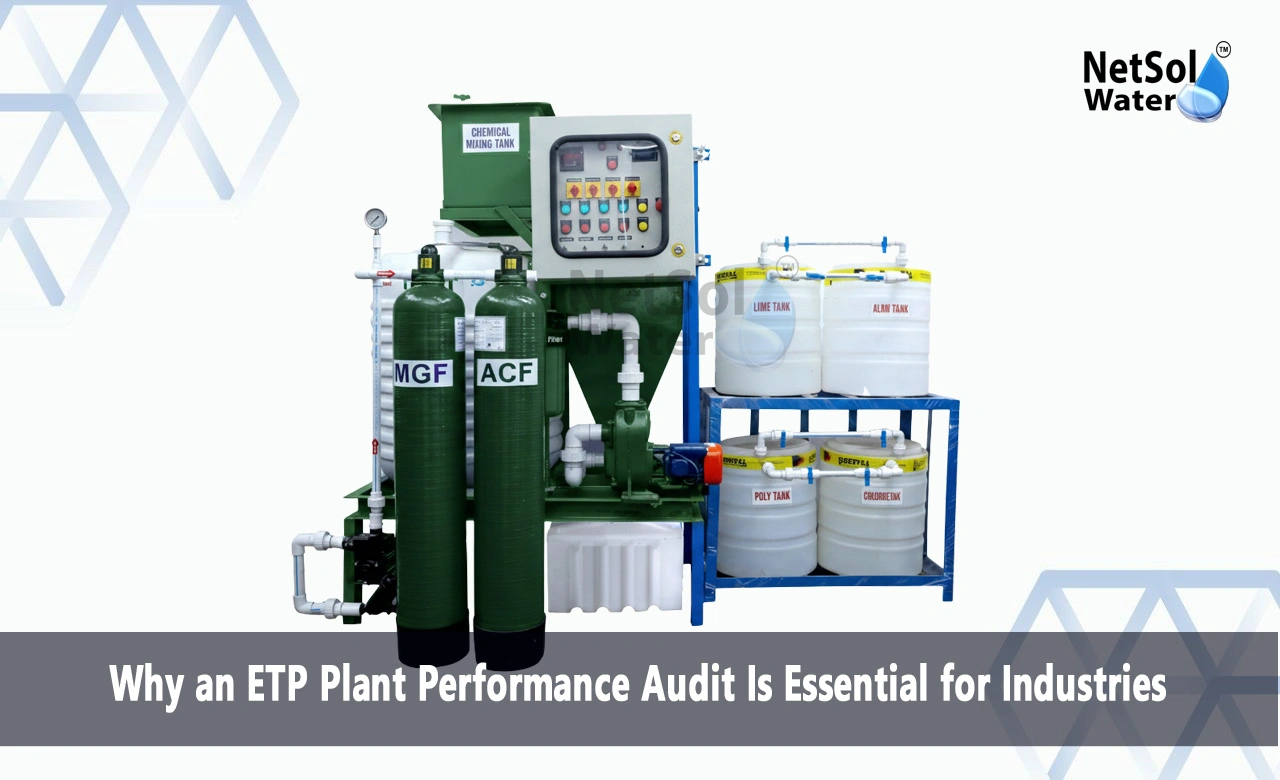
Why an ETP Plant Performance Audit Is Essential for Industries?
An effluent treatment plant is an important compliance and sustainability asset to any industry. Many of the ETPs, however, are still running years on without an official review of their real performance. Slow efficiency deterioration, increasing operating expenses, excessive breakdowns, and compliance risk are the issues that are usually not realized until a significant failure has taken place. An ETP performance audit is a systematic assessment of design, operation, and output quality to ensure that the plant is working as intended. Periodic audits enable industries to detect latent inefficiency, thwart regulatory offence as well as streamline costs.
1: Assuring Regulatory Compliance
The environmental control is getting tougher and failure to comply may result in fines, closure of the production or even loss of a good image. An ETP performance audit verifies whether treated effluent consistently meets discharge or reuse standards under varying operating conditions.
2: Determining Performance Gaps and Bottlenecks
A lot of ETPs cannot work because of their design but rather because operational drift in the long term takes place. An audit will assist in identifying the bottlenecks that may include congested units, lack of retention time or less performing biological systems that lower the overall treatment effectiveness.
3: Operating and Chemical Cost Control
Increased chemical and energy prices are usually indicators of unproductive processes. The systematic audit identifies instances of overdosing, energy wastage or unnecessary treatment procedure that raises the operating costs.
4: Life extension of Equipment and Assets
The use of equipment in ways that it was not created or under unfavorable environments results in high failure rates. An audit checks mechanical and electrical wellbeing, which can prevent such industries to have time off at unexpected moments and unnecessary replacements which are expensive.
ETP Performance Audit Checklist for Industries
1: Influent Assessment and Hydraulic Assessment
The first step in an ETP performance audit is evaluating the influent characteristics and flow patterns. The flow rates, loads of pollutants and variability should be compared to the original basis of design. The occurrence of sudden peak loads, shock discharges or bypassing equalization tanks is typical and actually impairs downstream performance.
2: Equalization and Pre-Treatment Evaluation
It is important to have stable ETP operations by proper equalization of ETP. The audit measures the interference of efficiency, detention time and pH stability in the equalization tank. Screening, oil separation and grit removal plants are evaluated insofar as they are clogged, carryover and maintenance practices that can influence subsequent treatment processes.
3: Physico-Chemical Treatment Performance
The effectiveness of coagulation and flocculation is measured based on the floc formation and the settling and chemical dosing behaviours. The audit confirms that dosing is done according to real time requirements or definite assumptions. The clarifiers are tested on short-circuit, sludge blanket, and quality of overflow.
4: Health and Stability Biological Treatment
Biological treatment sometimes forms the core of an ETP as well as being a subject of significant performance audits. Biomass health, oxygen transfer efficiency, nutrient balance, and sludge age are some of the parameters evaluated. Stress indicators such as foaming, bulking, or lack of removal of CO 2 is an indication of deeper biological imbalance that should be corrected.
5: Secondary Clarification and Sludge Handling
The occurrence of poor sludge settling or carryover impacts on the quality of final effluent and consumes more chemicals. Sludge wasting frequency, return rates, thickening efficiency and performance of dewatering are audited. Unresponsive sludge management is usually an indicator of poor upstream treatment.
6: Tertiary and Advanced Treatment Systems
Pressure drops, fouling, chemical consumption and recovery efficiency are discussed of filtration, adsorption, membrane systems or advanced oxidation units. The audit makes sure that there is the use of these systems as polishing actions and not as compensating treatments on failed upstream systems.
Operational and Management Aspects of an ETP Performance Audit
1: Monitoring, Instrumentation and Automation
Online sensors, flow meters, and control systems are evaluated in terms of their availability and reliability. An effective ETP performance audit checks whether decisions are data-driven or based on manual judgment. The consequence of poor instrumentation is usually delayed response and overuse of chemicals.
2: Skill of Operator and SOP Conformity
The lack of training or standard operating procedures may lead to poor performance by an otherwise well-designed ETP. The audit examines the practices of the operators, the response towards the upsets, and compliance with the maintenance schedules.
3: Energy Consumption and Efficiency
The efficiency of energy-intensive equipment, including mixers, pumps, and blowers is considered. Mechanical wear or improper sizing or bad control logic is frequently suggested by abnormal power consumption.
Common Findings During ETP Performance Audits
Audits have shown that ETPs are performing way over their design capacity, they are using chemicals to offset the underperformance of the biological component, or they are not performing preventive maintenance. Common problems are also lack of documentation, obsolete design suppositions and performance benchmarking.
Benefits of Conducting Regular ETP Performance Audits
A structured ETP performance audit improves treatment reliability, reduces operating costs, and enhances compliance confidence. It gives industries a well laid down roadmap on how to optimize, retrofit, or expand their plans without trying to implement emergency measures and risk of regulations.
Conclusion
An Effluent Treatment Plant performance audit is not just a compliance exercise but a strategic tool for industries to improve efficiency, sustainability, and long-term reliability. Through periodic reviewing of the influent conditions, treatment performance, equipment welfare and operational practices, the industries will be able to detect any unseen inefficiencies before the problems evolve into failures. Periodic audits help to keep the effluent treatment plants running at the best level and at the same time achieve the desired standards of the environment as well as keeping the cost under check.
Do you need an advice or assistance on selecting the best water and waste water treatment unit? We have solutions for all your problems!
Let us know your problem, our experts will make sure that it goes away.
For an assistance or related query,
Call on +91-9650608473 Or write us at enquiry@netsolwater.com