

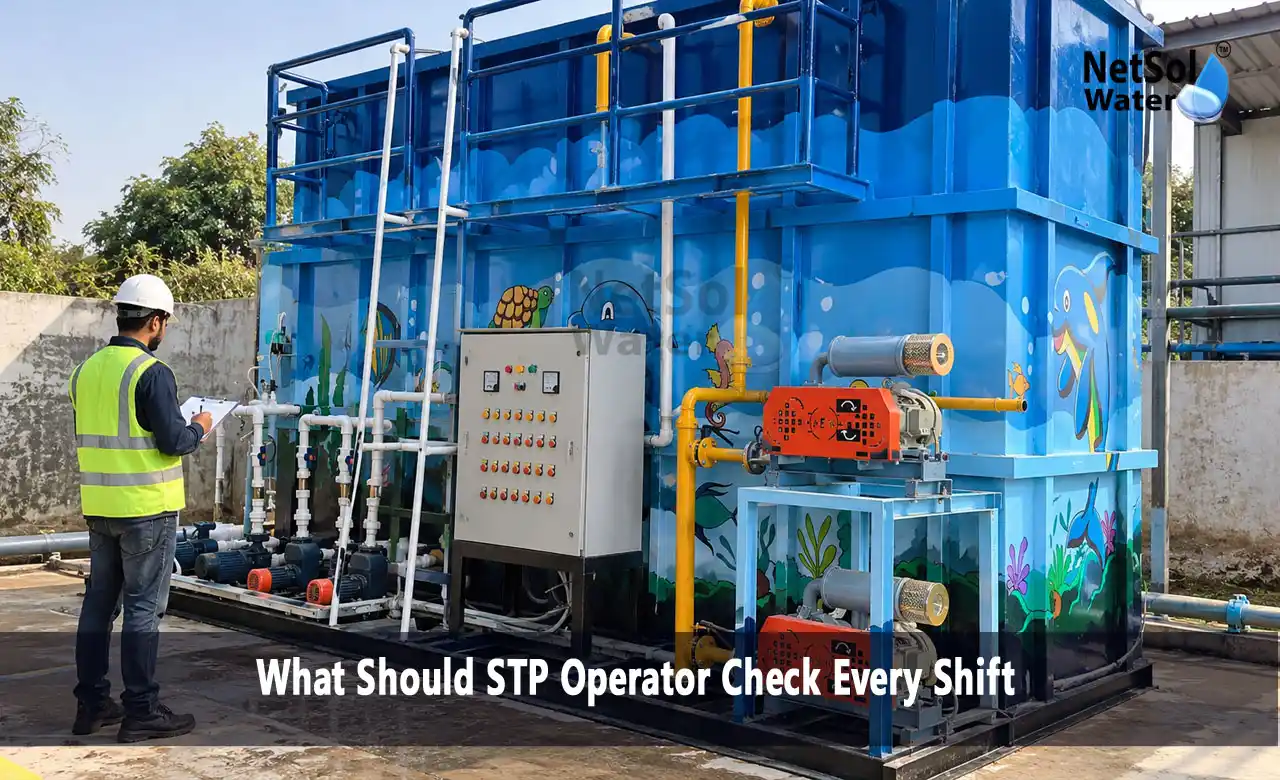
STP Operator Shift Checklist: What to Check Every Shift
Running a Sewage Treatment Plant (STP) smoothly depends heavily on consistent shift monitoring. Even when a plant runs on automatic controls, an operator still needs to physically verify equipment condition and process parameters at the start, middle and end of every shift.
A well-followed STP shift checklist helps catch pump failures, poor aeration, sludge problems, flow fluctuations and water quality deviations before they turn into major breakdowns. It also leaves a clean handover record for the next operator coming on duty.
Daily Shift Duties of STP Operator
1. Inlet Flow and Sewage Quality
Start by checking the inlet flow rate against the plant's normal operating range.
Test key parameters such as pH, temperature, TSS, COD and BOD as required by the plant's monitoring schedule. Sudden shifts in these values often point to high inflow demand, cleaning discharge, rainwater ingress or changing wastewater load.
If inlet flow rises or drops suddenly, inspect for blockages, leaks or unusual discharge.
2. Screening System
Inspect the inlet screen and clear away plastics, fibres, hair, rags and other solids. A clogged screen restricts flow and can overload the pumps downstream, so confirm screenings are being removed safely and check nearby areas for spills, leaks or odd smells.
3. Equalization Tank
Where an equalization tank is present, monitor water level and the mixing system. Confirm the mixer or air-mixing unit is working, watch for excess solids settling, floating solids or colour changes, and verify the transfer pump is maintaining flow to the biological stage.
4. Aeration Tank
In a biological STP, aeration tank monitoring is one of the most critical checks. Bubbling across the tank should look fairly even, with no dead zones.
Track dissolved oxygen (DO) as per plant procedure, and check blowers, air valves, headers and diffusers. Any unusual blower noise, pressure spike, low airflow or uneven aeration should be logged and investigated right away.
5. Biological Process
Observe the colour and appearance of the activated sludge or MBBR system. Sudden colour change, excess foam, floating sludge or strange odours usually signal a process imbalance.
Monitor MLSS, DO, sludge settling and pH as per the operating procedure, and never adjust aeration or chemical dosing on a whim, identify the root cause first.
6. Clarifier Performance
Check settling in the secondary clarifier, the outlet water shouldn't carry excessive suspended solids or floating sludge.
Monitor the sludge blanket where available and confirm return/waste sludge pumps are functioning. Poor sludge withdrawal lets the blanket rise, which can carry solids into the treated water.
7. Filters and Disinfection
Record pressure and flow across activated carbon, pressure sand filters, UF units or polishing filters. A sharp rise in differential pressure usually means clogging or excess solids loading.
For chlorination or UV disinfection systems, verify chemical dosing, chlorine residual, lamp status and lamp intensity.
8. Pumps and Electrical Equipment
Examine transfer pumps, return sludge pumps, treated water pumps and dosing pumps for abnormal vibration, noise, leakage, temperature or pressure change.
Check electrical panels for moisture, overheating or unusual alarms, and test standby equipment on schedule rather than assuming it will work during an emergency.
9. Sludge Handling
Every shift, check sludge collection and dewatering equipment - holding tanks, filter presses, centrifuges or screw presses - and track removal volumes.
If sludge turns abnormally wet or hard to dewater, review polymer dosing, equipment condition and sludge properties.
10. Treated Water Quality
Test final treated water against the applicable discharge or reuse standards, and track every parameter listed in the plant's testing plan.
Never judge treated water quality by appearance alone, clear water doesn't always mean every required parameter is within limits.
11. Shift Reading Records
Every handover should come with a completed operating sheet: flow, pH, DO, tank levels, equipment readings, chemical consumption, sludge removal, treated water quality, alarms and any unusual observations.
Comparing readings against the previous shift makes it far easier to catch subtle changes early.
Also Read: Sewage Treatment Plant Manufacturer
STP Shift Handover Checklist
Before handing over the plant, confirm:
. Inlet flow is within the normal range
. Screens are clean and operating properly
. Tank levels are within normal range
. Equalization mixing system is working
. Aeration is uniform across the tank
. DO is within the proper operating range
. Pumps and blowers are running normally
. Clarifier settling is satisfactory
. Sludge is being removed appropriately
. Filters are within operating range
. Disinfection equipment is functioning
. Treated water meets quality specifications
. Alarms and abnormalities are logged
. Unresolved issues are flagged for the next shift
Conclusion
A STP operator's job isn't just confirming the plant is running, it's confirming it's running correctly. Every shift should cover flow, screening, equalization, aeration, biological treatment, clarification, filtration, disinfection, pump upkeep, sludge handling and treated water quality.
A consistent shift checklist for STP operators keeps performance stable, improves handover communication and helps catch small issues before they turn into full treatment failures.
Need advice or assistance selecting the right water and wastewater treatment unit? We have solutions for every requirement.
Tell us your problem, our experts will help you resolve it.
For assistance or a related query, call +91-9650608473 or write to enquiry@netsolwater.com.