

What Is MBR STP and How Does It Work?
Advanced sewage treatment technologies are being adopted more by many industries, commercial building, and residential communities as they have been concerned about water scarcity, environmental pollution and the rules for discharging water. The Membrane Bioreactor Sewage Treatment Plant (MBR STP) is one of the most effective and result-oriented solutions that are available today.
MBR STP integrates biological wastewater treatment and membrane filtration technologies to generate high quality treated water for safe reuse for a range of non-potable applications. When compared to conventional sewage treatment systems, MBR technology provides enhanced treatment efficiency, reduced footprint and water quality.
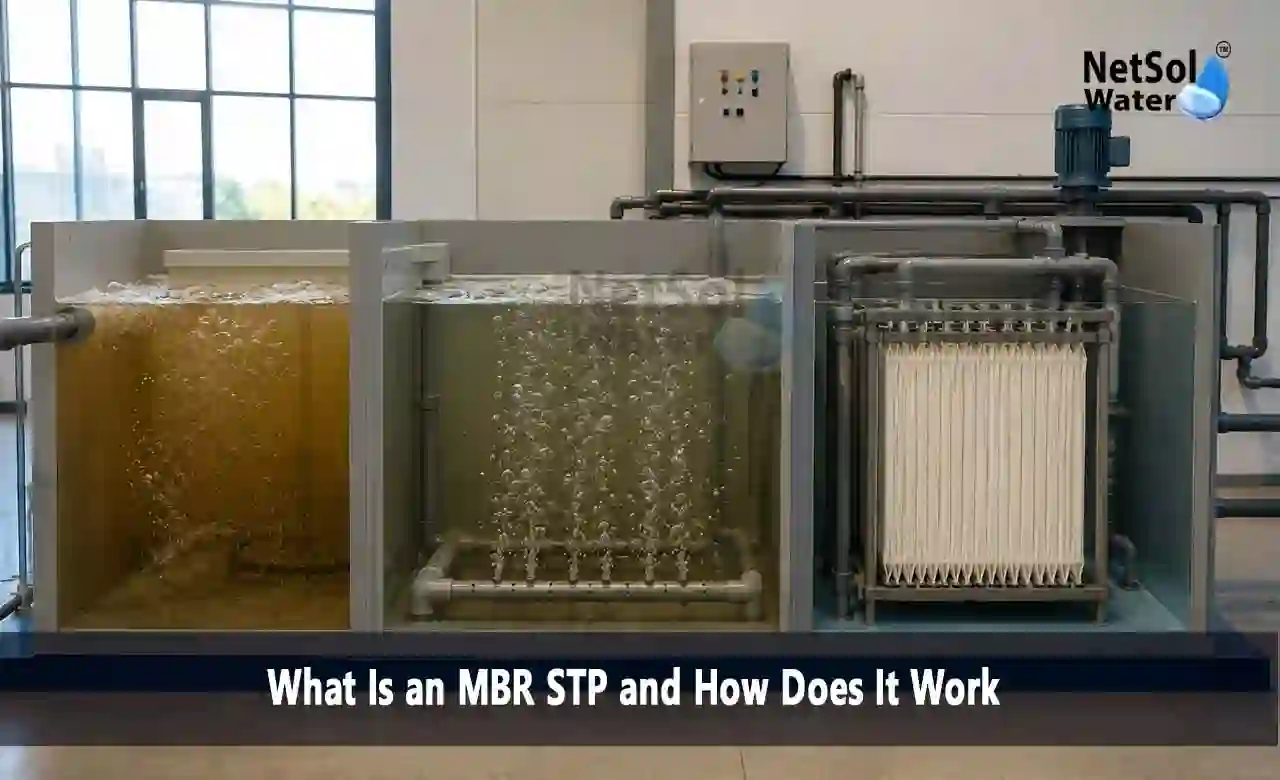
Main Components of MBR STP
An MBR sewage treatment plant is made up of a series of interconnected units, with each unit having a specific function in the treatment process.
The screening chamber filters out large items like plastic, cloth, paper and other debris that can harm equipment. The equalization tank is used to store the wastewater and to equalize flow and pollutant levels prior to treatment.
The aeration tank, or biological treatment tank, is used to contain helpful microorganisms that decompose dissolved organic material. Oxygen is continually supplied by diffusers to keep the water aerobic and to ensure the activity of the microorganisms.
A membrane tank houses submerged membrane modules, which are used to split treated water and biomass and suspended solids. Lastly, the treated water storage tank stores the purified water for reuse or safe discharge per the environment.
How Does MBR STP Work?
An MBR (membrane bioreactor) STP consists of multiple treatment stages that collectively help in efficient removal of contaminants from wastewater.
Step 1: Preliminary Screening
Sewage enters the screening chamber and the treatment process begins. Screens are used to remove large floating debris, including plastic bags, leaves, paper, cloth and other debris. This prevents the blockage or damage of pumps, pipelines and other equipment.
Screened wastewater goes into an equalization tank.
Step 2: Flow Equalization
Typical wastewater generation is variable, depending on the time of day. Equalization tank is a tank used to store incoming sewage and to give uniform flow to biological treatment process.
This aids in maintaining a constant operating condition and enhances the treatment plant's overall efficiency.
Step 3: Biological Treatment
The wastewater flows into the biological reactor from the equalization tank. In this, naturally-occurring microbes utilize the organic contaminants in the wastewater.
These microorganisms can break the biodegradable organic matter into simpler and more stable compounds by continuous aeration. In this stage, pollutants like Biochemical Oxygen Demand (BOD) and Chemical Oxygen Demand (COD) are greatly decreased.
Wastewater treatment in an MBR system is based on this biological process.
Step 4: Membrane Filtration
The mixture of biological treatment wastewater goes through submerged membrane modules. This is the part that sets MBR technology apart from traditional sewage treatment plants.
These membranes have microscopic holes, which will only allow clean water to flow through, but will keep suspended solids, bacteria, sludge, and many other contaminants inside the treatment tank.
The membranes separate the solids and liquids so no conventional secondary clarifier is needed. This leads to significantly cleaner treated water and to a smaller treatment system.
Step 5: Treated Water Collection
The treated water is stored in a treated water tank. It may be treated with further disinfection with ultraviolet (UV) light or with chlorination before reuse as needed by the project requirements.
The treated water generated by an MBR STP can be used for a variety of non-potable purposes, such as:
· Landscape irrigation
· Toilet flushing
· Cooling towers
· Washing of floors and vehicles.
· Construction activities
· Industrial utility purposes
The reuse of treated water will contribute to sustainable water management and reduce the consumption of fresh water.
Step 6: Sludge Management
The biological sludge which is an excess of biological material gradually builds up in the reactor during the treatment process. Some of this sludge is drained off every so often for additional treatment and safe disposal.
MBR technology generally results in reduced amount of excess sludge as compared with many conventional sewage treatment systems because of its extended sludge retention time. This helps to minimize sludge treatment and disposal expenses.
Why is Membrane Filtration important?
MBR sewage treatment plant membrane is the most critical element of the plant. Membranes physically separate treated water from suspended solids and microorganisms, unlike regular settling tanks.
This provides a number of significant advantages. The treated water is very low in turbidity, with very few suspended solids and has greatly reduced bacterial levels. This also ensures a steady quality even with variable wastewater flow and pollution.
For water reuse the main objective, these benefits are ideal for MBR technology.
What are the applications of MBR STPs?
MBR STPs are compact enough and highly effective to treat various residential, commercial, and industrial processes.
They are installed in a wide variety of buildings, such as apartment complexes, hotels, hospitals, educational institutions, shopping malls, office buildings, pharmaceutical industries, food processing units, airports, railway stations, industrial parks, and smart city developments, among others.
They are particularly useful in areas with limited land or in areas needing high quality recycled water.
Advantages of MBR STP
The MBR technology has some advantages over the conventional sewage treatment systems. It results in higher treated water quality, reduces installation space and facilitates wastewater reuse. Also, it effectively removes suspended solids and harmful microorganisms, but produces less excess sludge.
Modern MBR plants are fitted with automatic monitoring and controlling systems, improving the reliability of operation and decrease man power. These advantages make MBR one of the most advanced wastewater treatment technology today.
Conclusion
MBR STP is an advanced sewage treatment plant which incorporates biological treatment with membrane filtration to generate good quality treated water. Due to its efficient treatment process and small footprint, it is a popular choice for treating wastewater in today's modern world, as it is also effective in the removal of pollutants and water re-use.
MBR sewage treatment plants are capable of performing effectively in residential areas, commercial buildings, hospitals, and industrial facilities and are suitable to conserve water and comply with environmental standards. With the increased demand for sustainable water management, MBR technology will increasingly be used in the future of wastewater treatment.
Do you need an advice or assistance on selecting the best water and waste water treatment unit? We have solutions for all your problems!
Let us know your problem, our experts will make sure that it goes away.
For an assistance or related query,
Call on +91-965-060-8473 Or write us at enquiry@netsolwater.com