

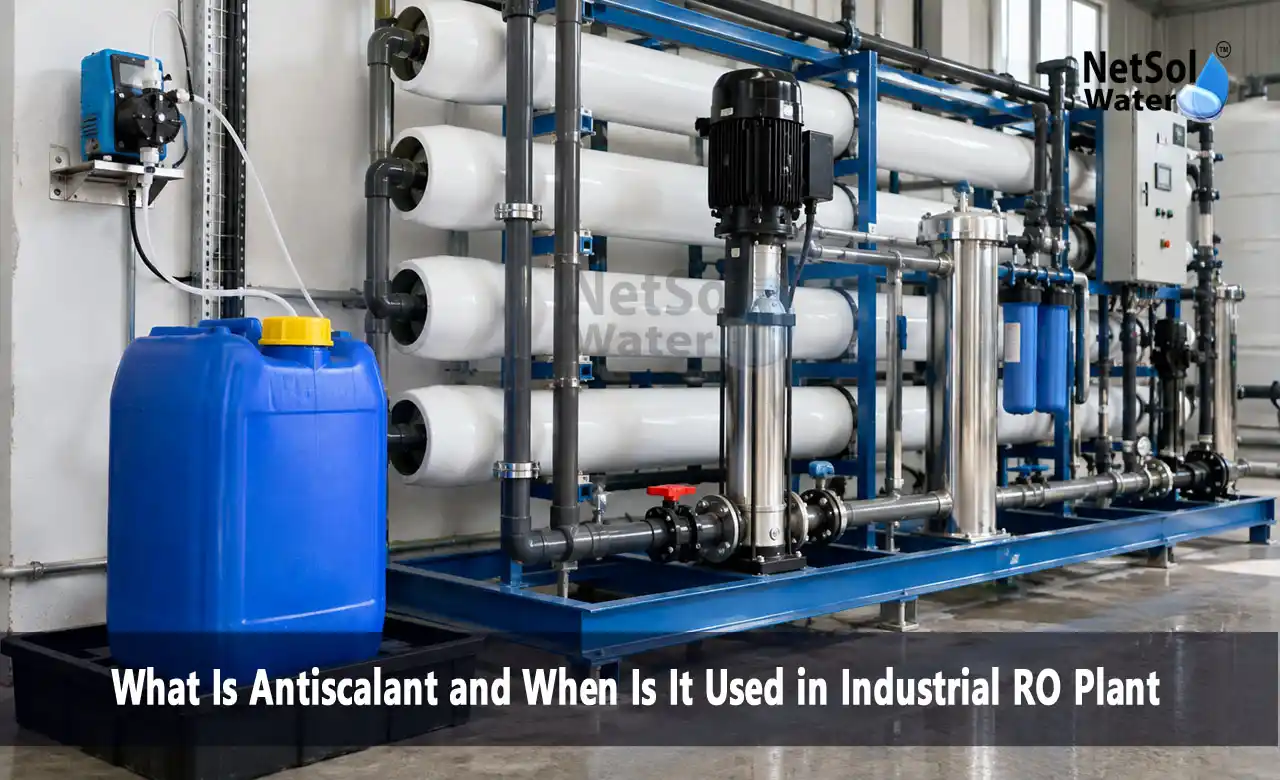
What Is Antiscalant and When Is It Used in Industrial RO Plant?
Water quality has a direct effect on industrial production. Factories need treated water for manufacturing, boilers, cooling systems and cleaning processes. In India, the demand for reliable water treatment keeps growing with the expansion of industries across cities and industrial regions. This makes industrial RO plants an important part of modern water treatment systems. These plants remove dissolved salts and other unwanted substances from feed water. Still, the RO membrane can face scaling when the feed water contains high levels of calcium, sulphates or silica.
Antiscalant helps control this issue. It works before water reaches the RO membrane, limits the formation of mineral scale, and supports steady system performance. Netsol Water works in the industrial water treatment sector in India and provides RO systems for different industrial applications. Its published system designs include antiscalant dosing before the high pressure pump and membrane stage.
What Is Antiscalant and Why Is It Important?
Antiscalant plays an important role in keeping an RO system stable. Many water sources contain dissolved minerals that become more concentrated during the RO process. As water passes through the membrane, a large part of the dissolved salts stays in the reject stream. This increases the concentration of minerals around the membrane surface. When these minerals cross their solubility limits, they can form hard deposits known as scale.
Here are a few key points that explain why antiscalant matters.
How Antiscalant Controls Scale Formation
Antiscalant is a chemical treatment that helps keep scale forming salts dispersed in the feed water. It works by interfering with the process that allows certain minerals to form and settle on the membrane surface. The exact chemical formulation can vary based on the water quality and the type of scale formation the system may face.
Calcium carbonate and calcium sulphate are common scaling concerns. Silica can also create difficult deposits under certain conditions. An effective scale control program considers the feed water chemistry before selecting the chemical and the dosing level.
Why Proper Dosing Matters
Antiscalant does not work better simply because the operator adds more chemical. The dosing rate should match the feed water quality and the design of the RO system. Operators normally use a dosing pump to inject a controlled amount of chemical into the feed line before the membrane stage. Netsol Water describes antiscalant dosing before the precision filtration and membrane process, and its published guidance also gives typical dosing ranges, explaining that the actual quantity depends on plant flow and operating time.
Correct dosing supports stable operation. It also helps avoid unnecessary chemical use, which makes proper dosing an important part of RO membrane protection.
When Is Antiscalant Used in Industrial RO Plants?
The need for antiscalant depends on feed water chemistry. Not every industrial RO plant faces the same level of scaling risk. Operators must first understand the water that enters the plant, including its hardness. Alkalinity and dissolved salts can affect scale potential, and the recovery level of the RO system also matters because higher recovery can concentrate salts further.
Here are the situations where antiscalant becomes especially useful.
High Hardness and High Dissolved Salt Water
Water with high calcium and magnesium content can create scaling pressure inside an RO system. Hardness alone does not tell the complete story. Other dissolved ions can combine with hardness minerals and form deposits under operating conditions.
Industrial systems often treat water from borewells. Surface sources or process streams can also carry a high mineral load. As the RO membrane removes water from the feed stream, the remaining water becomes more concentrated, which can increase the risk of mineral precipitation. Antiscalant helps keep these minerals from forming deposits on the membrane surface. Netsol Water specifically identifies hardness and silica as reasons for using antiscalant dosing in RO systems.
High Recovery and Challenging Feed Water
RO systems that operate at higher recovery can face a greater concentration of dissolved salts in the reject stream, which can increase the possibility of scale formation. The right approach depends on the complete water chemistry and the system design. A scale control chemical may be used along with other treatment steps such as filtration and pH adjustment.
For this reason, industrial RO plants should use antiscalant only as part of a wider pretreatment plan. A dosing system cannot correct every water quality problem on its own. Proper filtration and chemical treatment must work together to provide consistent results.
How Antiscalant Supports RO Membrane Protection
Membranes form the heart of an RO system. Their performance directly affects product water quality and system output. When scale collects on a membrane surface, it can restrict water flow, and the system may then need more pressure to maintain production. Permeate flow can also fall over time. These changes can increase operating costs and create a need for more frequent RO membrane cleaning.
This is why RO membrane protection deserves close attention. Here are the main ways antiscalant supports membrane performance.
Helps Maintain Membrane Flow
Scale can form a layer over the membrane surface. This layer acts as a barrier and makes it harder for water to pass through the membrane. As the deposit builds up, the plant may show lower permeate flow and higher pressure requirements.
Antiscalant helps control this risk before the minerals become hard deposits. It supports better movement of water through the membrane system and can help operators maintain more stable plant conditions. Netsol Water includes antiscalant dosing as part of its RO plant process before water enters the high pressure membrane stage.
Supports Longer and More Stable Operation
A well managed membrane system needs regular monitoring. Operators should track flow, pressure and treated water quality, since these can reveal changes in membrane performance. When scaling and fouling start to develop, operators may need chemical cleaning to restore performance.
Antiscalant can reduce the formation of mineral scale between cleaning cycles. It does not replace cleaning or proper pretreatment. Instead, it works as a preventive measure. Good chemical selection and proper dosing therefore contribute to reliable RO membrane protection, and they also help industries manage maintenance more effectively.
How Should Antiscalant Be Managed in an RO System?
Antiscalant management requires more than installing a dosing pump. The chemical must suit the feed water and the membrane system, and operators should also maintain a steady dosing rate. Changes in raw water quality can change the required treatment approach. A practical system begins with water testing. The test results help identify the main scaling risks, and engineers can then select a suitable antiscalant and establish the dosing requirement. Netsol Water describes dosing systems that include a chemical tank and a dosing pump, and it also explains that the chemical enters the feed stream before the RO membrane stage.
Regular observation remains important after installation. Operators should watch for changes in pressure, flow and water quality to see whether the system continues to perform as expected. A change in membrane pressure or permeate flow may signal fouling or scaling, or it may point to another pretreatment problem. Good operation depends on the complete treatment process. Antiscalant can help control scale, yet it should work with filtration, correct pressure control and regular membrane maintenance. This combined approach helps industrial RO plants deliver consistent treated water for industrial use.
Conclusion
Reliable water treatment starts with a clear understanding of water quality and operating conditions. Antiscalant can help control mineral scale before it affects the membrane. Proper selection and dosing can support stable flow and better membrane performance, and it can also form an important part of a wider membrane care program.
For industries that need dependable water treatment, the right system design matters as much as the equipment itself. Industrial RO plants should be designed around feed water quality. Required recovery and the intended use of treated water should also guide the design. Netsol Water provides industrial RO solutions and water treatment support for different applications. Contact Netsol Water to discuss your water quality requirements or to request a consultation for your RO system.
Contact Netsol Water at:
Phone: +91-9650608473, Email: enquiry@netsolwater.com