

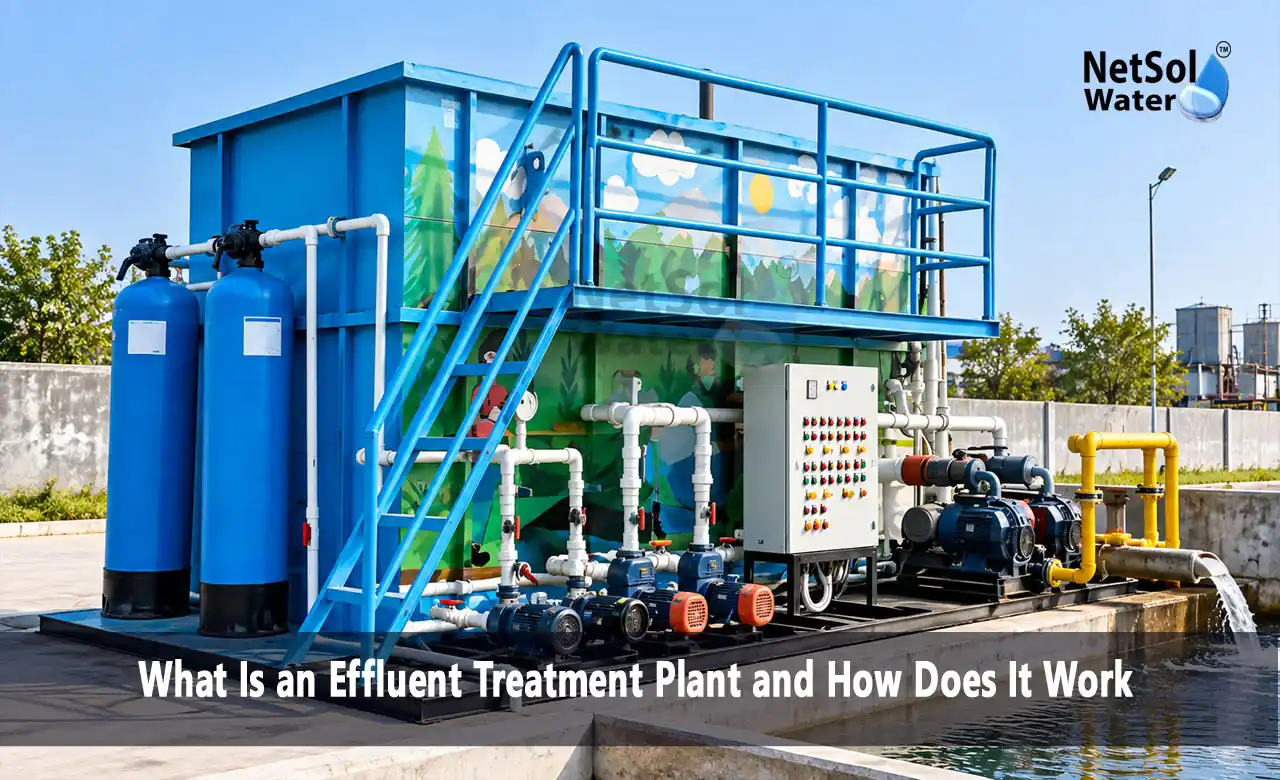
What Is an Effluent Treatment Plant and How Does It Work?
Every factory that uses water in its process ends up with wastewater. If that water goes straight into a drain, river or open land, it carries chemicals, oil and solids that harm people and nature. An effluent treatment plant, commonly called an ETP, solves this problem. It cleans industrial wastewater so that it can either be released safely or used again inside the plant.
In this blog, we explain what an ETP does, how the treatment happens stage by stage, and why more industries are making it a part of their daily operations.
Why Industries Need an Effluent Treatment Plant?
As industries grow, the volume of wastewater they produce grows with it. Untreated discharge pollutes rivers, lakes and groundwater, and the damage often reaches farms and homes downstream. Pollution control boards also expect every industry to treat its effluent before release, so skipping treatment can lead to penalties or even a shutdown.
A well-designed ETP protects you on both fronts. It keeps your discharge within legal limits, and it turns used water into a resource that can go back into cooling, cleaning or gardening. If you are comparing options, you can explore the range offered by a trusted effluent treatment plant manufacturer before finalising your setup.
How Does an Effluent Treatment Plant Work?
An ETP cleans water in stages. Each stage removes a different type of pollutant, and the water gets cleaner as it moves ahead. The basic flow has three main steps.
1. Preliminary Treatment
The plant first removes the coarse material. Screens catch plastic, rags and other large objects, while grit chambers let sand and heavy particles settle out. This step protects pumps and pipes from damage and lets the water flow smoothly into the later stages.
2. Primary Treatment
Here the goal is to remove suspended solids. The wastewater sits in a sedimentation tank where heavier particles sink to the bottom. Operators often add coagulants that bind fine particles into larger clumps, which settle faster. The settled material is drawn off, and the clearer water moves on. This stage cuts down the solid load considerably.
3. Secondary Treatment
Secondary treatment uses biology to break down dissolved organic waste. Microorganisms feed on the pollutants in the water, and aeration tanks supply the oxygen they need to do this work. Once the organic load has been consumed, a clarifier separates the cleaned water from the microbial mass.
Small units follow the same logic on a compact scale. If you run a small industry, our guide on simple effluent treatment steps for small industries is a good place to start.
Advanced Treatment Processes in an ETP
Even after secondary treatment, some impurities remain in the water. Advanced processes deal with these so that the final water meets the required standards.
1. Tertiary Treatment
This stage polishes the water. It removes nutrients such as nitrogen and phosphorus, which can trigger algae growth and harm aquatic life. Filtration and chemical treatment are used here, followed by disinfection with chlorine or ultraviolet light to kill any remaining bacteria.
2. Sludge Treatment
Every stage leaves behind solid waste known as sludge. It must be handled with care. Plants thicken it, digest it and dewater it so that the volume shrinks and disposal becomes safe and easy. In some cases, treated sludge is even converted into manure.
3. Membrane Technology
Modern plants increasingly add membrane systems such as reverse osmosis and ultrafiltration. These membranes trap extremely fine particles and dissolved salts, giving very high quality water. Industries that need premium process water, such as pharma and food units, find them especially useful.
Role of Effluent Treatment Plants in Sustainability
An ETP does more than clean wastewater. It supports the larger goal of sustainable industry in three clear ways.
. Environmental protection: Clean discharge keeps rivers, soil and aquatic life safe from industrial pollutants.
. Water conservation: Treated water can be reused for cooling, cleaning and irrigation, which lowers your freshwater demand and water bill.
. Regulatory compliance: A reliable plant helps you meet discharge norms every day and avoid legal trouble.
Choosing the Right ETP for Your Industry
No two industries generate the same effluent. A textile unit, a pharma plant and a food processor all need different designs. Capacity, space and budget matter too. Units with limited space can look at a mini effluent treatment plant, while facilities that also handle domestic waste may need a sewage treatment plant alongside their ETP.
Get the Right Water Treatment Solution
Effective wastewater management protects the environment and keeps your business compliant. Our team understands the challenges that different industries face and designs treatment systems around your exact needs. Contact Netsol Water today to discuss a customised solution, or visit our home page to see all our water and wastewater treatment plants.
Contact Netsol Water
Phone: +91-965-060-8473, Email: enquiry@netsolwater.com