

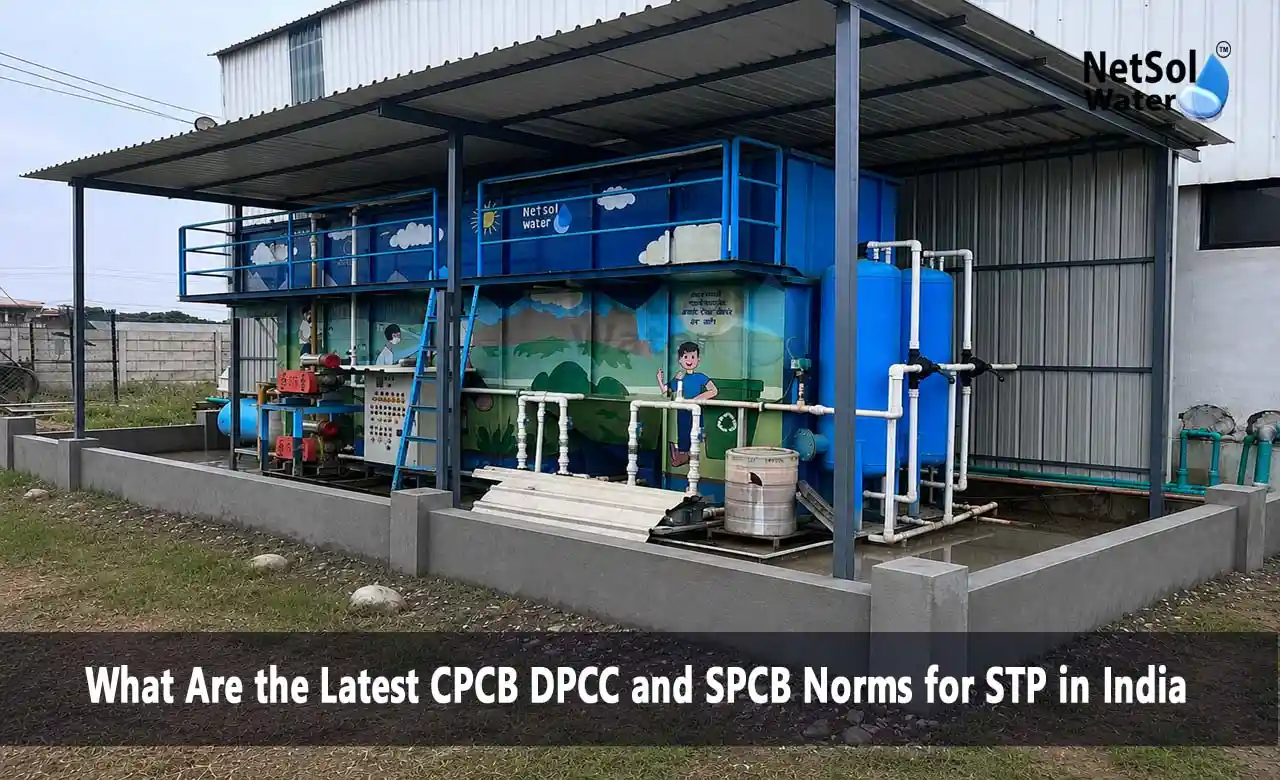
What Are the Latest CPCB, DPCC and SPCB Norms for STP in India?
Pollution control boards across India have been tightening enforcement on sewage treatment plants more than ever before. Karnataka's pollution control board has gone a step further, revising its STP outlet standards in October 2025 to some of the tightest in the country. This is not a one-off event. It reflects a nationwide shift where compliance is being checked more closely and enforced more strictly, and where “meeting the CPCB norm” often means meeting a number stricter than what most people assume.
If you own, operate, or are planning to install an STP, whether it's for a housing society, a commercial complex, a hotel, or an industrial township, you need to know exactly what standards your treated water is expected to meet. This blog breaks down the latest norms set by the Central Pollution Control Board (CPCB), the Delhi Pollution Control Committee (DPCC), and various State Pollution Control Boards (SPCBs) for the key parameters: BOD, COD, pH, oil and grease, ammonia, and phosphorus.
Why These Norms Exist?
Treated water from a STP is either discharged into a river, lake, or drain, used for irrigation, or reused for non-potable purposes like flushing and gardening. If this water still carries high levels of organic waste, chemicals, or nutrients, it can damage aquatic ecosystems, pollute groundwater, and create serious public health risks. This is exactly why pollution boards set strict numerical limits for each parameter before treated water can legally leave an STP.
Non-compliance is not treated lightly anymore. Operating without a valid Consent to Operate, or discharging water that fails these standards, can lead to penalties under the Environment Protection Act, 1986, closure orders, and in many cases, direct action from the National Green Tribunal, which has been closely monitoring STP compliance since 2015.
Understanding the Three Layers of Regulation
Before getting into the numbers, it helps to understand who sets what.
CPCB sets the national baseline standards under the Environment (Protection) Rules, 1986. These apply across the country unless a state or a specific project condition demands something stricter.
SPCBs, the pollution control boards of individual states, adopt the CPCB baseline but are free to prescribe tighter limits based on local conditions, such as a sensitive river basin, a coastal zone, or a water-stressed region. Karnataka's KSPCB and Maharashtra's MPCB are good examples of state boards that have gone beyond the national baseline for certain parameters.
DPCC, the Delhi Pollution Control Committee, functions like an SPCB for the National Capital Territory. Because of the ongoing legal attention on the Yamuna's pollution levels, Delhi has been pushed toward some of the strictest STP discharge standards in the country, and DPCC monitors operational plants every single month.
The rule to remember is simple: whichever standard is stricter, the national CPCB baseline or your specific state or city norm, is the one that applies to your plant. Always check the exact figures written on your Consent to Establish and Consent to Operate, since these are legally binding for your specific project.
| Regulatory Body | Level | Role | Notable Trait |
|---|---|---|---|
| CPCB | National | Sets baseline standards under Environment (Protection) Rules, 1986 | Applies across the country unless overridden by state/project-specific norms |
| SPCB (e.g. KSPCB, MPCB) | State | Adopts CPCB baseline, free to prescribe tighter limits | Goes beyond baseline for sensitive river basins, coastal zones, water-stressed regions |
| DPCC | NCT of Delhi (functions like an SPCB) | Sets and enforces Delhi-specific STP standards | Some of the strictest standards in the country; monitors plants monthly due to Yamuna pollution scrutiny |
Latest Norms for Key Parameters
1. BOD (Biochemical Oxygen Demand)
BOD measures the amount of oxygen microorganisms need to break down organic matter in water. A high BOD means the water still carries a heavy organic load, which depletes oxygen in rivers and lakes and harms aquatic life.
The regulatory direction over the last few years has moved firmly toward a tighter BOD limit of 10 mg/L or less for treated sewage discharged into surface water bodies, replacing the older and more relaxed limit of 30 mg/L that was common in earlier notifications. Delhi's large public STPs are being pushed toward this same 10 mg/L benchmark on a compliance timeline, and private STPs are increasingly held to this figure as a condition of their consent. Karnataka's KSPCB has already made BOD ≤ 10 mg/L its standard requirement for surface water discharge.
2. COD (Chemical Oxygen Demand)
COD measures the total amount of oxygen needed to chemically oxidise all pollutants in water, both biodegradable and non-biodegradable. It's always a higher number than BOD, since it accounts for a wider range of substances.
For treated sewage water, the commonly applied limit is COD ≤ 50 mg/L. This is considerably stricter than the older general industrial effluent standard of 250 mg/L, which applies to a different category of wastewater altogether. STPs specifically, given that their output often feeds directly into rivers or reuse systems, are increasingly expected to meet this tighter 50 mg/L figure.
3. pH
pH tells you how acidic or alkaline the treated water is. Water that is too acidic or too alkaline can harm aquatic organisms and corrode pipes and infrastructure.
The accepted range across CPCB, DPCC, and most SPCB norms is pH 6.5 to 8.5 for treated sewage discharge. This is a fairly stable parameter across regulatory bodies, since maintaining a near-neutral pH is a basic requirement of any properly functioning biological treatment process.
4. Oil and Grease
Oil and grease in treated water usually comes from kitchens, washrooms, and general domestic or commercial use. High levels can coat the surface of water bodies, block sunlight and oxygen exchange, and clog pipes and treatment equipment.
Both CPCB and SPCB norms generally cap oil and grease at 10 mg/L for treated sewage water. This limit applies uniformly, whether the water is being discharged into a water body or reused for other purposes, since oil and grease can interfere with almost any downstream use if left untreated.
5. Ammoniacal Nitrogen (Ammonia)
Ammonia in sewage comes from the breakdown of organic waste and human excreta. High ammonia levels are toxic to fish and other aquatic life, and they consume oxygen in water bodies as they get further oxidised, adding to overall pollution load.
This is one of the parameters regulators have been tightening control over recently. Along with BOD and COD, ammoniacal and total nitrogen are now part of the routine monthly sampling done by boards like DPCC for every operational STP. The commonly cited compliance figure for total nitrogen is around 10 mg/L, and achieving this consistently requires a well-designed nitrification-denitrification process within the STP, not just basic biological treatment. Plants relying on outdated or undersized treatment units often struggle specifically with this parameter, even when their BOD and COD numbers look fine.
6. Phosphorus (Phosphate as PO4)
Phosphorus, usually measured as phosphate, is another nutrient pollutant that contributes heavily to eutrophication, the process where excess nutrients cause algae to grow rapidly in water bodies, depleting oxygen and killing aquatic life.
The generally applied limit for phosphate in treated sewage water is 5 mg/L. Along with ammonia, this is one of the parameters that DPCC specifically samples every month as “dissolved phosphate” in its compliance checks for Delhi's STPs, reflecting how seriously nutrient pollution is now being treated by regulators.
Parameter Quick Reference
| Parameter | Typical Modern Limit | Older / Baseline Figure | Why It Matters |
|---|---|---|---|
| BOD | ≤ 10 mg/L | 30 mg/L (older notifications) | High BOD depletes oxygen in receiving water bodies. |
| COD | ≤ 50 mg/L | 250 mg/L (general industrial effluent standard) | Measures total oxidisable pollutant load, biodegradable + non-biodegradable. |
| pH | 6.5 – 8.5 | — | Extreme pH harms aquatic life and corrodes infrastructure. |
| Oil & Grease | ≤ 10 mg/L | — | Blocks sunlight/oxygen exchange, clogs pipes and equipment. |
| Ammoniacal/Total Nitrogen | ~10 mg/L | — | Toxic to aquatic life; consumes oxygen as it oxidises further. |
| Phosphate (PO4) | ≤ 5 mg/L | — | Drives eutrophication and algae blooms. |
Summary Table of Common Norms
| Parameter | Typical CPCB/SPCB/DPCC Limit for Treated Sewage |
|---|---|
| BOD | ≤ 10 mg/L |
| COD | ≤ 50 mg/L |
| TSS | ≤ 10 mg/L |
| pH | 6.5 – 8.5 |
| Oil & Grease | ≤ 10 mg/L |
| Ammoniacal/Total Nitrogen | ≤ 10 mg/L |
| Phosphate (PO4) | ≤ 5 mg/L |
| Fecal Coliform | ≤ 100 MPN/100 mL |
These figures represent the current direction across CPCB and most SPCBs, including DPCC, for discharge into surface water bodies. However, exact numbers can vary slightly depending on your project category, receiving water body, and state-specific notifications, so this table should be treated as a general reference rather than a substitute for the figures on your own Consent to Operate.
Why the Numbers Sometimes Differ From State to State?
You may come across different figures for the same parameter depending on where you look, and this isn't necessarily an error. India's discharge standards for STPs have gone through a fair amount of regulatory change over the past several years, including relaxation, legal challenges, and reinstatement of stricter norms. On top of that, states with sensitive ecosystems, such as coastal areas or major river basins, are permitted to set tighter limits than the national baseline.
This is exactly why Karnataka's KSPCB and Delhi's DPCC apply some of the strictest STP outlet standards in the country, while other states may still be operating closer to the general CPCB baseline. The safest approach for any STP owner or operator is to always confirm the exact applicable numbers with their local pollution control board rather than relying on a generic figure found online.
What Non-Compliance Actually Costs?
The Delhi example from late 2025 makes the financial risk very clear. Fines running into lakhs per plant, formal show-cause notices, and public scrutiny are now a real and recurring consequence, not a rare exception. Beyond direct penalties, non-compliant plants also face closure orders, legal proceedings before the National Green Tribunal, and reputational damage, particularly for housing societies, commercial developments, and municipal bodies whose STPs are meant to be functioning continuously.
For a plant owner, this means treating compliance as an ongoing operational responsibility, not a one-time approval you get when the STP is commissioned. Regular internal testing, proper maintenance of biological treatment units, and timely upgrades when a plant starts drifting out of spec are far cheaper than dealing with penalties after the fact.
How to Stay Compliant?
Meeting these norms consistently isn't just about having the right STP technology installed, it's about running it correctly every single day. A few practices go a long way:
Regular internal water testing for all key parameters, not just BOD and COD, helps catch problems like rising ammonia or phosphate levels before a regulatory inspection does. Routine maintenance of aeration systems, biological reactors, and filtration units keeps treatment efficiency stable. For larger STPs above 50 KLD, installing online monitoring sensors linked to the pollution board's server, as several states now require, gives real-time visibility into performance and helps avoid surprises. Finally, reviewing your Consent to Operate periodically ensures you're always working against the current applicable limits, since these standards do get revised from time to time.
TSS (Total Suspended Solids) and Fecal Coliform: The Two Parameters People Often Miss
Most conversations around STP compliance focus heavily on BOD and COD, but two other parameters are checked just as strictly, and plants often fail here even when their BOD and COD numbers look fine.
. Total Suspended Solids (TSS)
TSS measures the solid particles, both organic and inorganic, that remain suspended in treated water. High TSS makes water look cloudy, reduces sunlight penetration in the receiving water body, and can settle downstream, smothering aquatic habitats.
The standard limit applied across CPCB, DPCC, and most SPCB notifications is TSS ≤ 10 mg/L for treated sewage discharged into surface water. This figure is closely tied to how well the final filtration or clarification stage of a STP is functioning. A plant with a well-maintained tertiary filter, such as a sand filter or a membrane unit, rarely struggles with TSS. Plants with worn-out or poorly cleaned filtration media, on the other hand, are among the most common TSS failures flagged during inspections.
. Fecal Coliform
Fecal coliform indicates the presence of disease-causing bacteria from human waste. Even after biological treatment reduces BOD and COD to acceptable levels, water can still carry harmful pathogens unless it goes through proper disinfection.
The widely applied limit is fecal coliform ≤ 100 MPN per 100 mL for treated water meant for surface water discharge or reuse. This is achieved mainly through chlorination, UV disinfection, or ozonation at the final stage of treatment. Skipping or under-dosing this disinfection step is one of the most common reasons STPs fail on this parameter, even when every other number on the report looks compliant.
Norms for Reuse of Treated Water (Not Just Discharge)
Discharge into a river or drain is only one possible destination for treated water. In water-stressed cities, pollution boards and urban development authorities are actively pushing STP operators toward reuse instead of discharge, and the expected quality for reuse can be just as strict, sometimes stricter, depending on the application.
Common reuse categories and their general quality expectations include:
Flushing systems: Treated water used for toilet flushing through dual plumbing typically needs to be free of odour and visible solids, with BOD and TSS kept low enough to prevent staining or fouling of fixtures.
Gardening and landscaping: Water used for irrigation within a property needs to be relatively low in BOD and free of harmful pathogens, since it comes into contact with soil, plants, and sometimes people directly.
Cooling towers and washing: Treated water reused for cooling systems or vehicle washing needs low TSS and controlled hardness to avoid scaling and equipment damage.
Construction use: Many urban local bodies now permit or even mandate use of treated sewage water for construction activities like curing and dust suppression, provided basic quality parameters are met.
Several state policies, including Delhi's, now explicitly state that treated effluent should be reused to the maximum extent possible, with the long-term goal being zero discharge from individual STPs wherever feasible. This shift matters for anyone designing a new plant today, since building in reuse infrastructure from the start is far cheaper than retrofitting it later once local rules tighten further.
| Reuse Category | Key Quality Requirement |
|---|---|
| Flushing systems (dual plumbing) | Free of odour and visible solids; low BOD and TSS to prevent staining or fouling of fixtures. |
| Gardening and landscaping | Low BOD; free of harmful pathogens, since it contacts soil, plants, and sometimes people. |
| Cooling towers and washing | Low TSS; controlled hardness to avoid scaling and equipment damage. |
| Construction use (curing, dust suppression) | Basic quality parameters met, as permitted/mandated by urban local bodies. |
Consent to Establish and Consent to Operate: What the Process Actually Involves
Every STP in India needs formal approval from its SPCB or DPCC before construction and before it starts functioning. Understanding this two-step process helps avoid delays and compliance issues later.
Consent to Establish (CTE) is the first approval, granted before construction begins. It confirms that the proposed STP design, capacity, and technology are acceptable to the pollution board for the intended discharge or reuse purpose.
Consent to Operate (CTO) is granted after the plant is built and commissioned, once the board is satisfied that the treated water meets prescribed standards during a trial run. This is the document that specifies the exact numerical limits your plant must maintain going forward, and it needs periodic renewal.
A few practical points worth keeping in mind during this process:
. CTE and CTO applications typically require detailed technical drawings, expected inlet and outlet water quality, and the treatment technology proposed.
. Only CPCB-approved treatment technologies, such as Activated Sludge Process, Moving Bed Biofilm Reactor, or Membrane Bioreactor systems, are generally accepted for new STPs.
. CTO renewal usually requires submission of recent lab reports confirming the plant continues to meet its prescribed discharge standards.
. Operating without a valid CTO, or continuing to operate after it lapses, is treated as a serious violation and can invite the same penalties as discharging non-compliant water.
| Stage | When Granted | What It Confirms |
|---|---|---|
| Consent to Establish (CTE) | Before construction begins | Proposed STP design, capacity, and technology are acceptable for the intended discharge/reuse purpose. |
| Consent to Operate (CTO) | After the plant is built and commissioned, once trial-run water quality is satisfactory | The exact numerical limits the plant must maintain going forward; needs periodic renewal. |
Why STPs Commonly Fail to Meet These Norms?
Even well-designed plants can drift out of compliance over time. Based on patterns seen across inspection reports and enforcement actions, a few root causes show up repeatedly:
Undersized equalisation tanks: When a plant doesn't have enough buffer capacity to handle morning and evening peak flows, the biological treatment stage gets overloaded, and effluent quality drops during peak hours even if average daily numbers look acceptable.
Poor aeration and biological process control: Ammonia and BOD removal both depend heavily on healthy microbial activity, which needs consistent aeration and the right retention time. Underpowered blowers or overloaded reactors are a frequent cause of ammonia and BOD spikes.
Neglected filtration and disinfection stages: Since these are the final steps before discharge, any lapse here directly shows up as high TSS or fecal coliform in test reports, even when earlier treatment stages are working fine.
Irregular sludge removal: Excess sludge that isn't removed on schedule can carry over into the treated water stream, pushing up both TSS and BOD readings.
Lack of trained operators: Many smaller STPs, especially in housing societies and standalone commercial buildings, are run without dedicated, trained staff. Day-to-day process adjustments, like tweaking aeration or dosing, often get missed as a result.
Skipping routine internal testing: Plants that only test water quality when a regulatory inspection is due often discover problems too late to fix them before facing penalties.
Recognising which of these issues applies to your plant is usually the fastest way to fix a recurring compliance problem, rather than assuming the entire treatment system needs an overhaul.
| Common Root Cause | Parameter(s) Usually Affected |
|---|---|
| Undersized equalisation tanks | Overall effluent quality during peak flow hours |
| Poor aeration and biological process control | Ammonia, BOD spikes |
| Neglected filtration and disinfection stages | TSS, Fecal Coliform |
| Irregular sludge removal | TSS, BOD |
| Lack of trained operators | Day-to-day process adjustments across all parameters |
| Skipping routine internal testing | Problems detected too late, across all parameters |
Choosing the Right STP Technology to Meet Current Norms
Not every treatment technology delivers the same consistency against today's tighter standards, particularly for ammonia and phosphorus removal. A quick comparison of commonly used technologies can help with planning a new plant or upgrading an existing one.
1. Activated Sludge Process (ASP)
This is one of the oldest and most widely used biological treatment methods in India. It works well for meeting standard BOD and COD limits but often needs additional process stages, such as extended aeration or a separate nitrification tank, to reliably bring ammonia down to current strict limits.
2. Moving Bed Biofilm Reactor (MBBR)
MBBR uses free-floating media inside the aeration tank to support a larger population of microorganisms in a smaller footprint. It generally handles BOD, COD, and ammonia removal more consistently than basic ASP systems, and has become a popular choice for new installations, including compact plants for residential and commercial buildings.
3. Sequencing Batch Reactor (SBR)
SBR systems treat wastewater in timed batches within a single tank, cycling through aeration, settling, and decanting phases. This gives operators more control over each stage, which can help with consistent ammonia and nitrogen removal, though it requires more careful monitoring of cycle timings.
4. Membrane Bioreactor (MBR)
MBR combines biological treatment with membrane filtration, producing very high-quality treated water with low TSS and low BOD, often good enough for direct reuse without additional tertiary treatment. It comes at a higher capital and operating cost but is increasingly chosen for projects where reuse is a priority or where space is limited.
The right choice depends on your site's space constraints, budget, expected inlet water quality, and whether reuse is a priority alongside discharge compliance. For most new projects today, given how strict ammonia and TSS norms have become, technologies with built-in nitrification capability and a reliable final filtration stage are generally a safer long-term choice than older, more basic systems.
| Technology | Strengths | Considerations |
|---|---|---|
| Activated Sludge Process (ASP) | Well-established, meets standard BOD/COD limits | Often needs extended aeration or a separate nitrification tank for strict ammonia limits |
| Moving Bed Biofilm Reactor (MBBR) | Consistent BOD, COD, and ammonia removal; smaller footprint | Popular for new residential/commercial installations |
| Sequencing Batch Reactor (SBR) | More operator control over each treatment stage; helps consistent ammonia/nitrogen removal | Requires careful monitoring of cycle timings |
| Membrane Bioreactor (MBR) | Very high-quality output (low TSS, low BOD); often reuse-ready without tertiary treatment | Higher capital and operating cost |
A Quick Compliance Checklist for STP Owners
If you already operate a STP, running through this checklist periodically can help catch compliance risks early:
. Is your Consent to Operate current, and does it match your plant's actual capacity and discharge point?
. Are BOD, COD, TSS, pH, oil and grease, ammonia, and phosphate being tested internally at a regular interval, not just before inspections?
. Is your equalisation tank sized correctly for peak flow, not just average daily flow?
. Are aeration blowers, diffusers, and biological reactors being maintained on a fixed schedule?
. Is sludge being removed and disposed of as per your board's requirements, rather than being allowed to accumulate?
. Is your disinfection stage, whether chlorination, UV, or ozonation, functioning and dosed correctly at all times?
. If your plant is above 50 KLD, do you have online monitoring sensors installed and linked to your board's server, as required in several states?
. Are your operators trained specifically on your plant's treatment process, not just general maintenance?
Going through this list once a quarter, rather than only when a renewal or inspection is due, is one of the simplest ways to avoid the kind of penalties several Delhi STPs faced in late 2025.
Final Thoughts
The direction of India's STP discharge norms is clear: tighter limits, closer monitoring, and stricter enforcement, whether you're looking at CPCB's national baseline, DPCC's Delhi-specific standards, or SPCB's state-level norms. BOD and COD limits have moved firmly toward 10 mg/L and 50 mg/L respectively for most STPs, pH is expected to stay in a stable neutral range, and nutrient parameters like ammonia and phosphorus are now under active monthly scrutiny in cities like Delhi.
If you're setting up a new STP or upgrading an existing one, it's worth working with a team that stays current with these evolving norms and can design your treatment process to comfortably meet them, rather than just scrape by. Given how actively boards like DPCC and KSPCB are enforcing these standards today, building in a safety margin is a far better strategy than aiming for the bare minimum.
FAQs
Q1. What is the current CPCB limit for BOD in treated sewage water?
The commonly applied and increasingly enforced limit is BOD ≤ 10 mg/L for discharge into surface water bodies, though older notifications with a 30 mg/L limit are still referenced in some contexts. Always confirm the figure on your specific Consent to Operate.
Q2. Are DPCC norms stricter than CPCB norms?
Yes, in practice. Because of ongoing legal attention on the Yamuna's pollution, DPCC applies tighter discharge standards and monitors Delhi's STPs on a monthly basis, often holding plants to stricter figures than the general CPCB baseline.
Q3. What happens if a STP fails to meet these norms?
Non-compliant plants can face environmental compensation fines, show-cause notices, closure orders, and action from the National Green Tribunal. Recent penalties in Delhi have gone up to INR29 lakh for a single non-compliant plant.
Q4. Do all states in India follow the same STP discharge standards?
No. CPCB sets the national baseline, but SPCBs and bodies like DPCC can prescribe stricter limits based on local environmental sensitivity. States like Karnataka and cities like Delhi currently apply some of the tightest standards in the country.
Q5. How often should treated water be tested for compliance?
Regulators like DPCC test major STPs monthly, and larger plants above 50 KLD are increasingly required to install online monitoring. Plant operators should also carry out their own internal testing regularly, rather than waiting for a scheduled regulatory inspection.