

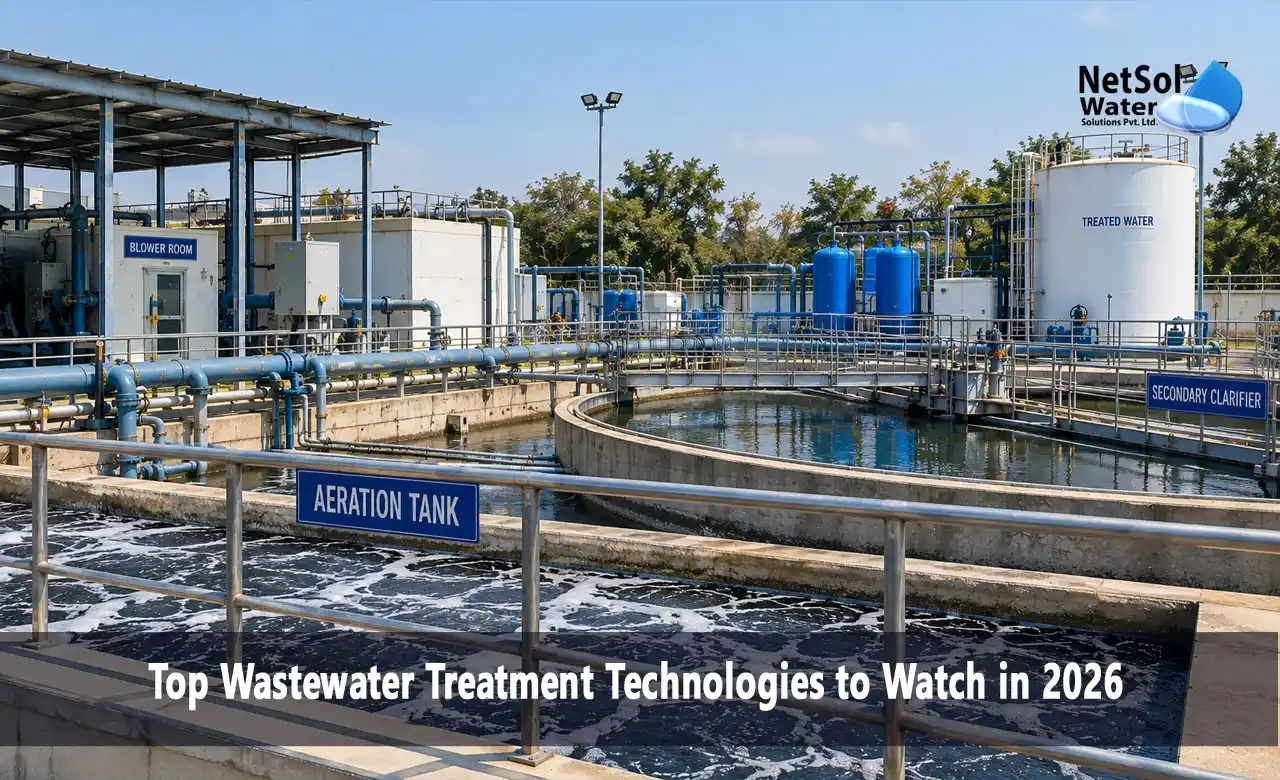
Top Wastewater Treatment Technologies to Watch in 2026
Wastewater management is changing as cities grow and industries use more water. This shift makes wastewater treatment technologies important for India. The country has large urban centres and fast-growing industrial areas that need better ways to manage used water. Greater Noida is known for planned urban growth and industrial development. Such areas need treatment systems that can handle changing loads and support safe water reuse. Modern wastewater treatment technologies now aim to do more than remove waste before discharge. They also focus on stable water quality and lower energy use. They aim to make plant control easier. Netsol Water is the leading name in water and wastewater treatment in India. The company offers solutions for sewage treatment and industrial effluent treatment. In 2026 the focus is moving toward systems that can treat harder pollutants and recover more useful water. Let us look at the key developments that deserve attention.
Smart Monitoring and Automated Treatment
Smart monitoring matters because wastewater flow and pollution levels can change during the day. A fixed plant setting may not give the same result under every condition. Modern control systems can watch the process and adjust equipment when conditions change. This can help operators keep treatment stable while using energy and chemicals in a more controlled way. Research published in 2026 shows that AI is gaining attention for real-time monitoring and process control in industrial wastewater treatment. Let us have a look at some key changes in this area.
. Real-Time Sensors and Process Control
Sensors can track pH and flow and dissolved oxygen and turbidity and temperature. These readings can reach a central control system without delay. Operators can then adjust aeration and pumps and chemical dosing when the wastewater changes. This can help avoid over-treatment and can also help the plant respond to sudden load changes. Real-time data gives teams a clear view of how the plant works through the day. It can also make fault finding easier. When plants collect useful data over time they can compare normal operation with unusual events. This helps teams act early instead of waiting for a poor test result. It also gives operators a stronger base for daily plant decisions.
. AI and Digital Twin Systems
AI can study large amounts of plant data and find patterns that may be hard to see through manual checks. It can support decisions on aeration and dosing and equipment use. Digital twin systems can create a virtual model of a treatment plant. Teams can use that model to test process changes before they make them on site. A 2026 review found strong growth in research on AI for wastewater treatment. It also points to predictive control and process optimisation as major areas of use. These tools still need good data and human review. They work best as support systems for trained plant teams. This approach can improve plant control without removing the need for experienced operators.
Advanced Membrane Treatment
Membrane treatment continues to attract attention because it can produce high-quality water for reuse. Membranes can also support compact plant designs when space is limited. Their use is growing as researchers test new materials and new operating methods. At the same time membrane fouling and energy demand remain important concerns. Research published in 2026 is examining next-generation membrane systems and ways to improve their long-term use. Let us have a look at some membrane options that may see wider use.
. Membrane Bioreactors
A membrane bioreactor combines biological treatment with membrane filtration. The biological stage breaks down organic matter. The membrane then separates treated water from suspended solids and microorganisms. This process can produce clear effluent for suitable reuse after the needed polishing and disinfection steps. MBR systems can also work well where land is limited. Their main challenges include fouling and energy demand and cleaning needs. New work in 2026 is looking at better membrane designs and new operating methods. One recent study on a vibrating MBR reported improved nutrient removal and higher resistance to fouling than a conventional aerated MBR in a full-scale trial.
. Ultrafiltration and Hybrid Membrane Systems
Ultrafiltration can remove fine suspended matter before water moves to later treatment stages. A plant can combine ultrafiltration with reverse osmosis and biological treatment and other polishing steps. These hybrid systems can match each stage with a clear treatment goal. That can help protect later membranes and may improve overall process control. New research is also testing membrane systems that work with biological films and other advanced processes. This area matters for industries that need steady water quality for reuse. The final design still depends on the incoming water quality and the required flow rate and the intended use of treated water.
Advanced Oxidation, Resource Recovery and Zero Liquid Discharge
Some industrial wastewater contains compounds that biological treatment cannot remove with ease. Other streams have high salt levels or persistent pollutants that need extra treatment. Advanced oxidation and electrochemical treatment and zero liquid discharge can help in these cases. At the same time industries are looking at wastewater as a source of recoverable water and useful materials. Research in 2026 shows stronger interest in advanced oxidation and electrochemical systems as well as resource recovery. Let us have a look at the main developments.
. Advanced Oxidation Processes
Advanced oxidation processes use highly reactive conditions to break down difficult pollutants. These systems can use ozone and ultraviolet light and peroxide-based methods. Engineers may combine them with biological or membrane treatment to improve overall removal. The best process depends on the pollutant type and the chemistry of the wastewater. A 2026 review highlights growing work on combined treatment systems for wastewater with complex pollution. These systems can help when standard treatment does not achieve the needed result. Careful design is still needed because chemical demand and energy use and possible by-products can affect the total cost. The process should match the actual wastewater rather than follow a fixed design for every site.
. Electrochemical Treatment
Electrochemical treatment uses electricity and electrode reactions to change or remove pollutants. Researchers are studying it for difficult compounds and for resource recovery. A 2026 review shows that electrochemical advanced oxidation is moving toward both pollutant removal and recovery of useful chemicals and materials. This makes the approach interesting for industries that want more value from wastewater. The method still faces issues such as power use and electrode life and operating cost. Its practical value becomes stronger when engineers select it for a specific wastewater stream rather than use it as a general solution. Better process selection can also help control energy use and improve long-term operation.
. Water Reuse and Zero Liquid Discharge
Water reuse is becoming a key goal for many treatment plants. Treated water can serve uses such as cooling and flushing and irrigation and some industrial processes when it meets the required quality. Zero liquid discharge can take this further by recovering water and leaving little or no liquid waste for discharge. Netsol Water offers ZLD solutions as part of its industrial wastewater treatment services. Its treatment range also includes biological systems and tertiary treatment such as filtration and reverse osmosis. ZLD can help sites with strict discharge limits. It can also need more energy and careful handling of concentrated solids. The right choice depends on the water quality and site conditions and the reuse target. These wastewater treatment technologies can help industries move toward better water recovery when the design matches the actual need.
Conclusion
Future water management will need treatment systems that do more with less waste and better control. Smart automation can support steady plant operation. Membrane systems can help produce high-quality water in compact layouts. Advanced treatment can address difficult pollutants. Reuse and ZLD can help industries manage limited water supplies with greater care. No single process fits every wastewater stream. The right solution should match the pollutant load and the site conditions and the required end use. Choosing wastewater treatment technologies based on real plant needs can support better performance and stronger long-term value. Netsol Water can help businesses assess these needs and select a practical treatment path.
For more information on wastewater treatment technologies contact Netsol Water and request a consultation. A detailed review of your wastewater can help identify the right process and the right plant design for your goals. Speak with the team to discuss treatment and reuse and compliance needs.
Phone: +91-9650608473, Email: enquiry@netsolwater.com