

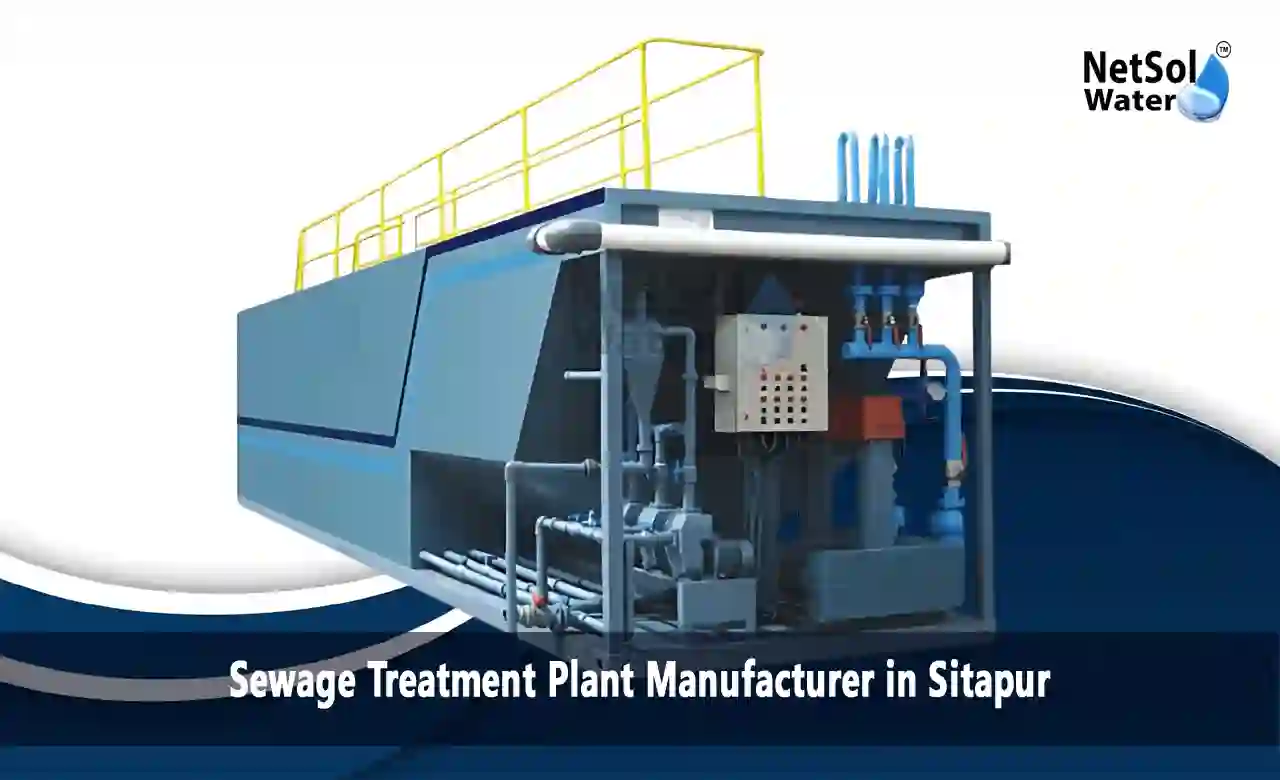
Sewage Treatment Plant Manufacturer in Sitapur
Sitapur is in the middle of a significant development phase. Residential colonies, educational institutions, healthcare facilities, and commercial markets are expanding across the district. Each new development adds residents, students, patients, and shoppers - and every one of them generates sewage that must be treated.
Untreated sewage is not a minor inconvenience. It contaminates groundwater used for drinking, spreads water-borne diseases, creates persistent odour and hygiene issues, and triggers National Green Tribunal penalties for developers and institutions that fail to comply with mandatory STP requirements.
A properly designed sewage treatment plant (STP) transforms this liability into an asset. Treated water can be reused for flushing, gardening, and construction - reducing fresh water dependency and ongoing water costs. Choosing the right STP manufacturer in Sitapur is the first and most important decision in making this work.
About Netsol Water
Netsol Water is an ISO-certified wastewater treatment company with 1,500+ completed projects across India. The company designs, manufactures, installs, and maintains sewage treatment plants for residential complexes, hospitals, schools, hotels and commercial developments in Uttar Pradesh.
What makes Netsol Water different is the combination of technology flexibility and local project delivery capability. The company offers five core STP technologies - Extended Aeration, SAFF, SBR, MBBR, and MBR - and selects the right one based on your site's space, sewage characteristics, treated water requirements, and budget.
Netsol Water's STP capacity range starts at 1 KLD for small standalone buildings and extends to 100 MLD for municipal-scale projects, ensuring the right system regardless of project scale.
Also Read: STP solutions across Uttar Pradesh
Why NGT Compliance Matters for Sitapur Property Developers and Institutions
The National Green Tribunal has issued clear directives requiring STPs for all residential buildings above 50 dwelling units or 20,000 sq. m built-up area, commercial buildings above 20,000 sq. m, and standalone institutions generating more than 10 KLD of sewage. In Uttar Pradesh, UPPCB enforces these directives at the state level.
Non-compliance consequences are serious:
• Financial penalties up to ?50,000 per day for NGT violations
• UPPCB Consent to Operate (CTO) rejection or cancellation for non-compliant properties
• Reputational damage for developers and institutions during project marketing
• Legal proceedings initiated by neighbouring residents or local authorities
Engaging a compliant STP manufacturer like Netsol Water ensures your system is designed to meet these requirements before installation - not after a notice arrives.
STP Technologies Available for Sitapur Projects
1. Extended Aeration (EA)
Extended Aeration is the most widely installed STP technology in India due to its operational simplicity and reliability. Sewage stays in the aeration tank for 16–24 hours, giving aerobic bacteria sufficient time to break down organic matter thoroughly. Very low sludge production compared to other biological processes. Best for housing societies, schools, and buildings where operator skill level is limited.
2. Sequential Batch Reactor (SBR)
SBR operates in timed cycles within a single tank, eliminating the need for multiple separate treatment chambers. This results in a significantly smaller civil footprint - important in Sitapur's densely developed areas. SBR plants achieve excellent BOD, COD, and nutrient removal, and can handle variable daily flows without losing performance.
3. Moving Bed Biofilm Reactor (MBBR)
MBBR uses plastic biofilm carriers in the aeration tank to dramatically increase the biological treatment capacity per cubic metre. This allows a much smaller aeration tank to achieve the same treatment performance as a larger Extended Aeration system. Ideal for hospitals, hotels, and multi-story commercial complexes where space is limited and treated water quality requirements are high.
4. Membrane Bioreactor (MBR)
MBR integrates biological treatment with hollow-fibre membrane filtration, producing treated water of much higher quality than standard secondary treatment. The permeate is virtually free of bacteria and suspended solids, suitable for direct use in toilet flushing or landscape irrigation without further polishing. Preferred when treated water reuse is a key project objective.
How a Sewage Treatment Plant Works?
1 - Raw Sewage Collection: Sewage from toilets, kitchens, and drains is collected in an equalization tank that stabilises variable flow rates throughout the day.
2 - Screening: Bar screens remove large solids - rags, plastics, paper - that would damage pumps and treatment equipment.
3 - Primary Settlement: Heavier solids sink to the bottom of a settling tank as primary sludge. Oils and fats are skimmed from the surface.
4 - Biological Treatment: Aerobic bacteria in the aeration tank consume dissolved and suspended organic matter, reducing BOD by 85–97%.
5 - Secondary Clarification: Treated water and biological sludge are separated. Sludge is recycled to the biological tank or sent to the sludge treatment section.
6 - Tertiary Polishing: Sand filtration and UV disinfection produce final treated water meeting CPCB and NGT norms for safe reuse or discharge.
STP Applications in Sitapur
1. Residential Complexes and Housing Societies
Any residential complex with 50 or more dwelling units in Sitapur is legally required to install an STP under NGT directives. Treated water from the STP can be reused for common area gardening, horticulture, and toilet flushing - reducing the society's fresh water bill by 30–40% annually.
2. Hospitals and Healthcare Facilities
Hospitals generate wastewater that contains pharmaceutical residues, disinfectants, and pathogenic microorganisms. A properly designed STP with enhanced disinfection (UV + chlorination) ensures hospital wastewater is treated to safe discharge standards without contaminating the surrounding environment.
3. Schools and Educational Campuses
Residential schools, colleges, and training institutes generate consistent sewage loads from students, staff, and campus operations. Mid-capacity Extended Aeration or SBR STPs are cost-effective, easy to operate, and reliable for educational campuses in Sitapur.
4. Hotels and Hospitality Properties
Hotels in Sitapur generate 100–250 litres of wastewater per guest per day. An STP allows this water to be recycled for landscape irrigation and toilet flushing, reducing municipal water dependency and operational costs. MBBR and SBR technologies are preferred for hotel applications.
STP Plant Costs in Sitapur - Realistic Reference Ranges
• 1 KLD STP (small residential/standalone building): INR4 lakh to INR6 lakh
• 5 KLD STP (school/small hotel): INR6 lakh to INR9 lakh
• 10 KLD STP (hospital/housing society): INR9 lakh to INR14 lakh
• 25 KLD STP (large housing complex/hotel): ?INR4 lakh to INR28 lakh
• 50 KLD STP (large institution/commercial complex): INR28 lakh to INR45 lakh
MBR-based plants cost approximately 25–35% more than Extended Aeration plants for the same capacity due to membrane costs. However, MBR plants deliver significantly better treated water quality and lower post-treatment footprint. Technology selection should balance capital cost against treated water quality requirements and reuse targets.
Top 3 STP Manufacturers Serving Sitapur
1. Netsol Water
Netsol Water is the leading STP manufacturer serving Sitapur with multi-technology capability (EA, SBR, MBBR, MBR, SAFF), a project range from 1 KLD to 100 MLD, and NGT/UPPCB-compliant designs. Full AMC support and operator training ensure long-term performance after commissioning.
2. VA Tech Wabag
VA Tech Wabag is a global water treatment company with India operations offering sophisticated STP solutions for large-scale and institutional applications. Better suited for high-volume, complex projects requiring advanced treatment technology. Service responsiveness may be lower for smaller projects in Sitapur.
3. Thermax Limited
Thermax is an established Indian industrial solutions company offering sustainable wastewater treatment systems. Strong capability for large industrial and institutional projects. Primarily serves larger projects where technical complexity and project value justify engagement.
Conclusion
Sewage treatment in Sitapur is both a legal obligation and a genuine operational opportunity. A properly designed STP protects your project from NGT penalties, enables water reuse, and adds genuine green infrastructure value to any development.
Netsol Water's engineering depth, technology range, and commitment to compliance make it the most reliable STP manufacturer for Sitapur's growing development market. Connect today for a free site assessment and project-specific STP design proposal.
Talk to Netsol Water today - get a free consultation and STP design proposal for your Sitapur project.
FAQs - Sewage Treatment Plant Manufacturer in Sitapur
Q1. Is an STP mandatory for all buildings in Sitapur?
Under NGT directives, STPs are mandatory for residential buildings above 50 dwelling units or 20,000 sq. m, and commercial/institutional properties above 20,000 sq. m. UPPCB enforces these requirements in Sitapur. Smaller buildings may also require STPs based on local development authority conditions and municipal regulations.
Q2. What is the most affordable STP technology for a housing society?
Extended Aeration is typically the most cost-effective STP technology for housing societies due to low chemical input, simple operation, and reliable performance with untrained operators. SBR is a good alternative when space is limited. MBR is recommended when high-quality treated water for toilet flushing reuse is a priority.
Q3. How much water can an STP recover for reuse?
A well-designed STP can recover 85–90% of input sewage as reusable treated water. The remaining 10–15% is lost through evaporation and sludge moisture. For a housing society using 10 KLD of water, the STP can generate approximately 8–9 KLD of treated water daily for gardening and flushing reuse.
Q4. Does Netsol Water handle STP installation and commissioning in Sitapur?
Yes. Netsol Water provides end-to-end project delivery in Sitapur including site assessment, system design, civil design recommendations, equipment supply, installation, testing, and commissioning. Post-commissioning AMC services and operator training are also available for complete project support.
Q5. What maintenance does an STP require?
STPs require daily operator checks (air flow, pH, DO levels), weekly equipment inspection, monthly sludge removal, bi-annual or annual mechanical servicing of pumps and blowers, and periodic membrane cleaning (for MBR plants). An AMC with Netsol Water covers all scheduled maintenance activities and emergency response.
Q6. How is STP sludge disposed of?
STP sludge is dewatered using filter presses or centrifuges to reduce volume and moisture content. The resulting sludge cake is then disposed of at UPPCB-authorised solid waste facilities, used as land application (agriculture), or converted to manure compost where regulations permit. Proper sludge disposal is a key compliance requirement.
Q7. Can I install an STP in a completed building?
Yes, but retrofitting is more complex and costly than installing during construction. Netsol Water designs compact, space-efficient STP configurations suitable for retrofit installations in existing buildings, basements, and rooftop areas. Site assessment determines the most practical layout and technology for retrofit projects.