

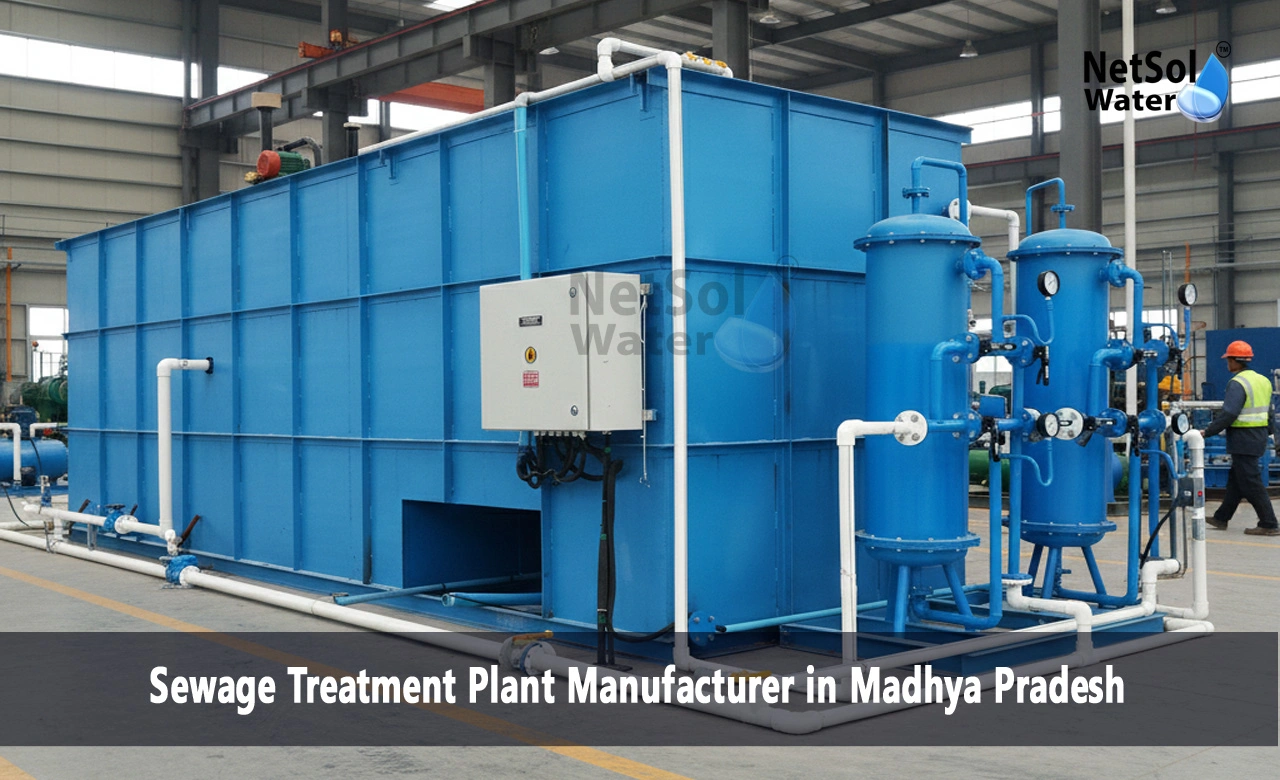
Sewage Treatment Plant Manufacturer in Madhya Pradesh
The fast rate of urbanization, residential suburbanization, business communities and the development of industries have greatly augmented sewage production in the urban areas and towns. The control of sewage is no longer a luxury, but a necessity of environmental protection, the health of the population, and compliance with the regulation. Sewage not treated is likely to pollute water, cause diseases, and destroy ecosystems.
The Sewage Treatment Plants are constructed units that are meant to treat domestic and municipal wastewater so that it can be reused or released. These plants eliminate organic material, suspended solids, pathogenic bacteria and nutrient and render water safe to be disposed or recycled. Choosing a reliable Sewage Treatment Plant Manufacturer in Madhya Pradesh ensures efficient treatment performance, durable infrastructure, and long-term operational stability.
Increasing Demand of Sewage Treatment Plants in MP
· Population Urbanization: As residential apartments, townships, and gated communities are on the rise, the amount of sewage is growing significantly.
· Environmental Protection Requirements: When untreated sewage is released into rivers or the land, the resulting effects are very detrimental to the environment. STPs assist in the protection of natural water bodies and ground water sources.
· Regulations and compliance by the government: The authorities in charge of pollution control require that housing societies, commercial complexes, hospitals, and industries should be properly treated by sewage.
· Water Reuse Opportunities: Treated sewage water can be used to irrigate the landscape, flush toilets, cooling towers, and gardens, and consumes less fresh water.
The Establishment of the Netsol Water Presence in Madhya Pradesh
1: Customized STP Solutions
Netsol Water constructs STPs according to the site analysis and sewage. Every plant is designed to satisfy the capacity requirements and discharge requirements.
2: Modern Treatment Technologies
Some of the advanced technologies integrated in the company include:
· Moving Bed Biofilm Reactor (MBBR).
· Sequential Batch Reactor (SBR).
· Activated Sludge Process (ASP)
· Membrane Bio-Reactor (MBR)
· Smaller Packaged STP Systems.
The technologies guarantee that there are positive removal of BOD, COD, TSS, and pathogens.
3: End-to-End Project Execution
Netsol Water service outsources project management services, including design and manufacturing, commissioning, and maintenance support.
Capacity Range and Investment Overview
The dimensions of a Sewage Treatment Plant have a direct effect with the amount of investment made. Capacity planning is determined by the daily sewage generation (in KLD -Kilolitres per Day), the choice of technology, the level of automation, and the conditions on the site. An overview of capacity with a cost estimate is provided below:
1: Small-Capacity STPs (5–25 KLD)
These are plants that are applicable in small residential societies, guest house, clinics, and institutional buildings.
This type of investment normally lies within the range of between ?8 lakh and 20 lakh, with or without small packaged system unit being a compact or a civil based system. Pricing is also dependent on technology choice like MBBR or basic ASP.
2: Medium-Capacity STPs (50–200 KLD)
Large-scale apartments, hospitals, commercial complex and mid sized industrial campuses are suited to medium-scale plants.
This type of systems will cost between 25 lakh and 1 crore. The elements that influence the investment are the level of automation (manual or using PLC), the effectiveness of the aeration system, the type of tank (RCC or FRP) and the discharge requirements.
3: STPs with Large Capacity (More than 500 KLD)
Sewage treatment plants of large scale are intended to serve townships, municipal projects and large industrial or institution campuses.
The cost to install these installations can begin at 1.5 crore and extend very high with the addition of advanced technologies like MBR (Membrane Bio-Reactor) or a fully automated monitoring system.
Significant Factors Affecting Final Cost
Although the base estimate is offered through capacity it is the nature of the sewage, the availability of land, the extent of civil construction, dewatering of sludge systems, odor elimination systems, and the need to reuse treated water that determine the final price. The cost of the project can be augmented with advanced tertiary treatment or stringent discharge requirements. Nonetheless, with a well-structured STP, regulation will be adhered to, water reuse will be beneficial, and environmental sustainability will be achieved in the long term.
Treatment Process of STP Plant
A normal STP is based on several treatment steps. During the initial phase, the screens eliminate huge solids and debris. The wastewater is followed to an equalization tank in which the changes of flow are adjusted. Primarily, with the separated solid, sedimentation is used to recover the suspended solids.
The microorganisms are used in the secondary stage, in which bacteria are present to decompose organic matter by the aid of biological processes like MBBR, SBR, or ASP. This brings about a great reduction in the level of BOD and COD. The third stage can be filtration, chlorination or UV disinfection to eliminate the residual contaminants and pathogens.
The treated water is further disposed of harmlessly or reused to non-drinking purposes, and the sludge is de-watered and disposed by environmental regulation.
Characteristics of Netsol Water Sewage Treatment Plants
· High Treatment Efficiency: Targeted to attain the best BOD, COD, and TSS reduction to meet the standards.
· Aeration Systems that are energy efficient: Blowers and diffusers are optimized and less energy is used.
· Compact and Modular Designs: Best suited to installations with limited space.
· Corrosion-Resistant Construction: FRP, RCC or coated MS tanks are to be used which guarantees extended lifespan of the use.
· Automated monitoring Opportunities: The control systems based on PLC allow real-time performance monitoring.
· Minimal Maintenance Specifications: Designed to work easily and minimize the downtime of operation.
Serviced industries and establishments by Netsol
· Townships and Residential Apartments.
· Hospitals and Healthcare Centres.
· Educational Institutions
· Hotels and Resorts
· Commercial Complexes
· Industrial Campuses
The 3 Best Sewage Treatment Plant Manufacturers in Madhya Pradesh
1: Netsol Water
Netsol Water is a trusted Sewage Treatment Plant Manufacturer in Madhya Pradesh, known for advanced technology integration, customized design, and reliable long-term performance.
2: Sewage Treatment Plants
Sewage Treatment Plants provides sewage and wastewater treatment services in residential, commercial and industrial sectors.
3: Urban STP Plant
Urban STP Plant is capable of offering large-scale municipal and industrial sewage treatment systems through high-level biological treatment technologies.
Conclusion
Sewage management plays a major role in the protection of the human health as well as conservation of the natural resources and also by ensuring that the regulations are met. Sewage Treatment Plants offer a planned and sustainable method of wastewater control of residential, commercial, and institutional projects.
Selecting a reliable Sewage Treatment Plant Manufacturer in Madhya Pradesh ensures optimized plant performance, regulatory adherence, and long-term cost efficiency. Netsol Water can remain a key participant in the promotion of sustainable solutions to wastewater management with advanced technologies, scalable solutions, and full-service support.
Do you need an advice or assistance on selecting the best water and waste water treatment unit? We have solutions for all your problems!
Let us know your problem, our experts will make sure that it goes away.
For an assistance or related query,
Call on +91-9650608473 Or write us at enquiry@netsolwater.com