

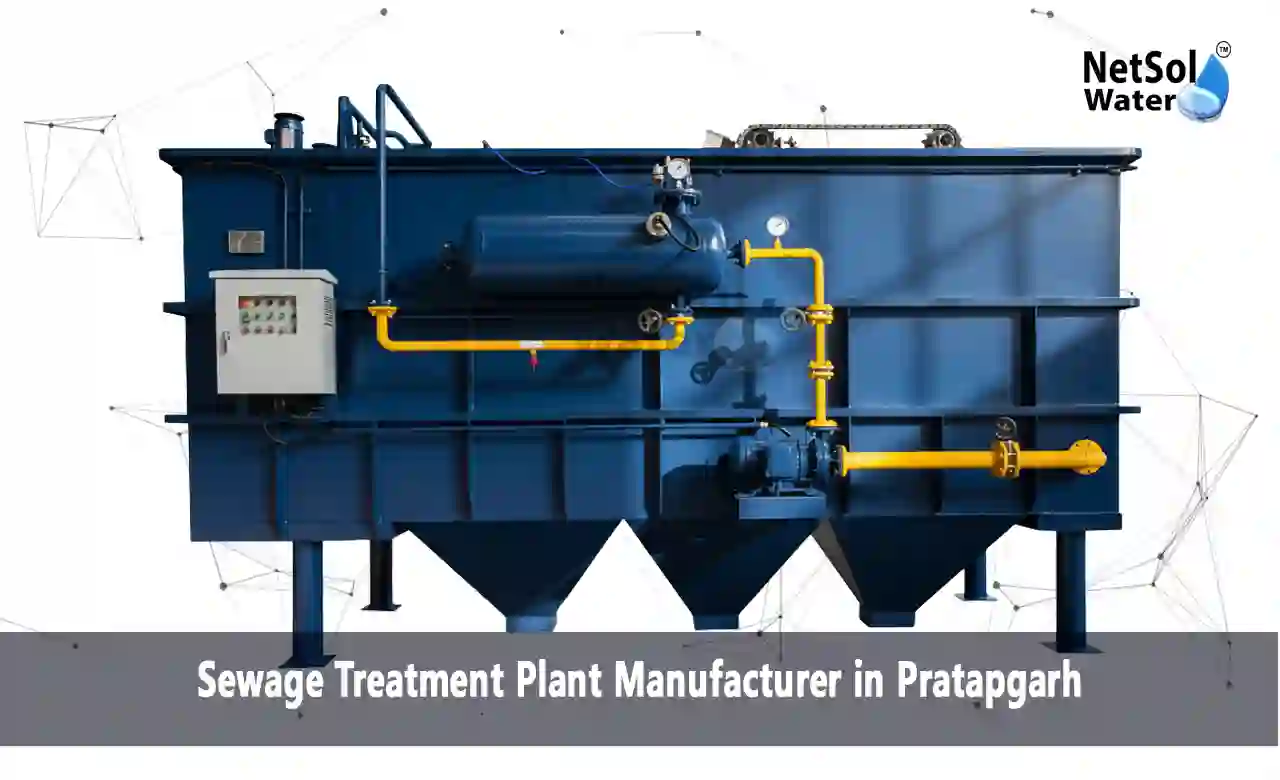
Sewage Treatment Plant Manufacturer in Pratapgarh
Pratapgarh is growing fast. New housing colonies, commercial complexes, schools, and hospitals are coming up every year. With this growth comes one very real challenge - what happens to all the wastewater these buildings generate?
Untreated sewage is one of the biggest threats to public health and groundwater quality. When it seeps into the soil or flows into nearby water bodies, it carries harmful bacteria, organic waste, and disease-causing pathogens. The result? Contaminated drinking water, foul smells, and serious health hazards for local communities.
This is exactly why investing in a high-quality sewage treatment plant (STP) in Pratapgarh is not just a good idea - it is a regulatory necessity and a civic responsibility. Whether you are building a residential township, running a hospital, managing a hotel, or operating an institution, an STP ensures your wastewater is treated safely before it exits your premises.
What Is a Sewage Treatment Plant and How Does It Work?
A sewage treatment plant is an engineered system that processes domestic and commercial wastewater through a series of physical, biological, and chemical stages. The goal is simple: remove harmful contaminants and produce water that is safe for discharge or reuse.
Here is how a standard STP works step by step:
1 - Preliminary Treatment
Incoming sewage passes through bar screens and grit chambers that remove large solid waste, sand, and floating debris. This protects downstream equipment from damage and clogging.
2 - Primary Treatment
Wastewater enters a primary settling tank (clarifier) where suspended solids settle to the bottom as primary sludge. The clarified liquid then moves to secondary treatment.
3 - Secondary (Biological) Treatment
This is where the real work happens. Microorganisms break down dissolved organic matter using processes like MBBR (Moving Bed Biofilm Reactor), SBR (Sequential Batch Reactor), or Activated Sludge Process (ASP). The result is dramatically cleaner water.
4 - Tertiary Treatment & Disinfection
The treated water goes through polishing filters and disinfection using chlorination or UV to eliminate residual pathogens. This step ensures the output meets CPCB norms.
5 - Sludge Management
The collected sludge is thickened, dewatered, and either composted or disposed of safely. A well-managed sludge handling system keeps the entire plant stable and hygienic.
Why Choose Netsol Water as Your STP Manufacturer in Pratapgarh?
Netsol Water, headquartered in Greater Noida, is one of India's most trusted sewage treatment plant maufacturer and supplier in U.P., With over a decade of experience and hundreds of successful installations across Uttar Pradesh, the company brings deep technical knowledge, proven technologies, and genuine after-sales support to every project.
1. Custom Engineering for Every Site
No two sites have the same sewage load, space constraints, or discharge requirements. Netsol Water designs each STP based on actual site conditions - they do not offer a one-size-fits-all product. This tailored approach results in better performance and lower lifecycle costs.
2. Multiple STP Technologies to Choose From
Netsol Water offers the full spectrum of STP technologies including MBBR, SBR, MBR, ASP, and Modular systems. Each has its own advantages depending on your site size, budget, and treated water quality goals.
3. Proven Compliance with CPCB and PCB Norms
All Netsol Water systems are designed to meet Central Pollution Control Board (CPCB) standards and Uttar Pradesh Pollution Control Board (UPPCB) requirements. This protects your business from penalties and legal complications.
4. Strong After-Sales Support and AMC
The plant is only as good as the team behind it. Netsol Water provides comprehensive Annual Maintenance Contracts (AMC), operator training, spare parts supply, and emergency response services across Pratapgarh and nearby regions.
STP Technologies Offered by Netsol Water in Pratapgarh
1. MBBR Technology (Moving Bed Biofilm Reactor)
MBBR is one of the most popular STP technologies for medium to large installations. It uses specially designed plastic media inside aerated tanks where a biofilm of microorganisms grows and breaks down sewage organics. MBBR systems are compact, energy-efficient, and handle load variations well.
2. SBR Technology (Sequential Batch Reactor)
SBR treats sewage in timed cycles - fill, aerate, settle, and decant - all within a single tank. It is highly efficient, delivers consistent output quality, and requires minimal civil footprint. SBR is ideal for hotels, hospitals, and housing societies.
3. MBR Technology (Membrane Bioreactor)
MBR combines biological treatment with membrane filtration to produce extremely clean treated water. The output is often suitable for toilet flushing, landscaping irrigation, and even industrial reuse. MBR is the gold standard when high water quality is non-negotiable.
4. ASP Technology (Activated Sludge Process)
ASP is a time-tested biological treatment method that uses aeration and active microbial cultures to break down organic matter. It is well-suited for large-scale installations and produces reliable results.
5. Modular STP Systems
When space is a constraint or phased expansion is planned, modular STPs offer pre-fabricated, factory-tested modules that can be assembled on-site quickly. These systems reduce civil work costs and construction time significantly.
Applications - Where STPs Are Used in Pratapgarh
1. Residential Housing Societies and Apartments
Modern apartment complexes and gated communities are legally required to have an STP for in-house sewage treatment. Netsol Water provides compact systems perfectly suited for multi-floor buildings and plotted housing projects.
2. Hotels, Resorts, and Guest Houses
The hospitality sector generates large volumes of wastewater daily. An STP ensures regulatory compliance, allows water reuse for landscape irrigation, and keeps the premises odour-free and hygienic.
3. Hospitals and Healthcare Facilities
Hospital wastewater contains pathogens, pharmaceuticals, and other contaminants that require specialised treatment. Netsol Water designs STPs for healthcare facilities that meet the strictest environmental norms.
4. Educational Institutions and Campuses
Schools, colleges, and hostels with large student populations generate significant daily sewage. An STP on-campus ensures clean surroundings and reduces dependence on municipal drainage.
5. Commercial Complexes and Industrial Premises
Offices, malls, and industrial sites must manage their sewage responsibly. Installing an STP helps businesses meet environmental clearance conditions and avoid penalties from pollution control boards.
STP Capacity Range Available in Pratapgarh
Netsol Water offers sewage treatment plants across a very wide capacity range to match every type of client:
• 1 KLD to 10 KLD - Suitable for small homes, clinics, guest houses, and compact commercial units
• 10 KLD to 100 KLD - Ideal for housing societies, schools, mid-size hotels, and institutional buildings
• 100 KLD to 1 MLD - Designed for large commercial complexes, campuses, and residential townships
• 1 MLD and above - Municipal-scale projects and industrial estates
Capacity is determined based on per-capita sewage generation norms, peak flow calculations, and reuse requirements. Netsol Water's engineers conduct free site assessments to help clients choose the right plant size.
STP Cost in Pratapgarh - Price Guide for 2024–2025
STP pricing varies based on capacity, technology type, automation level, civil work scope, and site conditions. Here is a practical reference:
• Small STPs (1–10 KLD): Approximately INR 5 lakh to INR 10 lakh
• Medium STPs (10–50 KLD): Approximately INR 10 lakh to INR 35 lakh
• Large STPs (50–100 KLD): Approximately INR 35 lakh to INR 65 lakh
• Very Large STPs (100 KLD+): INR 65 lakh and above depending on customization
Note: These are indicative ranges. Final pricing depends on your specific requirements. Contact Netsol Water for a detailed, no-obligation quotation.
Top STP Manufacturers Serving Pratapgarh
1. Netsol Water
Netsol Water leads this space with dedicated service coverage for Pratapgarh, a wide STP technology portfolio, and a reputation built over hundreds of successful projects. Their combination of custom engineering, regulatory compliance expertise, and responsive after-sales support makes them the top recommendation.
2. Urban STP Plant
Urban STP Plant has an active presence in the Pratapgarh market and offers STP systems for residential and institutional use. A viable option for buyers seeking local alternatives.
3. Sewage Treatment Plants
Sewage Treatment Plants is a nationally recognized water treatment company offering a range of STP technologies for commercial and industrial clients. Good choice for larger-scale projects.
Frequently Asked Questions (FAQs)
Q1. What is the minimum capacity STP I need for a residential society?
For a small society with 50 flats generating around 150 litres per flat per day, you would need an STP of approximately 7 to 10 KLD capacity. Netsol Water can assess your specific requirements and recommend the exact size during a free consultation.
Q2. Is it mandatory to install an STP in Pratapgarh?
Yes. As per UPPCB norms and local municipal rules, residential complexes, hotels, hospitals, and commercial buildings above a certain size must install STPs and treat their sewage before discharge. Non-compliance attracts heavy penalties and potential closure notices.
Q3. How long does it take to install an STP?
Small to medium STPs typically take 4 to 8 weeks from order confirmation to commissioning, depending on civil work requirements and site readiness. Modular systems can be deployed faster - sometimes within 2 to 3 weeks.
Q4. Can treated STP water be reused?
Yes. Treated water from an STP can typically be reused for toilet flushing, garden irrigation, vehicle washing, and cooling tower makeup (after appropriate polishing). This can reduce your freshwater consumption by 30 to 40 percent.
Q5. What maintenance does an STP require?
An STP requires daily checks on aeration, sludge levels, and chemical dosing, along with weekly and monthly maintenance tasks. Netsol Water provides AMC packages that cover all routine and emergency maintenance, ensuring your plant operates at peak efficiency.
Q6. Does Netsol Water provide training for STP operators?
Yes. Netsol Water provides comprehensive operator training as part of the commissioning process. Their team covers daily operations, troubleshooting, safety procedures, and maintenance protocols to ensure your staff can run the plant independently.
Q7. What is the lifespan of an STP?
A well-built and properly maintained STP can last 20 to 25 years. The structural components typically have a longer life, while mechanical and electrical parts may need replacement every 8 to 12 years depending on usage intensity.
Get Your Free Consultation Today
Ready to install a world-class Sewage Treatment Plant in Pratapgarh? Netsol Water's experts are here to guide you from site assessment to commissioning. We offer competitive pricing, custom engineering, and lifetime AMC support.
Call Us: +91-9650608473, Email Us: enquiry@netsolwater.com
Our team responds within 24 hours. Reach out today and let us build the right water treatment solution for your facility.