

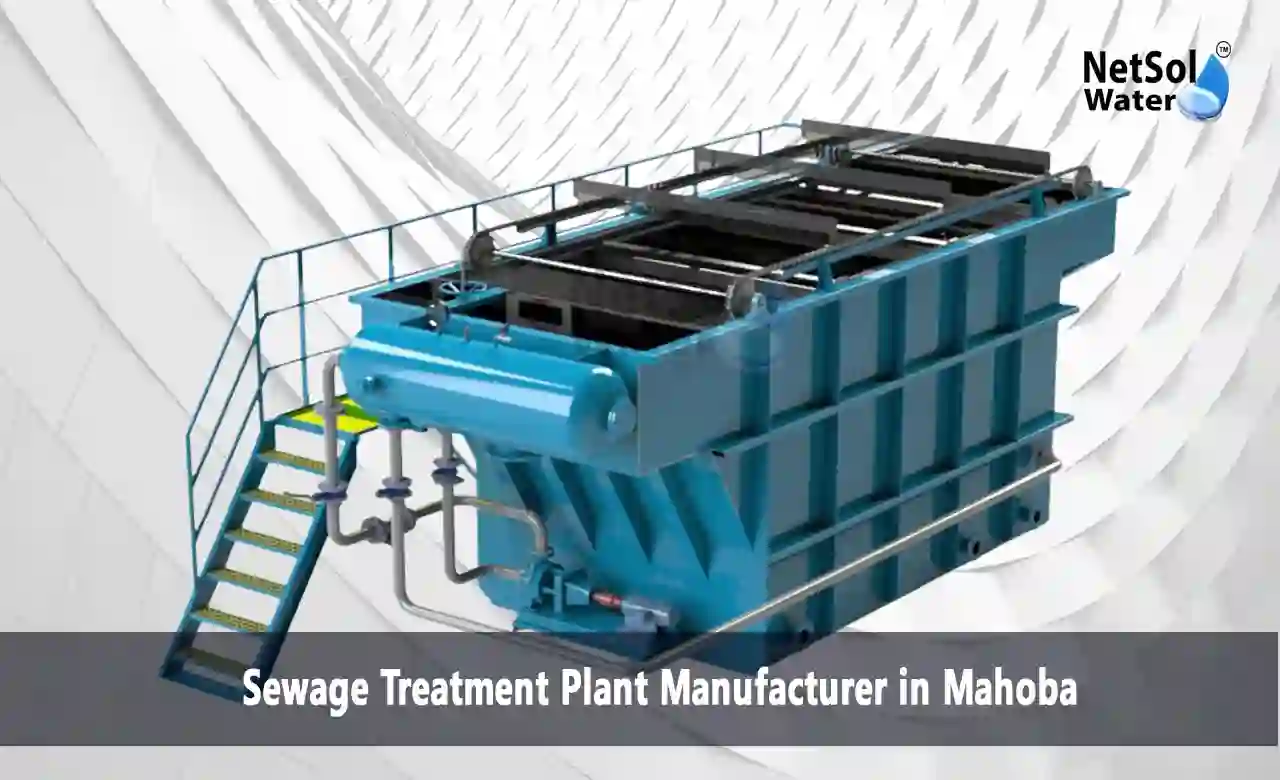
Sewage Treatment Plant Manufacturer in Mahoba
Mahoba is growing fast - more residents, more industries, more construction projects. But that growth brings a challenge no one can ignore: rising volumes of untreated sewage. Every home, hotel, and factory generates wastewater every single day. When that wastewater is not treated correctly, it ends up in the ground, in the Ken River, or in the open - and that creates serious health and compliance problems.
If you are searching for a trusted sewage treatment plant manufacturer in Mahoba, you have come to the right place. This guide covers everything - from understanding why you need an STP to choosing the right technology, capacity, and partner.
Why Mahoba Urgently Needs Better Sewage Treatment?
Mahoba sits in the water-stressed Bundelkhand region. Groundwater levels are falling every year. The Ken River, which flows through this region, is already under pressure from agricultural and industrial runoff. When raw sewage enters these water sources, the consequences are severe:
• Drinking water becomes contaminated, raising public health risks.
• Agricultural land absorbs pollutants, reducing crop quality.
• Industries face scrutiny and penalties from the UP Pollution Control Board (UPPCB).
The UPPCB actively enforces environmental norms in Uttar Pradesh. Operating a facility without a functional STP can lead to heavy fines, closure notices, and blocked environmental clearances. Sewage treatment is no longer optional - it is a legal and ethical necessity.
What a Sewage Treatment Plant Actually Does?
A sewage treatment plant (STP) takes in raw wastewater and cleans it through a series of controlled stages:
• Primary Treatment: Physical screens and settling tanks remove solid waste and large debris.
• Secondary Treatment: Biological processes (bacteria) break down dissolved organic matter.
• Tertiary Treatment: Advanced filtration and disinfection remove remaining impurities.
The treated water that comes out typically meets BOD levels below 10–30 mg/L and TSS below 30 mg/L - well within UPPCB and CPCB norms. More importantly, this clean water can be reused for toilet flushing, garden irrigation, or industrial cooling, which is a major advantage in a water-scarce district like Mahoba.
Who Needs a Sewage Treatment Plant in Mahoba?
STPs are not just for large factories. If your facility generates wastewater regularly, you almost certainly need one. Common users include:
• Residential housing societies and apartment complexes (50+ units)
• Hotels, resorts, and lodges
• Schools, colleges, and hospitals
• Food processing, dairy, and textile units
• Commercial complexes and shopping malls
• Municipal and government facilities
Even mid-sized projects generating 50 KLD or more are subject to UPPCB regulations. Getting ahead of compliance requirements protects your project from delays and legal risk.
STP Technologies - Which One Is Right for Your Project?
Not every project needs the same solution. A reliable manufacturer will help you choose the right technology based on your site, volume, and reuse goals. Here are the four main options:
1. MBBR - Moving Bed Biofilm Reactor
Best for: Residential complexes and commercial buildings. MBBR uses plastic media carriers inside aeration tanks to grow a dense biofilm. It handles load fluctuations well and requires less space than conventional systems - ideal for constrained urban sites.
2. SBR - Sequential Batch Reactor
Best for: Municipal projects and facilities with variable sewage loads. SBR treats wastewater in timed cycles within a single tank, reducing footprint and energy costs. It is widely used for small to mid-sized municipal projects across UP.
3. MBR - Membrane Bioreactor
Best for: Projects that need high-quality treated water for regular reuse. MBR combines biological treatment with ultra-filtration membranes, producing effluent with very low turbidity and near-zero suspended solids. The upfront cost is higher but the output quality justifies it.
4. Extended Aeration
Best for: Large installations with ample space. A reliable, time-tested technology that works well for sites where land is not a constraint. Suitable for capacities upward of 500 KLD.
How to Choose the Right STP Manufacturer in Mahoba
Price is one factor. But choosing the cheapest option upfront often leads to the most expensive outcome over time. Here is what actually matters:
• Proven Experience: Ask how many plants the manufacturer has built in Uttar Pradesh. Request references and ask for a site visit.
• Technology Range: A manufacturer who only offers one technology for every project is a red flag. Your project needs a custom recommendation.
• Material Quality: Ask specifically about the grade of steel, FRP quality, pump brands, and blower specifications. These details determine long-term reliability.
• After-Sales Support: Check what their Annual Maintenance Contract (AMC) covers. A plant without ongoing maintenance support is a liability.
• ISO Certification: Always verify the manufacturer's ISO certification. It reflects documented quality processes, not just a claim.
Typical STP Capacity Requirements in Mahoba
• Small housing society (50–200 flats): 50 KLD – 200 KLD
• Large residential complex: 200 KLD – 500 KLD
• Hotel / Hospital: 50 KLD – 300 KLD
• Industrial unit: 100 KLD – 5 MLD
• Municipal sewage project: 1 MLD and above
Effluent Quality Standards Your STP Must Meet
The UPPCB and CPCB set mandatory discharge norms. Any STP you install must consistently achieve these parameters:
• BOD (Biochemical Oxygen Demand): Below 10–30 mg/L
• COD (Chemical Oxygen Demand): Below 250 mg/L
• TSS (Total Suspended Solids): Below 30 mg/L
• pH: Between 6.5 and 8.5
• Coliform bacteria: Within safe reuse limits
Ask every manufacturer you speak to for guaranteed output parameters in writing. Any manufacturer who cannot provide this data is not ready to handle your project.
Why NetSol Water Is Mahoba's Most Trusted STP Manufacturer?
NetSol Water is an ISO-certified water and wastewater treatment company with a strong track record across Uttar Pradesh. We have delivered STP installations across Agra, Amroha, Ambedkar Nagar and multiple other districts - and we bring that regional knowledge to every Mahoba project we take on.
• In-House Manufacturing: We design and build every component ourselves - no random third-party assembly.
• Correct Sizing Every Time: We size plants on actual water generation data, not rough estimates.
• Multiple Technologies Available: MBBR, SBR, MBR, and Extended Aeration - the right fit for your project.
• Full AMC Support: Scheduled maintenance, rapid response, and a dedicated service team in your region.
• UPPCB Compliance Guaranteed: Every plant we build meets current CPCB and UPPCB discharge norms.
Ready to get started? Contact NetSol Water today for a free site assessment and custom STP recommendation for your Mahoba project.
Also Read: STP Plant Manufacturer in U.P.
FAQs - Sewage Treatment Plant in Mahoba
Q: What is the cost of a sewage treatment plant in Mahoba?
A: STP costs in Mahoba typically range from INR8 lakh to INR1 crore or more, depending on capacity, technology (MBBR/SBR/MBR), and site conditions. A 100 KLD MBBR plant for a housing society generally falls between INR55–75 lakh. Get a site-specific quote from a certified manufacturer for accurate pricing.
Q: Which STP technology is best for a housing society in Mahoba?
A: MBBR (Moving Bed Biofilm Reactor) is the most popular choice for housing societies in Mahoba. It requires less space, handles varying sewage loads efficiently, and produces treated water that meets UPPCB norms. SBR is another strong option for societies with fluctuating daily volumes.
Q: Is it mandatory to install an STP in Mahoba?
A: Yes. The Uttar Pradesh Pollution Control Board (UPPCB) mandates that all residential complexes, hotels, hospitals, and industries above a threshold size must have a functional STP. Non-compliance can result in fines, stop-work notices, and refusal of environmental clearance.
Q: Can treated water from an STP be reused?
A: Absolutely. Treated water from a properly designed STP can be reused for toilet flushing, garden irrigation, vehicle washing, and industrial cooling. This is especially valuable in water-stressed areas like Mahoba and the broader Bundelkhand region.
Q: What BOD level must an STP achieve in Uttar Pradesh?
A: As per CPCB and UPPCB guidelines, the BOD of treated sewage must be below 30 mg/L for discharge into surface water bodies, and below 10 mg/L for direct land irrigation or reuse in sensitive areas.
Q: How long does it take to install an STP in Mahoba?
A: A standard STP installation in Mahoba typically takes 4 to 12 weeks depending on capacity and site conditions. Pre-fabricated modular systems (like packaged MBBR units) can be commissioned faster - sometimes within 3–4 weeks.
Q: What annual maintenance does an STP require?
A: A well-designed STP needs quarterly servicing of blowers and pumps, monthly checks of media and diffusers, regular sludge removal, and periodic membrane/media replacement every 5–8 years. An AMC from a certified provider ensures continuous compliance and performance.