

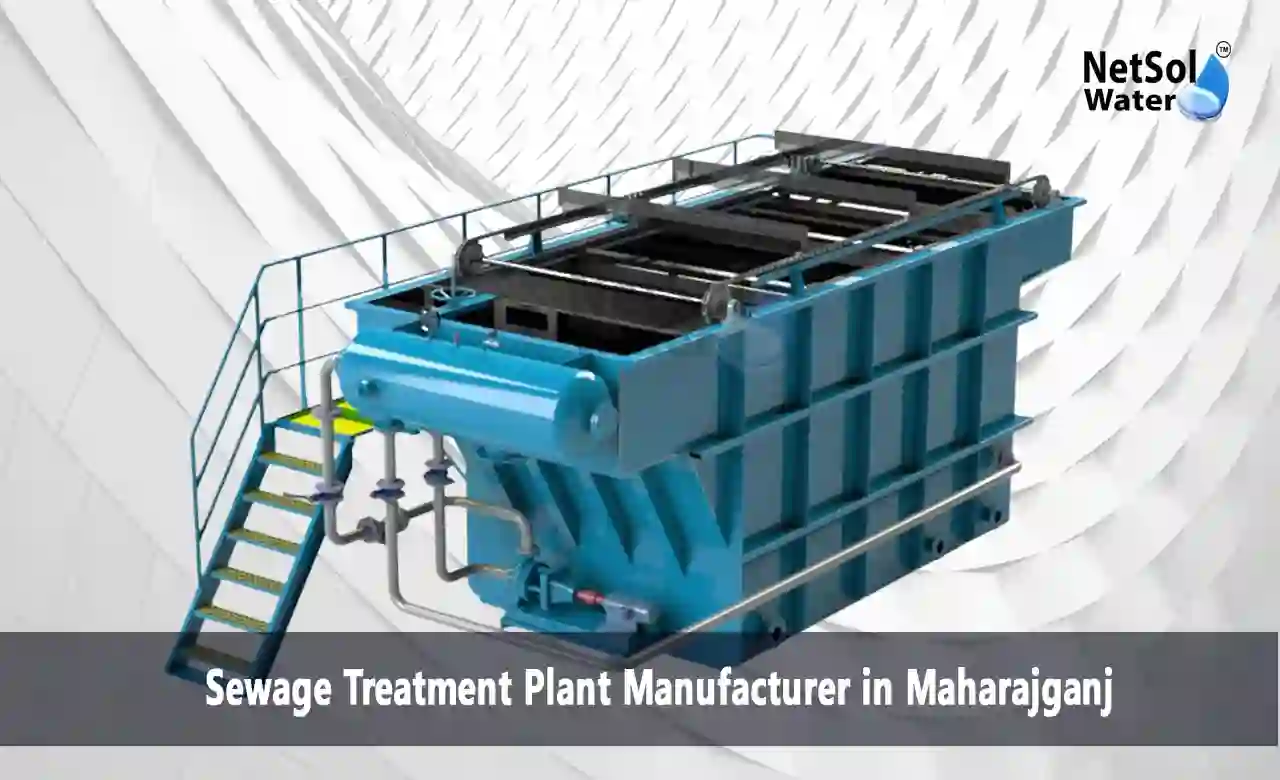
Sewage Treatment Plant Manufacturer in Maharajganj
New apartments, hotels, and factories are coming up across Maharajganj. But with every new building comes a question that most developers push to the back of their minds: where does all the sewage go?
If you are a builder, society manager, hotel owner, or industrial operator, ignoring this question is a risk you cannot afford. The Uttar Pradesh Pollution Control Board (UPPCB) is actively penalising non-compliant units across eastern UP. Contaminated borewells and polluted stretches of the Rohini and Gandak rivers are already visible consequences of inadequate treatment.
The good news? Getting it right is straightforward - once you find the right sewage treatment plant manufacturer in Maharajganj. This guide covers everything you need to know.
Why Sewage Treatment Is Non-Negotiable in Maharajganj?
Maharajganj sits in eastern Uttar Pradesh, with the Rohini and Gandak rivers running through the district. These water bodies support agriculture and groundwater recharge for thousands of households. Every litre of untreated sewage that reaches them makes the situation worse.
The legal consequences are equally serious. UPPCB has been issuing closure notices, show-cause notices, and heavy fines to commercial establishments and residential complexes that operate without a functional STP. New construction projects also face delays in environmental clearances if an approved STP design is not part of the application.
Beyond compliance, there is a powerful practical reason. Properly treated water can be reused for irrigation, toilet flushing, and cooling - turning a waste problem into a resource.
Who Needs an STP in Maharajganj?
Many people assume STPs are only for large industries or municipal bodies. That is no longer the case. The mandate now covers a wide range of establishments:
• Residential housing societies and apartment complexes (50+ units)
• Hotels, resorts, lodges, and dharamshalas
• Hospitals, nursing homes, and healthcare facilities
• Schools, colleges, and hostel complexes
• Shopping malls, commercial buildings, and office complexes
• Food processing and packaging units
• Textile and garment manufacturing facilities
• Government buildings and municipal facilities
Even smaller units that discharge into municipal drains are now being asked to pre-treat their wastewater before letting it enter the drain network.
How a Sewage Treatment Plant Works?
Understanding the treatment process helps you evaluate manufacturers more confidently and ask the right questions.
Stage 1: Preliminary Treatment
Raw sewage passes through bar screens that trap solid waste - plastic, rags, and debris. A grit chamber then removes sand and heavy particles. This stage protects all downstream equipment from damage and clogging.
Stage 2: Primary Treatment
Sewage flows slowly into a settling tank. Suspended solids sink to the bottom as sludge; grease and scum are skimmed from the top. This removes up to 60% of suspended solids before biological treatment begins.
Stage 3: Secondary (Biological) Treatment
This is the heart of the system. Microorganisms break down the dissolved organic matter in the sewage. Technologies like MBBR, SBR, and Extended Aeration handle this differently - but all aim to dramatically reduce BOD and COD levels.
Stage 4: Tertiary Polishing
Sand filtration removes residual solids. Activated carbon eliminates odour and colour. UV disinfection destroys pathogens. After this stage, treated water meets discharge and reuse standards.
Stage 5: Sludge Handling
Collected sludge is thickened, dewatered, and - in many cases - converted into agricultural compost. A complete STP design always includes a proper sludge management plan.
STP Technology Comparison: Which One Is Right for Your Project?
| Technology | Key Strength | Space Needed | Best For |
|---|---|---|---|
| MBBR | Compact, handles load variation, easy maintenance | Low | Housing societies, hotels, commercial |
| SBR | Flexible, energy-efficient, handles fluctuation | Low-Medium | Municipal, institutions, large offices |
| MBR | Highest output quality, ideal for water reuse | Low | Hospitals, luxury hotels, water-scarce projects |
| Extended Aeration | Simple, proven, reliable | High | Larger sites with open land |
Output Standards Your STP Must Meet (UPPCB / CPCB Norms)
• BOD (Biochemical Oxygen Demand): Below 10–30 mg/L depending on discharge location
• COD (Chemical Oxygen Demand): Below 250 mg/L
• TSS (Total Suspended Solids): Below 30 mg/L
• pH: Between 6.5 and 8.5
• Faecal Coliform: Within safe limits for intended reuse or discharge
A credible manufacturer will discuss these numbers with you upfront and commit to meeting them with their design.
5 Costly Mistakes to Avoid When Buying an STP
1. Choosing the cheapest quote - substandard components lead to frequent breakdowns and regulatory fines.
2. Skipping sewage characterisation - without testing your actual sewage, no one can design the right system.
3. Ignoring space constraints - not every technology fits every site. Discuss footprint requirements early.
4. Forgetting the AMC agreement - a plant without scheduled maintenance slowly loses performance.
5. Not planning for future capacity - design for 20–30% more than your current requirement to avoid expensive upgrades.
Why Choose NetSol Water for Your STP in Maharajganj?
NetSol Water is an ISO-certified STP plant manufacturer in U.P. with 500+ STP and ETP installations across Uttar Pradesh, including Agra, Amroha, Ambedkar Nagar, and now actively serving Maharajganj.
We start every project with a proper site assessment and sewage characterisation - not a standard quote template. We collect actual data, design the system around it, and size it correctly.
Our in-house manufacturing team builds every component under strict quality control. We handle full installation, commissioning, and handover. And we offer structured AMC programs that keep your plant performing at its best for years.
Ready to Get Started? Contact NetSol Water Today.
Share your project details - location, establishment type, and estimated sewage volume. Our team will assess your requirements and recommend the most cost-effective STP solution for Maharajganj.
FAQs: Sewage Treatment Plant in Maharajganj
Q: What is the cost of a sewage treatment plant in Maharajganj?
A: STP cost in Maharajganj depends on capacity, technology, and site conditions. A 50 KLD MBBR system typically starts around ?15–25 lakhs. MBR systems cost more due to membrane components. Contact NetSol Water for a site-specific quotation after sewage characterisation.
Q: Which STP technology is best for a housing society in Maharajganj?
A: MBBR (Moving Bed Biofilm Reactor) is the most recommended technology for housing societies in Maharajganj. It is compact, handles varying sewage loads efficiently, is relatively low-cost to operate, and consistently meets UPPCB discharge standards.
Q: Is an STP mandatory for apartments and hotels in Maharajganj?
A: Yes. UPPCB mandates STPs for residential complexes with 50 or more units, hotels, hospitals, commercial buildings, and any establishment generating above a threshold volume of wastewater daily. Non-compliance can result in closure notices and heavy fines.
Q: How long does it take to install an STP in Maharajganj?
A: A standard STP installation in Maharajganj takes 6 to 12 weeks from design approval to commissioning, depending on plant capacity and civil work readiness. Pre-fabricated systems like MBBR can be faster. Site access and civil infrastructure readiness affect timelines.
Q: Can treated water from an STP be reused in Maharajganj?
A: Yes. Treated water from a properly designed STP meets standards for irrigation, toilet flushing, and industrial cooling. In Maharajganj, where seasonal water stress is common, reusing treated water is both practical and increasingly required by environmental guidelines.
Q: What documents are required for STP approval from UPPCB?
A: You typically need a detailed process flow diagram, equipment specifications, treated effluent quality guarantee, site layout, and consent to establish application. NetSol Water assists clients with all technical documentation required for UPPCB approvals.
Q: Does NetSol Water offer AMC services for STPs in Maharajganj?
A: Yes. NetSol Water offers structured Annual Maintenance Contracts (AMC) covering scheduled service visits, equipment inspection, sludge management guidance, performance monitoring, and rapid breakdown support for STPs installed in Maharajganj and across eastern UP.
Q: What is the difference between STP and ETP?
A: An STP (Sewage Treatment Plant) treats domestic wastewater from households, hotels, and commercial buildings. An ETP (Effluent Treatment Plant) is designed for industrial wastewater, which carries chemicals, metals, and complex contaminants. Both are often required on the same industrial campus.