

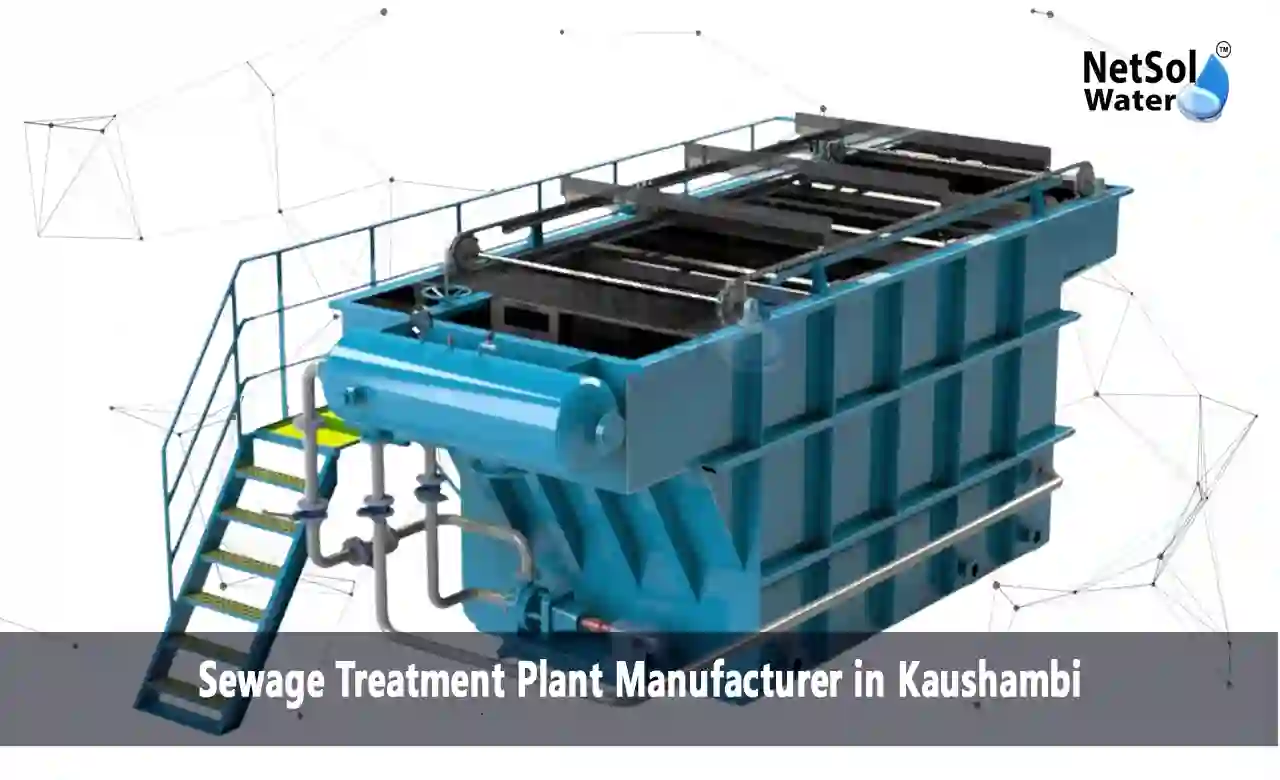
Sewage Treatment Plant Manufacturer in Kaushambi
Kaushambi is transforming. What was once a predominantly rural district is rapidly developing new residential colonies, schools, hospitals, commercial complexes, and small townships. Every new building, every new institution, every new marketplace adds to a growing volume of domestic sewage that needs to go somewhere - and that somewhere cannot simply be an open drain or a groundwater aquifer.
Sewage is not merely "dirty water." It carries organic waste, suspended solids, harmful pathogens like E. coli and coliform bacteria, and nutrients like nitrogen and phosphorus that cause algal blooms and eutrophication in water bodies. When untreated sewage seeps into groundwater, it renders drinking water unsafe. When it flows into local streams or ponds, it kills aquatic life.
Sewage Treatment Plants (STPs) are the infrastructure that civilized, growing communities rely on to manage this challenge. They treat sewage to a safe, reusable standard - enabling water recycling, protecting the environment, and ensuring the health of Kaushambi's growing population.
Netsol Water is a leading STP manufacturer in Kaushambi, designing and commissioning plants for housing societies, educational institutions, hospitals, commercial complexes, and government projects.
Why Kaushambi Specifically Needs Decentralized STP Solutions
Unlike Lucknow or Allahabad, Kaushambi doesn't yet have an extensive centralized sewage collection and treatment network. This creates a strong case for decentralized, on-site sewage treatment for individual developments:
• New housing societies cannot rely on municipal infrastructure that doesn't yet reach their zones
• Schools and hospitals generate daily sewage that requires immediate on-site treatment for sanitation compliance
• Commercial complexes and hotels need STPs to meet local authority NOC requirements and avoid groundwater pollution
• Areas near rivers or agricultural zones face strict regulatory requirements for sewage discharge
• Water scarcity makes treated sewage reuse for irrigation, flushing, and landscaping economically valuable
STP Technologies We Deploy in Kaushambi
1. Moving Bed Biofilm Reactor (MBBR)
MBBR is one of the most widely adopted modern STP technologies for Kaushambi's smaller to mid-scale applications. Specially designed plastic media carriers float in aerated treatment tanks. Microorganisms colonize these carriers, forming a biofilm that breaks down organic pollutants highly efficiently. Because the media is always in motion, contact with sewage is maximized. MBBR systems are compact, robust against load variations, and require minimal operator intervention - perfect for housing societies and institutional setups.
2. Sequential Batch Reactor (SBR)
SBR technology processes sewage in timed cycles - fill, react, settle, decant - all within a single tank. This cyclic approach delivers highly controlled treatment, producing very consistent output quality. SBR is particularly suited for locations where space is tight but high treatment efficiency is required. The automated sequencing also reduces labor requirements substantially.
3. Membrane Bioreactor (MBR)
MBR combines biological treatment with membrane filtration in a single integrated system. Post-biological treatment water passes through ultra-fine membranes that remove even the smallest particles and microorganisms. The result is extremely high-quality treated water - suitable for toilet flushing, garden irrigation, and even some non-potable industrial applications. MBR is ideal where treated water reuse is a priority.
4. Activated Sludge Process (ASP)
ASP is a proven, conventional treatment technology suitable for large, constant-flow sewage applications. Aeration of sewage in treatment tanks promotes the growth of microorganisms that digest organic matter. ASP is economical for large-scale township projects with predictable sewage flows.
STP Capacity Planning for Kaushambi Developments
1. Small STPs (Up to 30 KLD)
For individual houses, small apartment buildings (up to ~100 residents), guest houses, and small offices. Compact skid-mounted units that require minimal space and can be installed in days.
2. Medium STPs (30–200 KLD)
For housing societies, schools, hospitals, and medium-sized hotels. Multi-stage treatment systems with automated monitoring, online BOD and TSS tracking, and treated water storage tanks.
3. Large STPs (200 KLD+)
For townships, large commercial complexes, and institutional campuses. Continuous operation systems with advanced sludge management, automated sludge dewatering, and biogas recovery options on larger plants.
Also Read: STP Plant Manufacturer and Supplier in Uttar Pradesh
STP Cost Analysis for Kaushambi Projects
• Small STP (1–30 KLD): INR5 lakh – INR20 lakh. Basic biological treatment, compact design, low power consumption.
• Medium STP (50–200 KLD): INR35 lakh – INR80 lakh. Multi-stage treatment, automated operations, treated water recycling capability.
• Large STP (200 KLD+): INR80 lakh – INR1.5 crore+. Continuous operation, advanced sludge handling, full automation.
Cost factors: sewage volume, technology selected, land availability, automation requirements, and treated water reuse specifications.
FAQ: Sewage Treatment Plant Manufacturer in Kaushambi
Q1. What is the difference between an STP and an ETP?
An STP (Sewage Treatment Plant) treats domestic wastewater from households, institutions, and commercial properties - primarily organic waste and pathogens. An ETP (Effluent Treatment Plant) is designed for industrial wastewater containing chemicals, heavy metals, oils, and industrial-specific pollutants. Different treatment processes are required for each.
Q2. Is an STP mandatory for housing societies in Kaushambi?
Yes. Housing societies generating more than a specified volume of sewage per day are required to install functional STPs as per UPPCB and local authority regulations. Many building NOCs and occupancy certificates now mandate STP installation, particularly for new developments.
Q3. How much treated water can an STP recycle for reuse?
Well-designed STPs with appropriate tertiary treatment can recycle 70–85% of treated sewage for non-potable reuse - garden irrigation, toilet flushing, floor washing, and vehicle washing. MBR-based systems achieve even higher quality suitable for more demanding reuse applications.
Q4. How much space does an STP require in Kaushambi?
Modern MBBR and SBR-based STPs are very space-efficient. A 50 KLD system typically requires approximately 100–150 square meters. Compact underground or semi-underground designs are available for projects with significant space constraints, with above-ground area usable for other purposes.
Q5. What ongoing maintenance does an STP require?
Regular STP maintenance includes daily effluent quality checks, weekly cleaning of screens and equalization tanks, monthly inspection of blowers and pumps, quarterly membrane cleaning (for MBR systems), and annual performance audits. Netsol Water provides comprehensive operation and maintenance contracts.
Get Your STP Designed for Kaushambi - Call Netsol Water: +91-9650608473