

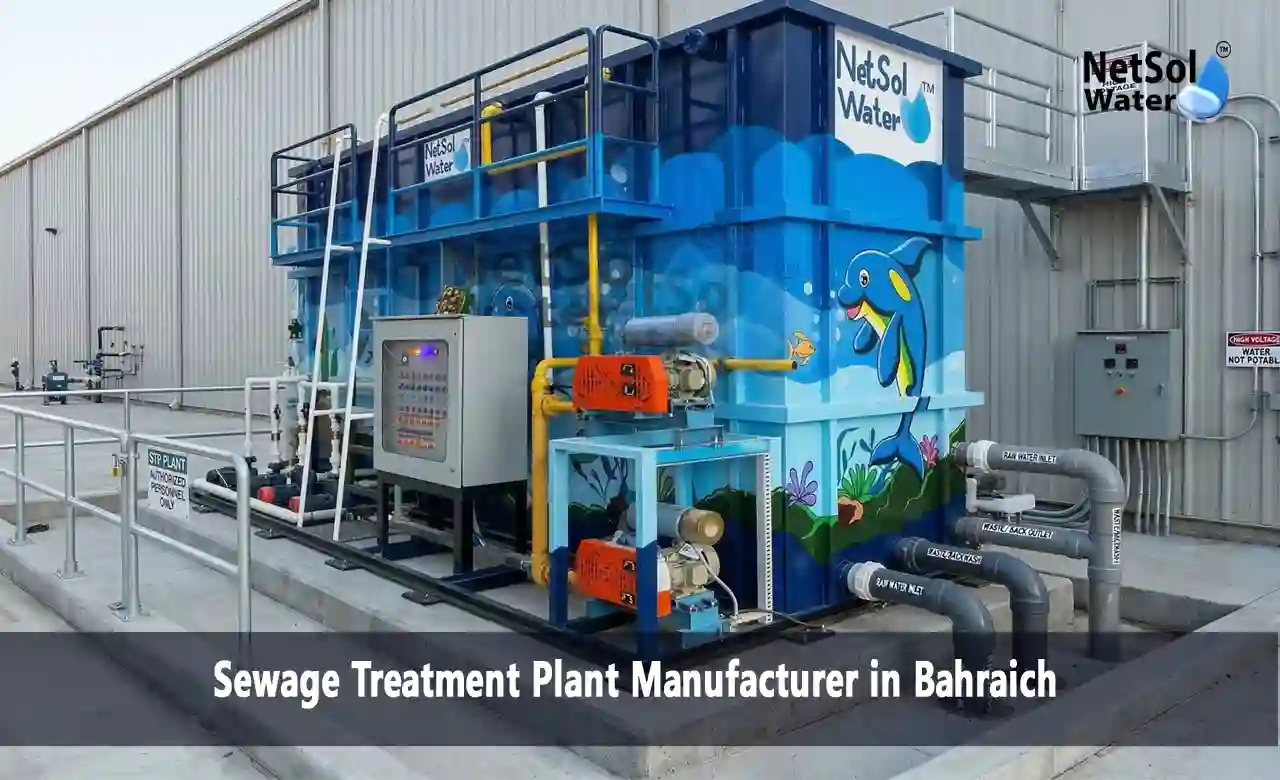
Sewage Treatment Plant Manufacturer in Bahraich
Bahraich sits in the Terai belt of Uttar Pradesh, bounded by the Ghaghra and Saryu rivers. That geography is beautiful - and it makes proper sewage treatment non-negotiable. Untreated discharge into these waterways harms downstream communities, destroys agricultural land, and puts drinking sources at risk for hundreds of thousands of people.
India generates over 72,368 million litres of sewage daily, yet the Central Pollution Control Board (CPCB) estimates that barely 28% of that volume receives proper treatment. Bahraich and surrounding districts in eastern UP are among the areas where this gap is most visible - and most dangerous.
If you are building a housing society, running a hospital, managing a hotel, or setting up a factory in Bahraich, you are legally required to treat your wastewater before it enters any natural water body or municipal drain. The Uttar Pradesh Pollution Control Board (UPPCB) mandates on-site sewage treatment for any complex generating more than 10 KLD of wastewater. Non-compliance invites penalties, forced closure notices, and ongoing legal exposure.
This guide explains what to look for in a reliable sewage treatment plant manufacturer in Bahraich, how Netsol Water approaches these projects, and what your installation will realistically cost and deliver.
Why Bahraich Needs Better Sewage Treatment Right Now?
Bahraich's population has grown at roughly 20% per decade, and new residential colonies, pilgrim infrastructure around Shravasti, and industrial clusters along the NH-27 corridor are generating wastewater volumes that existing municipal systems simply cannot handle.
The UPPCB has intensified inspections across Uttar Pradesh since 2022, issuing closure notices to builders and institutions operating without functional STPs. In a district where the Ghaghra River is already under pressure from agricultural runoff, every unchecked discharge point makes the situation worse.
The good news: modern packaged STPs are compact, fast to install, and affordable enough to fit within the budget of a 50-flat housing society or a 30-bed clinic. The challenge is finding a manufacturer who actually understands local site conditions, not one who ships a generic system and disappears.
About Netsol Water:
Netsol Water is a leading Sewage Treatment Plant Manufacturer in Uttar Pradesh and an environmental engineering company with its core operations across the state. The company has designed and commissioned over 1500 wastewater treatment systems across residential, institutional, and industrial segments since its establishment - covering STPs, ETPs (effluent treatment plants), and water treatment plants.
In the Bahraich and Gonda districts specifically, Netsol Water has delivered packaged STP installations for housing developments, government institutional buildings, and small food processing units. Each project goes through a documented site survey, capacity sizing calculation, and a performance test before handover.
What makes Netsol Water stand out is not just the hardware. It is the end-to-end accountability - from the first site visit to annual maintenance contracts and UPPCB compliance documentation. For a property developer or facility manager who has never installed an STP before, that single-point responsibility removes enormous risk.
Three Factors That Should Drive Your Manufacturer Decision
1. Local Engineering Knowledge
A manufacturer based in Noida or Mumbai can ship you a plant. A manufacturer who has worked in Bahraich knows that the local water table can affect civil design, that summer wastewater concentrations spike differently here than in metropolitan areas, and that local masons need straightforward installation drawings. Netsol Water conducts physical site surveys before proposing any design - not desktop estimates.
2. Complete Project Scope, Not Just Equipment Supply
Many buyers receive a quote for plant equipment only to discover later that civil construction, electrical panels, pumping systems, and commissioning are separate. Your total cost can be 40 to 60 percent higher than the initial equipment quote if these are not bundled. Netsol Water provides turnkey scope: civil design, equipment, installation, and commissioning as a single contract with one accountable party.
3. Post-Installation Support and Spare Parts Availability
An STP that breaks down and stays offline for two weeks is worse than no STP at all from a compliance standpoint. Netsol Water maintains a regional spare parts inventory and has service staff available across UP within 24 to 48 hours. Annual maintenance contracts (AMCs) include scheduled servicing, effluent quality testing, and UPPCB report preparation - the paperwork your facility actually needs to stay compliant.
STP Technologies Available for Bahraich Projects
1. Moving Bed Biofilm Reactor (MBBR)
MBBR technology uses small plastic media carriers that float through the aeration tank. Bacteria colonise the surface of these carriers and break down dissolved organic matter with exceptional efficiency. The result is a compact system - MBBR plants typically need 30 to 40 percent less footprint than conventional activated sludge systems. Treated water routinely achieves BOD levels below 20 mg/L and TSS below 30 mg/L, well within CPCB Class B reuse standards.
For Bahraich projects where space is tight or where the generator room and parking structure leave little room for a plant, MBBR is typically the best fit. Netsol Water offers MBBR-based packaged plants from 5 KLD up to 500 KLD as modular stacked units.
2. Sequencing Batch Reactor (SBR)
SBR systems treat sewage in time-based cycles rather than in continuous flow. During each cycle, the reactor fills with incoming sewage, aerates it to drive biological treatment, allows solids to settle, and then decants the clean water out. Because a single tank handles multiple treatment stages, SBR plants use even less space than MBBR and can handle the fluctuating flows typical of hostels, hospitals, and seasonal tourist facilities near Shravasti.
Netsol Water's SBR systems come with PLC-based automation so the cycle timing adjusts to actual incoming flow. This is particularly important for schools and colleges where Sunday flows are near zero and peak weekday flows hit four to five times the average.
3. Membrane Bio-Reactor (MBR)
When your treated water needs to meet the highest reuse standards - for toilet flushing in a five-star hotel, for process water reuse in a factory, or for compliance with strict UPPCB zero-discharge requirements - MBR delivers. Ultrafiltration membranes physically remove suspended solids and pathogens that biological treatment alone cannot eliminate. MBR systems produce near-drinking-quality effluent and can reduce your raw water procurement by 60 to 70 percent for reusable applications.
MBR has higher capital cost than MBBR or SBR, but when reuse savings are factored in over a five-year period, the economics are strong for medium and large commercial installations.
4. Packaged Compact and Decentralised Plants
For individual bungalows, small guesthouses, construction site camps, or temporary event infrastructure, Netsol Water supplies pre-assembled skid-mounted STPs in containerised form. These units arrive ready to connect - power supply and inlet pipe, and you are operational within one to two days. No major civil excavation, no concrete chambers, no long lead times.
How a Sewage Treatment Plant Actually Works: The Four Stages
Stage 1 - Preliminary Treatment
Raw sewage entering the plant first passes through a bar screen that captures rags, plastic, and large solids that would otherwise clog pumps and damage downstream equipment. A grit chamber then slows the flow to allow sand and grit to settle out. These simple steps protect every other component in the system and cut maintenance costs significantly.
Stage 2 - Biological Treatment
This is the core of the process. In the aeration tank, oxygen is pumped into the sewage to support colonies of aerobic bacteria. These bacteria consume dissolved organic compounds - the BOD load - converting them into carbon dioxide, water, and new bacterial biomass. A well-designed biological stage reduces BOD from an incoming 200 to 300 mg/L down to below 30 mg/L. Technologies like MBBR and SBR optimise this stage for smaller footprints.
Stage 3 - Secondary Clarification and Disinfection
After biological treatment, the mixed liquor - water plus bacterial biomass - flows to a secondary clarifier or settling zone. Gravity separates the biomass sludge from the treated water above it. The clear water then passes through a disinfection stage, typically UV irradiation or chlorination, which eliminates residual pathogens and brings the water to safe reuse or discharge standards.
Stage 4 - Sludge Handling
The settled biomass needs management. Netsol Water designs sludge thickening and dewatering into every plant, reducing sludge volume by 80 to 90 percent before disposal. Properly dewatered sludge from a domestic STP can, after composting treatment, be used as a soil conditioner. This closes the resource loop and reduces disposal costs for the plant operator.
Where STPs Add Value in Bahraich?
1. Housing Societies and Residential Colonies
Under UPPCB rules, any residential complex with 50 or more dwelling units must install an STP and cannot discharge untreated sewage into municipal drains. A 200-flat society generating roughly 60 to 80 KLD of sewage can treat and reuse that water for all garden irrigation, toilet flushing in common areas, and driveway cleaning - cutting municipal water bills by 25 to 35 percent per year. That reuse saving typically covers the annual operating cost of the plant.
2. Hospitals and Healthcare Facilities
Hospital wastewater contains pathogens, pharmaceutical residues, and chemical disinfectants that standard municipal sewers are not designed to handle. UPPCB requires all healthcare facilities above a threshold bed count to install dedicated STPs. A 50-bed hospital in Bahraich generates approximately 15 to 25 KLD of mixed domestic and clinical wastewater. Netsol Water configures these systems with extended treatment stages to address healthcare-specific contaminants and provides the monthly effluent quality reports that UPPCB inspectors require.
3. Hotels, Resorts, and Pilgrim Facilities
The Sravasti pilgrimage circuit and the growth of eco-tourism near Bahraich generates seasonal hospitality demand with highly variable wastewater flows. SBR-based systems are ideal here because the time-cycle control handles low-occupancy weekdays and high-occupancy festival weekends from a single compact plant. Treated water from hotel STPs can be reused for landscape irrigation and laundry pre-rinse, reducing operating costs.
4. Industries and Small Factories
Food processing, dairy, textiles, and engineering units near the Bahraich industrial area must meet UPPCB effluent discharge norms before releasing wastewater into common effluent treatment systems or surface water bodies. Penalties under the Water (Prevention and Control of Pollution) Act can reach several lakh rupees per instance, and repeat violations result in court notices. Netsol Water carries out effluent characterisation testing before designing industrial STPs, ensuring the treatment chain is matched to your actual effluent, not a generic specification.
STP Capacity Planning: Getting the Sizing Right
Undersizing means the plant is permanently overloaded, treated water quality suffers, and you face UPPCB non-compliance. Oversizing means you paid for treatment capacity that sits idle, and the biological communities in the plant may not establish properly at low loads.
Netsol Water uses the following sizing approach for Bahraich projects:
• For residential: 135 litres per person per day (CPHEEO standard) multiplied by the total occupant count at full occupancy.
• For hospitals: 340 to 450 litres per bed per day depending on bed type.
• For hotels: 180 litres per room per day, adjusted upward for restaurants and laundry.
• For schools and colleges: 45 litres per student per day for day students, 135 for hostellers.
• For industries: actual measured discharge volume or process water balance calculation.
After the initial sizing calculation, Netsol Water builds in a 15 to 20 percent capacity buffer to accommodate future growth or peak load events, so you do not need to expand the plant within the first five years of operation.
What a Sewage Treatment Plant Costs in Bahraich?
Cost depends on technology, capacity, civil scope, level of automation, and site-specific conditions. Rather than a single price that is meaningless without context, here is how the economics actually work for the most common project types in Bahraich.
For a small packaged STP serving a 30 to 50-flat housing society - roughly 1 to 20 KLD capacity using MBBR or SBR technology - the installed cost typically ranges between Rs. 6 to 15 lakh excluding civil work for a pre-fabricated tank system. Annual operating cost for this size, including power, consumables and quarterly servicing, runs between Rs. 60,000 and Rs. 1.2 lakh per year.
For a medium project - a 100 to 150-flat society or a 50-bed hospital at 50 to 80 KLD - installed costs typically range from Rs. 15 to 60 lakh depending on civil complexity and automation level. Choosing to add treated water reuse infrastructure (storage tank, booster pump, distribution lines) adds Rs. 3 to 8 lakh but generates water procurement savings that often pay back within three to four years.
Large projects - townships, industrial estates, and institutional campuses above 200 KLD - are priced on a detailed project report (DPR) basis. At this scale, technology selection (MBBR vs SBR vs MBR) significantly affects both capital and operating cost, and Netsol Water prepares a full techno-economic comparison before you commit to any technology.
Netsol Water provides written quotations with itemised scope, guaranteed performance parameters, and a commissioning timeline commitment. Ask for this in writing before signing any contract with any STP vendor.
UPPCB Compliance and Approvals:
Getting an STP installed is the first step. Staying compliant after installation is an ongoing responsibility that many project owners underestimate until they receive an inspection notice.
Before commissioning, you need to submit Form V consent under the Water Act to the UPPCB, including plant drawings, design specifications, and proof of compliance with CPCB discharge norms. For larger projects, you may also need an Environmental Clearance from the State Environment Impact Assessment Authority (SEIAA).
After commissioning, UPPCB requires quarterly effluent quality monitoring by a NABL-accredited laboratory, submission of self-monitoring reports, and maintenance of an operator logbook. Treated water must meet the following discharge standards: BOD below 30 mg/L for surface water discharge, suspended solids below 100 mg/L, pH between 6.5 and 9.0, and faecal coliforms below 1000 MPN per 100 mL.
Netsol Water assists with Form V preparation, coordinates with accredited laboratories for commissioning tests, prepares operation and maintenance manuals, and offers a compliance monitoring package where their team collects monthly samples and files quarterly reports on your behalf. For property developers and facility managers who are not environmental engineers, this support is genuinely valuable - compliance paperwork errors cause more plant shutdowns than equipment failures.
Frequently Asked Questions
Q1. What is a sewage treatment plant and why is one required in Bahraich?
A sewage treatment plant (STP) is a facility that removes biological, chemical, and physical contaminants from domestic or industrial wastewater before it is discharged into the environment or reused on-site. In Bahraich, the UPPCB mandates STP installation for any establishment generating more than 10 KLD of wastewater - including housing societies with 50 or more units, all registered hospitals, hotels above a threshold size, and industries in notified categories. Operating without an approved STP exposes you to fines, court notices, and forced closure.
Q2. What is the minimum STP capacity available for a small building or guesthouse?
Netsol Water supplies packaged STPs starting from 1 KLD. A 1 to 5 KLD unit suits individual bungalows, small guesthouses, clinics, and construction site offices. These units are skid-mounted, arrive pre-assembled, and can be operational within one to two days of delivery with minimal civil work.
Q3. How long does an STP installation take in Bahraich?
A packaged STP with pre-fabricated tanks can be installed and commissioned in seven to fourteen days from the delivery date for capacities up to 50 KLD. Larger projects requiring in-situ concrete civil chambers take four to eight weeks depending on scope. Netsol Water provides a written commissioning timeline at the time of order, so your project planning is not dependent on guesswork.
Q4. What is the difference between MBBR and SBR technology?
MBBR uses continuously moving plastic media carriers covered in biofilm bacteria to treat sewage in a compact continuous-flow process. It handles consistent daily flows well and is simpler to operate. SBR treats sewage in timed batches in a single tank - fill, aerate, settle, decant - and is more adaptable to highly variable flows such as those found in schools, hotels, and pilgrim facilities. Both technologies meet CPCB Class B treated water standards when properly designed. Netsol Water recommends the right technology after assessing your actual flow pattern during the site survey.
Q5. Can treated sewage water be reused?
Yes, and this is one of the strongest economic arguments for investing in a good STP. Treated water from an MBBR or SBR plant meets CPCB standards for toilet flushing, garden irrigation, vehicle washing, and construction water use. MBR-treated water can meet standards for cooling tower makeup and certain industrial process applications. A 100-flat housing society reusing its treated water for gardens and toilet flushing can reduce its municipal water procurement by 25 to 35 percent - a measurable reduction in monthly water bills.
Q6. What are the CPCB and UPPCB discharge norms for STP treated water?
For surface water discharge in Uttar Pradesh, treated STP effluent must meet: BOD below 30 mg/L, suspended solids below 100 mg/L, pH between 6.5 and 9.0, and faecal coliforms below 1000 MPN per 100 mL. For reuse applications, standards vary by end use. Netsol Water designs every plant to achieve these parameters with at least 20 percent safety margin so that seasonal variations in incoming sewage do not push you out of compliance.
Q7. Is it mandatory to get UPPCB approval before starting an STP?
Yes. You must file for consent to establish (CTE) before construction of the STP begins, and consent to operate (CTO) before commissioning. Both require plant drawings, technical specifications, and proof of compliance capability. Operating an STP without valid UPPCB consent is itself a violation, even if the plant is technically functional. Netsol Water handles all consent documentation as part of their turnkey service.
Q8. What ongoing maintenance does an STP require?
A well-designed packaged STP needs daily visual checks by on-site staff (blower operation, flow levels, any alarms), weekly aeration and pump servicing, monthly blower filter cleaning, quarterly effluent quality testing, and annual overhaul of mechanical components. Netsol Water's annual maintenance contracts (AMCs) cover all scheduled servicing, emergency response within 24 to 48 hours, UPPCB report preparation, and effluent sampling. Most clients find an AMC cost-effective compared to hiring a dedicated in-house operator.
Ready to Get Your STP Installed? Here is What to Do Next
If you have a project in Bahraich - a housing society going up, a hospital expansion, a hotel under construction, or a factory that needs to get compliant - the first practical step is a site survey. Not a brochure, not a generic quote, but a visit from an engineer who looks at your actual site, measures your available space, reviews your anticipated wastewater volume, and tells you what technology and capacity you actually need.
Netsol Water offers free site surveys for projects in Bahraich and surrounding districts. From that survey, you will receive a written proposal with technology recommendation, capacity calculation, itemised cost, commissioning timeline, and post-installation service terms.
Do not wait for a UPPCB notice to start this process. Consent applications take time, installation takes time, and commissioning takes time. Starting now puts you in compliance before your building is occupied and your risk exposure begins.
Contact Netsol Water today:
Phone: +91-9650608473, Email: enquiry@netsolwater.com