

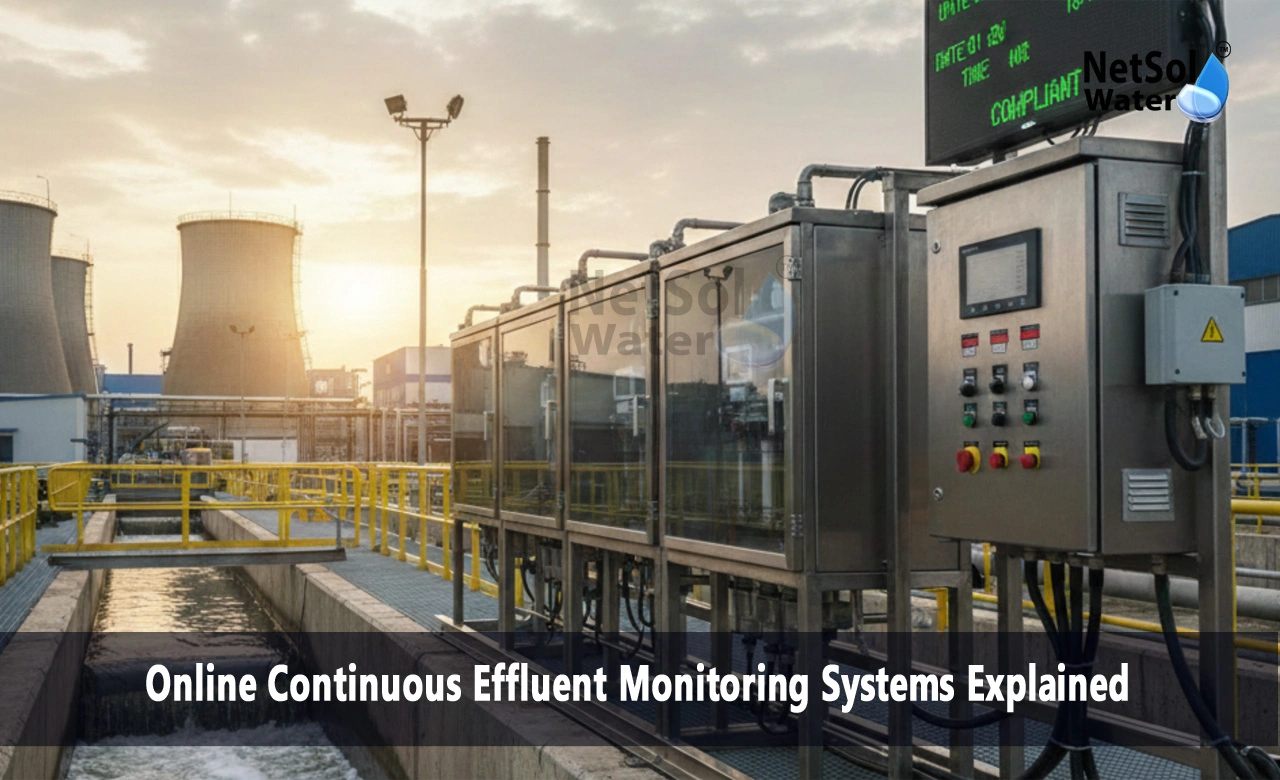
Online Continuous Effluent Monitoring Systems Explained
Environmental compliance is no longer a periodical sampling and reporting practice. Pollution Control Boards are making more and more use of real-time data to determine how industries are controlling their effluent. This shift has made Online Continuous Effluent Monitoring Systems a critical component of industrial wastewater compliance. Such systems also offer round the clock, automatic control of the quality of effluent and send the data to the regulatory authorities eliminating the possibilities of manipulation and delay in reporting.
Understanding how online continuous effluent monitoring systems work, why they are mandatory, and how they should be operated is essential for industries running effluent treatment plants.
What Are Online Continuous Effluent Monitoring Systems?
Online continuous effluent monitoring systems are automated setups installed at the final discharge point of an ETP. They also constantly measure the main parameters of the effluent with the help of sensors and analyzers and transfer this information to the servers of Pollution Control Board over the secure communication networks.
These systems generate a record of continued compliance as opposed to laboratory testing which contains snapshot results. This enables the regulators to monitor the trends of performance, identify the violations at an initial stage, and assess the discipline of operations.
Why Online Continuous Effluent Monitoring Systems Are Mandatory?
1: Real-Time Compliance Assurance
Pollution Control Boards demand to be on a constant data to help make sure that industries do not exceed the discharge limits at any point in time not only when sampled. Online tracking gets rid of the chances of temporary obedience covering permanent infractions.
2: Data Integrity and Transparency
Data transmission is done manually minimized through automated system. This enhances the credibility of the data and creates regulatory confidence particularly among the high pollution potential industries.
3: Quickly Identifying Process Failures
Ongoing surveillance serves in detecting failures of treatment like chemical overdose, biological upsets or hydraulic overloads before they evolve into significant non-compliance incidents.
Key Parameters Monitored in Online Continuous Effluent Monitoring Systems
· pH and Temperature: The basic measures of the stability of treatment are pH and temperature. Acute changes are typically indicative of a chemical disequilibrium or biological strain, or equipment failure.
· Flow Rate Measurement: Monitoring of flow will help in making sure that the volumes of effluent discharges do not exceed the allowable levels. Abusiveness in the flow patterns may be in the form of by-passing, leakage or hydraulic overloading.
· Organic Load Indicators: Organic strength indicators and others are used as parameters to monitor the efficiency of the treatment. Constant elevated readings are signs of poor functioning biological or physico-chemical processes.
· Other Regulatory Parameters: According to the type of industry, regulators might mandate observance of the conductivity, turbidity, or certain pollutants. Consent conditions normally define these requirements.
System Components of Online Continuous Effluent Monitoring Systems
1: Sensors and Analyzers
They are fitted in direct in the effluent stream or sampling chamber. The correct choice and location of sensors are important to achieve quality measurements and durability.
2: Data Acquisition, Logging Unit
This unit gathers information on the sensors, transforms it into a uniform format and stores locally before being transmitted. It provides continuity of data in the event of network failure.
3: Communication Network
The information is shared with the servers of Pollution Control Board via secure modes of communication. Any breach in data flow is indicated as a compliance problem.
4: Central Display and Alerts
Monitoring data also is provided to industries in real-time. Alerts assist the operators to take remedial measures before violations are realized.
Operational Challenges in Online Continuous Effluent Monitoring Systems
· Sensor Fouling and Drift: The nature of the effluente.g. oil, suspended solids or biological growth may influence the sensor accuracy. Unless it is cleaned and calibrated regularly, it loses the reliability of the data.
· Poor Fit between Treatment and Monitoring: Most of the industries are concentrated on maintaining the sensors running but not on the stability of treatment. Such gaps are revealed in a short period on online monitoring which will result in constant non-compliance messages.:
· Information Vacuoles and Lapses in Communication: Data gaps can be caused by power outage, network problems or low maintenance. The Pollution Control Boards tend to perceive long periods of data loss as being the same as failure to comply.
Best Practices of reliable online monitoring compliance
It is important to have regular calibration with the use of standard solutions. Temporal arrangements of the maintenance should be focused on the nature of the effluent and not on uniform schedules. The operators are supposed to be trained so that they can interpret trends as opposed to responding to alarms. The combination of online monitoring data with logs of the ETP operation and laboratory analysis will increase the overall compliance control.
The use of Online Monitoring in Regulatory Audits
In the case of inspections, the authorities contrast online data to laboratory reports, flow records, and records of chemical consumption. Every inconsistency gives alarms. The industries that have predictable trends in online data are usually less inspected and approvers consent renewed more easily.
Conclusion
Online Continuous Effluent Monitoring Systems have transformed environmental compliance from periodic verification to continuous accountability. They do not only serve as regulatory mechanisms but are effective means of operations that enhance treatment stability, minimize environmental risk and enhance transparency. Online monitoring can be viewed as a component of ETP management and not a liability imposed by the regulations, and industries that view it as a chance to enhance their business positions would be in a better position to fulfill the expectations of regulatory authorities and continue their operations in the long term.
Netsol Water is Greater Noida-based leading water & wastewater treatment plant manufacturer. We are industry's most demanding company based on client review and work quality. We are known as best commercial RO plant manufacturers, industrial RO plant manufacturer, sewage treatment plant manufacturer, Water Softener Plant Manufacturers and effluent treatment plant manufacturers. Apart from this 24x7 customer support is our USP. Call on +91-9650608473, or write us at enquiry@netsolwater.com for any support, inquiry or product-purchase related query.