

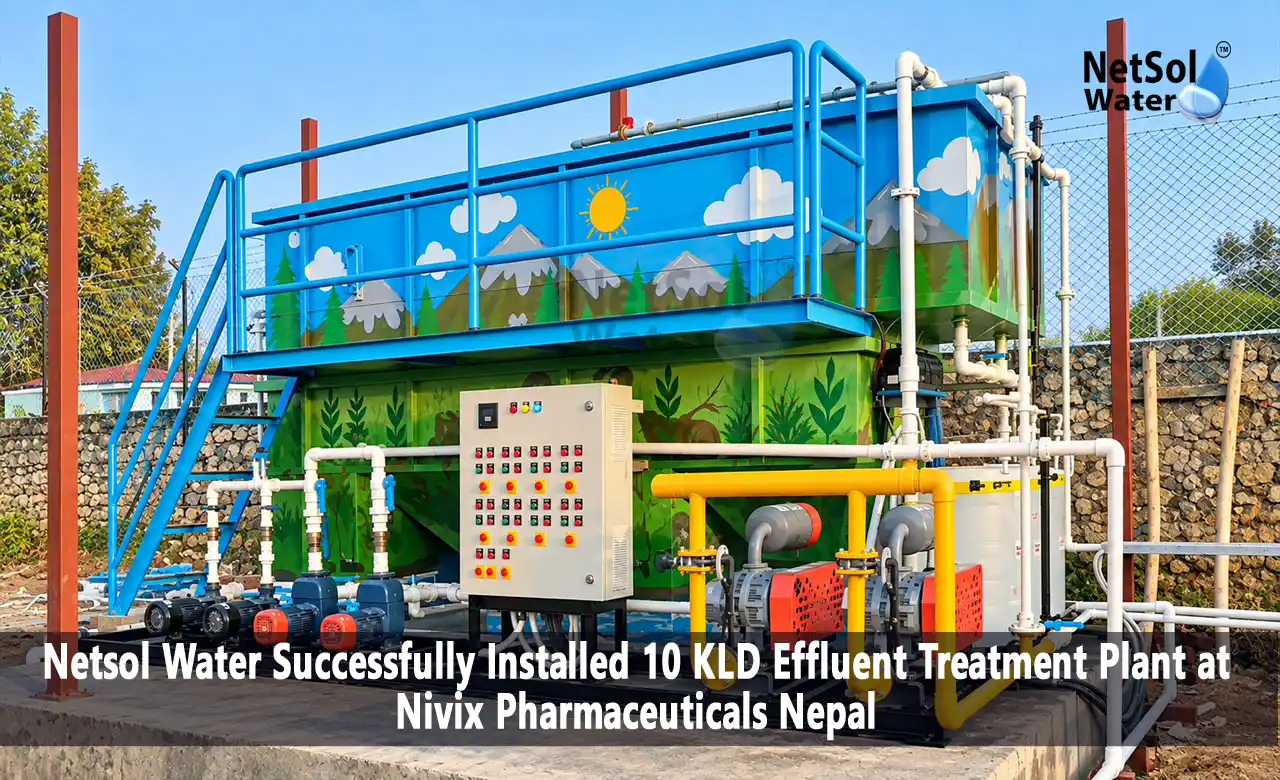
Case Study: Installed 10 KLD ETP Plant at Nivix Pharmaceuticals, Nepal
Netsol Water designed, supplied, installed and commissioned a 10 KLD Effluent Treatment Plant for Nivix Pharmaceuticals in Nepal. The project was undertaken to treat pharmaceutical process and washing wastewater generated at the facility before its safe discharge or reuse. This case study walks through the project background, the treatment approach adopted, the equipment involved, and the practical benefits the plant brings to the client's operations.
Project Overview
Pharmaceutical manufacturing generates wastewater that is far more variable and chemically complex than ordinary sewage. Nivix Pharmaceuticals needed a dependable, compact treatment system that could handle this variability consistently, day after day, without demanding constant supervision. Netsol Water's engineering team studied the site conditions and wastewater generation pattern before finalizing a 10 KLD ETP design suited to the facility's scale of operation.
| Detail | Description |
|---|---|
| Client | Nivix Pharmaceuticals |
| Location | Nepal |
| Industry | Pharmaceutical Manufacturing |
| Plant Type | Effluent Treatment Plant (ETP) |
| Capacity | 10 KLD |
| Application | Treatment of pharmaceutical process and wash-water effluent |
| Project Scope | Design, supply, installation and commissioning |
| Technology/Treatment Approach | Physico-chemical treatment combined with biological treatment and tertiary polishing |
| Executed By | Netsol Water Solutions Pvt. Ltd. |
A 10 KLD capacity means the plant is engineered to treat up to 10,000 litres of effluent in a 24-hour cycle. For a facility of Nivix Pharmaceuticals' scale, this capacity is enough to comfortably accommodate daily wastewater generation from production and cleaning activities, while leaving a reasonable operating margin for day-to-day fluctuations in flow.
About Nivix Pharmaceuticals
Nivix Pharmaceuticals operates as a pharmaceutical manufacturing unit in Nepal, involved in producing formulations that require strict process control and hygiene standards. Like most pharmaceutical manufacturers, the facility generates wastewater as a byproduct of formulation, equipment cleaning, and washing operations.
In pharmaceutical manufacturing, wastewater management is not an afterthought it is a core operational responsibility. Effluent from such units can carry residues of active ingredients, cleaning agents, and other process-related substances. If discharged untreated, this wastewater can affect surrounding soil, water bodies, and the broader environment. For a facility like Nivix Pharmaceuticals, having a properly functioning Effluent Treatment Plant for Pharmaceutical Industry is essential to operating responsibly and sustainably.
Project Background
Pharmaceutical effluent typically originates from a mix of sources, and Nivix Pharmaceuticals' wastewater stream reflected the same general pattern seen across the sector:
. Process wastewater from formulation and manufacturing activities
. Cleaning and washing wastewater from equipment, floors, and vessel rinsing
. Variable wastewater characteristics, since flow and pollutant load shift with production schedules
. Suspended solids carried over from process residues
. Organic pollutants contributing to biochemical and chemical oxygen demand
. pH variations from the use of different cleaning and process chemicals
. Chemical residues left behind from formulation and cleaning operations
This makes pharmaceutical wastewater fundamentally different from domestic sewage. Municipal effluent is relatively predictable; pharmaceutical effluent can shift in character from batch to batch. A system built only for steady, low-strength wastewater would struggle to cope. Nivix Pharmaceuticals needed a plant engineered with this variability in mind one that would actively manage and stabilize wastewater rather than simply pass it through a fixed process.
Wastewater Treatment Requirement and Project Challenges
Based on the nature of the effluent generated at the facility, the project brief centered around several practical requirements:
. Effective treatment of pharmaceutical-origin effluent without oversized infrastructure
. Flow equalization to smooth out variations in incoming wastewater volume and strength
. pH control to bring effluent within a workable range before further treatment
. Reduction of suspended solids to protect downstream equipment and improve clarity
. Reduction of organic load through combined chemical and biological steps
. A chemical treatment stage capable of handling colloidal and fine particulate matter
. A biological treatment stage to address biodegradable organic content
. Reliable clarification to separate treated water from settled solids
. Final polishing for improved aesthetic and residual water quality
. Compact plant arrangement, since industrial sites often have limited space
. Simple, reliable operation that facility staff could manage without specialized training
These were treated as real, site-specific requirements rather than generic checklist items. The plant had to fit within the available footprint while still delivering consistent, multi-stage treatment.
Netsol Water's 10 KLD ETP Solution
Netsol Water proposed a customized 10 KLD Effluent Treatment Plant built around a combined physico-chemical and biological treatment philosophy. Pharmaceutical wastewater usually contains both particulate matter that responds well to chemical treatment and dissolved organic matter better addressed biologically relying on only one mechanism rarely gives consistent results across varying effluent conditions.
The overall process flow adopted for the project follows this sequence:
Collection/Screening → Equalization → Coagulation → Flocculation → Primary Clarification → Biological Treatment → Secondary Clarification → Disinfection → Pressure Sand Filtration → Activated Carbon Filtration
Each stage performs a distinct function. Screening protects the system from coarse debris; equalization absorbs shock loads; coagulation and flocculation destabilize and aggregate fine particles; clarification removes the resulting flocs; biological treatment breaks down organic pollutants; secondary clarification separates biological solids; disinfection addresses pathogenic content; and final filtration polishes the water to the desired clarity.
Detailed Treatment Process
. Bar Screen Chamber
Raw effluent first passes through a bar screen chamber, where coarse floating material and larger solids are physically intercepted. Without this step, downstream pumps and equipment would face unnecessary wear and clogging screening acts as the first line of defense for the whole system.
. Equalization Tank
From screening, wastewater flows into the equalization tank. Pharmaceutical facilities rarely discharge effluent at a constant rate flow spikes during cleaning cycles, and pollutant concentration varies from batch to batch. The tank buffers these fluctuations by holding and blending wastewater, so what enters downstream treatment is more uniform, protecting the chemical and biological stages from shock loads.
. Coagulation
Equalized wastewater then undergoes chemical coagulation. Fine particles and colloidal matter in pharmaceutical effluent carry a natural electrical charge that keeps them suspended. Coagulant dosing neutralizes this charge, allowing dispersed particles to begin coming together essential wherever suspended and colloidal solids form a significant part of the pollutant load.
. Flocculation
After coagulation, wastewater is gently and continuously mixed in the flocculation stage. This controlled agitation lets destabilized micro-particles collide and bind into larger, heavier flocs. Mixing intensity matters: too vigorous and flocs break apart; too weak and particles fail to aggregate. Well-formed flocs are what make the next stage effective.
. Primary Clarification / Tube Settler
Flocculated wastewater moves into a primary clarifier fitted with a tube settler. As water passes through the inclined tube plates, flocs settle under gravity while clear water rises to the top. Tube settlers increase effective settling area within a compact footprint, reducing suspended solids and turbidity before biological treatment.
. Aeration Tank / Biological Treatment
Clarified effluent enters the aeration tank, where biological treatment takes over. Air is introduced to maintain the dissolved oxygen levels aerobic microorganisms need to remain active. These organisms consume biodegradable organic matter as part of their metabolism, converting it into biomass, water and carbon dioxide the primary mechanism for reducing BOD/COD, the indicators of organic pollution.
. Secondary Clarification / Tube Settler
The mixed liquor from aeration then passes into a secondary clarifier, again with a tube-settler configuration, where biological solids (sludge) are separated from the treated water. This keeps the biomass responsible for breaking down organic matter from carrying forward into the final effluent.
. Chlorine Contact Tank
Before final filtration, clarified water passes through a chlorine contact tank. Disinfection here addresses pathogenic microorganisms remaining after biological treatment, with adequate contact time provided for the disinfectant to act effectively.
. Pressure Sand Filter (PSF)
Disinfected water then passes through a Pressure Sand Filter, a tertiary polishing step that traps fine suspended particles carried over from earlier stages, improving clarity and reducing residual turbidity.
. Activated Carbon Filter (ACF)
As a final stage, water passes through an Activated Carbon Filter. Its porous structure adsorbs residual colour, odour-causing compounds, and certain dissolved organics that survive earlier steps, rounding off the treatment train.
Major Equipment and Technology Highlights
| Feature | Role in the Plant |
|---|---|
| 10 KLD treatment capacity | Sized to the facility's daily effluent generation |
| Equalization system | Balances flow and load variations |
| Chemical dosing system | Enables controlled coagulant dosing |
| Coagulation and flocculation units | Aggregate fine and colloidal solids |
| Tube-settler clarifiers (primary & secondary) | Compact, efficient solids separation |
| Biological aeration system | Reduces organic (BOD/COD) load |
| Chlorine contact tank | Disinfects treated water |
| Pressure Sand Filter | Removes residual suspended particles |
| Activated Carbon Filter | Removes colour, odour and residual organics |
| Sludge handling arrangement | Manages solids generated during treatment |
Installation and Commissioning
. Site Preparation
Netsol Water's team assessed available space at the facility to plan equipment layout for smooth wastewater flow between stages, making the best use of the compact footprint on site.
. Equipment Installation
Treatment units screening chamber, equalization tank, chemical dosing arrangement, clarifiers, aeration system, chlorine contact tank, PSF and ACF were installed per the finalized layout, along with associated pumps and blowers.
. Piping and Interconnections
Hydraulic interconnections were established between each stage, ensuring wastewater moves through the sequence screening to final filtration without leaks or flow imbalance.
. Electrical and Control Work
Electrical connections were completed for pumps, blowers and dosing equipment, with operational arrangements set up for facility staff to run the plant reliably as part of routine operations.
. Testing and Commissioning
Once installed, the plant underwent testing and commissioning trials checking equipment performance, verifying flow through the treatment train, and confirming each stage functioned as intended before handover for regular operation.
Treatment Performance and Water Quality
A multi-stage treatment train of this kind combining physico-chemical and biological processes with tertiary filtration is designed to bring about a substantial improvement across the key indicators of wastewater quality: suspended solids, turbidity, organic load (BOD/COD), and pH.
In practical terms, the treatment sequence at Nivix Pharmaceuticals works to:
. Bring pH within a workable, near-neutral range through controlled dosing
. Reduce suspended solids and turbidity through coagulation, flocculation and clarification
. Lower organic pollutant levels through biological treatment in the aeration stage
. Improve final clarity, colour and odour through pressure sand and activated carbon filtration
Since site-specific laboratory test reports for this installation have not been referenced here, this case study does not present numerical before-and-after values or claim compliance with a specific discharge standard. Any such figures, once independently verified for the Nivix Pharmaceuticals plant, would need to be confirmed through actual test reports before being cited.
Project Benefits
. Environmental Benefits
. More structured and responsible handling of pharmaceutical wastewater
. Reduction of pollutant load before discharge or reuse
. A more environmentally accountable approach to industrial effluent management
. Operational Benefits
. A systematic, multi-stage treatment sequence rather than a single-step process
. Better control over wastewater handling across varying flow conditions
. Noticeably improved treated-water quality compared to untreated effluent
. Maintenance Benefits
. Treatment stages arranged for straightforward access and monitoring
. A structured process flow that makes day-to-day operation easier to manage
. Simplified upkeep for facility staff without requiring specialized expertise
Project Video
10 KLD ETP Plant Installation at Nivix Pharmaceuticals, Nepal
To help visualize how the plant looks and operates on site, Netsol Water has shared a video walkthrough of the installed 10 KLD ETP at Nivix Pharmaceuticals. It offers a practical, on-ground view of the treatment setup covered throughout this case study.
Why Netsol Water for Pharmaceutical ETP Projects?
Pharmaceutical effluent treatment calls for more than a standard, off-the-shelf setup it requires a treatment train tailored to the specific wastewater profile of the facility. Netsol Water's approach to the Nivix Pharmaceuticals project reflects the strengths the company brings to industrial wastewater treatment more broadly:
. Customized ETP solutions designed around actual site conditions rather than fixed templates
. Practical experience in industrial and pharmaceutical wastewater-treatment solutions
. In-house design and engineering capability for compact, efficient treatment layouts
. End-to-end installation and commissioning support
. After-sales and service support to help plants continue running reliably
. AMC (Annual Maintenance Contract) support where facilities need ongoing operational assistance
. Hands-on project execution experience, from site assessment through to handover
Conclusion
Nivix Pharmaceuticals needed a dependable way to manage the variable, chemically complex wastewater generated at its manufacturing facility in Nepal. Netsol Water responded with a customized 10 KLD Effluent Treatment Plant, built around a multi-stage treatment sequence combining chemical treatment, biological treatment, and tertiary filtration. Proper effluent treatment is not optional for pharmaceutical manufacturers it is central to operating responsibly. Through this project, Netsol Water helped Nivix Pharmaceuticals put a structured, workable treatment system in place. Industries facing similar wastewater-treatment requirements are welcome to discuss their site-specific needs with Netsol Water's engineering team.
Frequently Asked Questions (FAQs)
Q1. What is the capacity of the ETP installed at Nivix Pharmaceuticals?
Netsol Water installed a 10 KLD Effluent Treatment Plant at Nivix Pharmaceuticals, capable of treating up to 10,000 litres of pharmaceutical wastewater per day, sized according to the facility's daily effluent generation pattern.
Q2. Where was the 10 KLD ETP installed?
The plant was installed at the Nivix Pharmaceuticals manufacturing facility in Nepal, as part of a design, supply, installation and commissioning project executed by Netsol Water Solutions Pvt. Ltd.
Q3. What type of wastewater does the Nivix Pharmaceuticals ETP treat?
The plant treats pharmaceutical process and washing wastewater, which typically includes suspended solids, organic pollutants, chemical residues, and varying pH levels arising from manufacturing and cleaning activities.
Q4. Why is an ETP important for pharmaceutical manufacturing?
Pharmaceutical wastewater can carry process residues and chemical contaminants that affect the environment if discharged untreated. An ETP allows manufacturers to treat this wastewater systematically before discharge or reuse, supporting responsible operations.
Q5. What is the purpose of the equalization tank in an ETP?
The equalization tank balances variations in incoming wastewater flow and strength, ensuring downstream chemical and biological treatment stages receive a more consistent feed rather than sudden shock loads.
Q6. What is the role of coagulation and flocculation?
Coagulation neutralizes the charge on fine, suspended and colloidal particles, while flocculation encourages these destabilized particles to combine into larger flocs that can be removed effectively during clarification.
Q7. What is the purpose of the PSF and ACF in the ETP?
The Pressure Sand Filter removes residual fine suspended particles for improved clarity, while the Activated Carbon Filter adsorbs residual colour, odour and certain dissolved organic compounds, polishing the final treated water.
Q8. Can Netsol Water design customized ETP plants for pharmaceutical industries?
Yes. Netsol Water designs, supplies, installs and commissions customized Effluent Treatment Plants for Pharmaceutical Industry applications, tailoring the treatment train to each facility's specific wastewater characteristics and site conditions.