

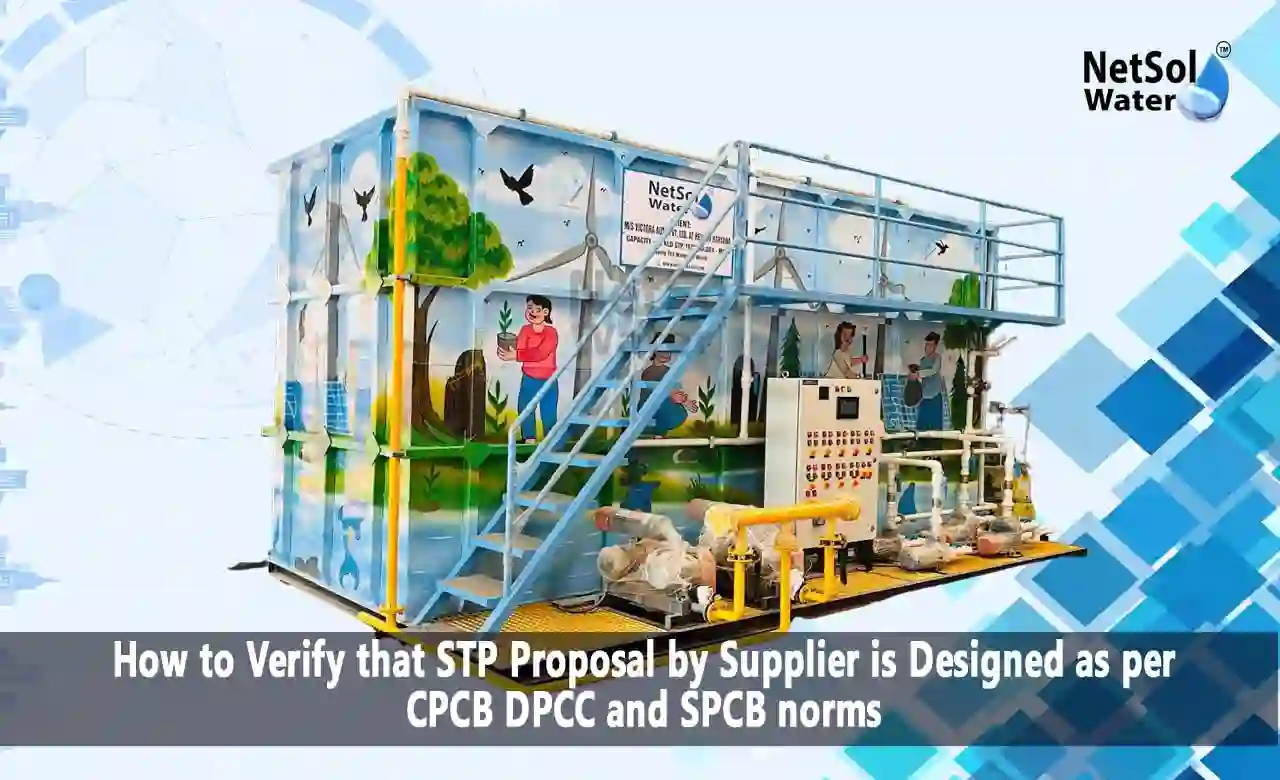
How to Verify an STP Proposal as per CPCB, DPCC & SPCB Norms?
Every industry, commercial building, housing society, hotel and institution that produces wastewater needs a sewage treatment plant that meets government standards. A well-designed sewage treatment plant helps protect water resources and keeps the environment clean. It also helps an organization meet legal requirements and avoid future problems during inspections. Many buyers focus on the price of the project but they often forget to check whether the design follows the rules issued by CPCB, DPCC and SPCB. This step is very important because a proposal that does not meet these standards can create operational issues and increase maintenance costs. That is why every buyer should understand how to verify that STP Proposal by the supplier is designed as per CPCB, DPCC and SPCB norms before making a final decision. A careful review helps you choose a system that performs well and delivers long-term value. Netsol Water is the leading manufacturer and supplier of sewage treatment plants that offers solutions designed according to approved environmental standards.
Check Whether the Design Meets CPCB DPCC and SPCB Guidelines
Before accepting any proposal you should first understand why compliance with government standards is important. Every sewage treatment plant must meet specific discharge standards and treatment requirements. A supplier should design the plant in a way that supports safe wastewater treatment and follows environmental rules. A proper review helps you avoid future changes that may increase project costs. Let us have a look on some important points that help you check whether the design follows CPCB, DPCC and SPCB guidelines.
1. Review the Treatment Process
The treatment process should clearly explain how wastewater moves through each stage of the plant. The proposal should describe screening, equalisation, biological treatment, clarification, filtration and disinfection in a logical order. Every stage should support the next stage and help produce treated water that meets the required standards. A clear process flow also shows that the supplier understands wastewater treatment and has planned the system carefully.
2. Check Design Parameters
The proposal should include details such as daily flow, wastewater quality, treated water quality and hydraulic calculations. These values should match the actual wastewater generation of the project. If the design values are incorrect then the plant may fail to deliver the expected results. A complete proposal always explains how these calculations support the treatment process.
Verify Equipment Quality and Technical Specifications
Equipment selection plays an important role in the overall performance of a sewage treatment plant. Even if the treatment process looks correct, poor equipment can affect efficiency and increase operating costs. Every buyer should examine the equipment details before approving the proposal. Let us have a look on some important areas that should be reviewed during equipment verification.
1. Examine Equipment Details
Each machine should have proper technical specifications. The proposal should mention the capacity, material of construction, motor ratings and operating conditions of pumps, blowers diffusers filters and other equipment. These details help you understand whether the selected equipment is suitable for the expected load. A complete specification also makes future maintenance easier because replacement parts can be identified without confusion.
2. Confirm Material Quality
The supplier should clearly mention the material used for tanks, pipelines, valves and supporting structures. Good quality materials improve the life of the plant and reduce maintenance needs. Corrosion resistant materials also perform better in wastewater treatment conditions. When material quality is clearly mentioned the buyer gains confidence in the durability of the complete system.
Evaluate Documentation and Regulatory Approvals
A complete proposal includes much more than drawings and equipment details. Proper documentation shows that the supplier has prepared the project with care and understands government expectations. It also makes future approvals and inspections easier. Let us have a look on some documents that should always be included with the proposal.
1. Study Technical Drawings
The proposal should contain layout drawings process flow diagrams piping drawings and equipment layouts. These drawings should match the technical specifications and process description. Clear drawings help engineers understand the complete project before construction begins. They also reduce confusion during installation and commissioning.
Check Supporting Documents
The supplier should provide design calculations, equipment data sheets, expected treated water quality and operation details. These documents support every technical claim made in the proposal. If any important document is missing then the buyer should request clarification before moving forward. Proper documentation also helps government authorities review the project during approval procedures.
Assess Supplier Experience and After Sales Support
The experience of the supplier has a direct effect on the success of the project. A company with strong technical knowledge can design install and maintain the plant more effectively. Good after sales support also helps the plant perform well for many years. Let us have a look on some factors that should be considered while evaluating the supplier.
1. Review Previous Projects
The supplier should share information about completed sewage treatment plant projects that are similar in size and application. Previous project experience shows that the company understands different wastewater conditions and can deliver practical solutions. Customer feedback and successful installations also increase confidence in the supplier.
2. Understand Service Support
A good supplier should provide installation guidance, commissioning support, operator training and maintenance services. Regular service helps the plant maintain treatment quality and reduces unexpected breakdowns. Spare parts should also be available without long waiting periods. Strong service support creates a better experience throughout the life of the sewage treatment plant.
Conclusion
Every organization should spend time reviewing technical details before approving a sewage treatment plant proposal. A careful evaluation helps confirm that the treatment process equipment documentation and service support meet the required standards. This approach reduces future risks and supports smooth plant operation for many years. If you want to verify that STP Proposal by supplier is designed as per CPCB, DPCC and SPCB norms then a detailed technical review is always the right step. Netsol Water is the leading manufacturer and supplier of sewage treatment plants with experienced professionals who help clients choose compliant and efficient solutions. Contact Netsol Water today to discuss your project and request expert guidance for a sewage treatment plant that meets your operational and environmental requirements.
Contact Netsol Water at:
Phone: +91-9650608473, Email: enquiry@netsolwater.com