

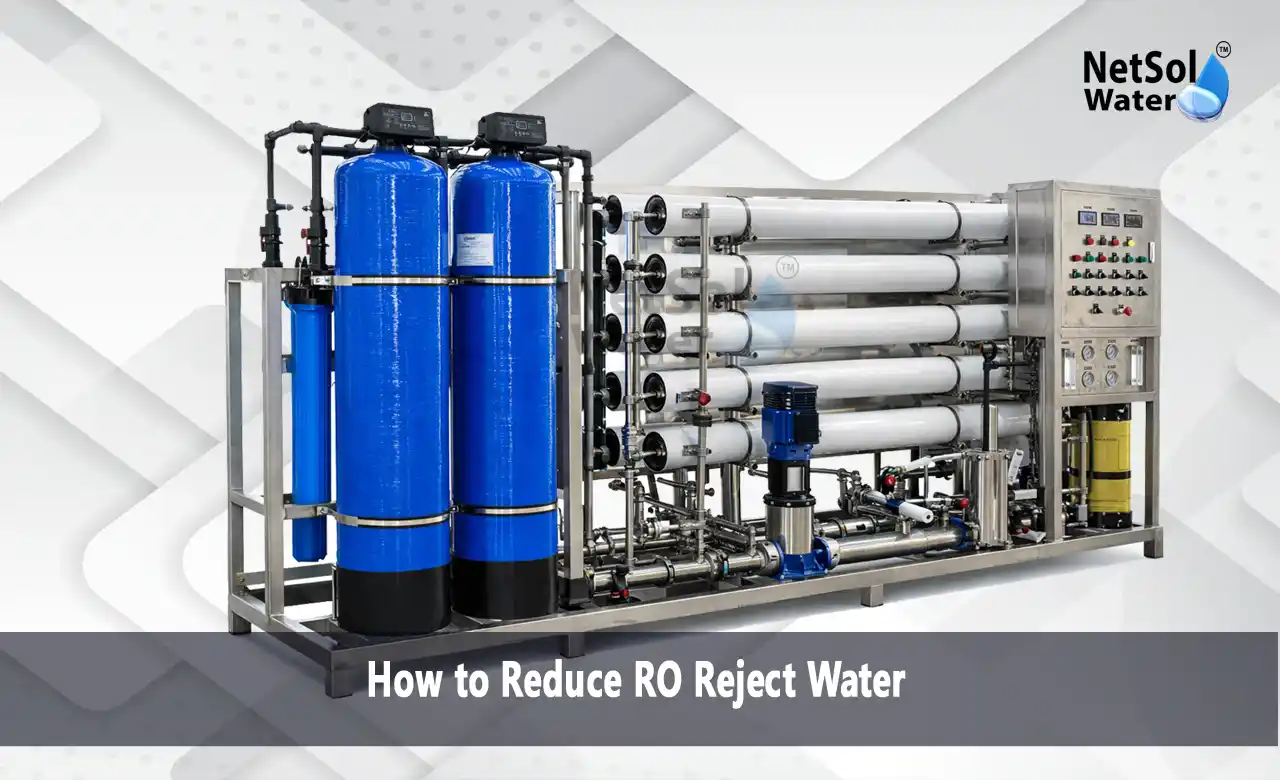
How to Reduce RO Reject Water?
Reverse Osmosis is an effective and useful water purification technology used to remove dissolved salts, minerals, and other impurities. The process, however, produces a high-strength wastewater stream called RO reject water or concentrate. The amount rejected largely depends on the recovery rate of the system, feed water quality, membrane condition, and operating conditions.
For commercial and industrial users, too much RO reject can lead to higher water usage, disposal costs of wastewater, and increased operating costs. Reducing this waste without compromising water treatment efficiency can be achieved by improving RO recovery and by identifying appropriate reuse solutions.
Understand Your RO Recovery Rate
The initial stage of lowering RO reject water is to grasp the current RO recovery rate.
RO recovery is the percentage of feed water that is recovered as permeate. An RO system with 60% recovery, for instance, will yield 60% permeate and 40% reject. The better the recovery, the more treated water is generated from the feed water.
Increasing recovery, however, should not be done merely on an incremental basis without evaluating the water chemistry. Too much recovery may lead to scaling, fouling, and damage to the membrane.
Test the Feed Water
The quality of the feed water is one of the biggest factors in the achievable RO recovery. Recovery may be inhibited by high levels of hardness, silica, iron, suspended solids, and other dissolved constituents.
In-depth water analysis can help determine the causes of scaling or fouling. This information enables operators to optimize pretreatment and set an appropriate recovery goal for the system.
Improve RO Pretreatment
One of the most significant factors in enhancing RO recovery is effective RO pretreatment.
Contaminants can be removed before water is sent to the RO membranes using multimedia filtration, activated carbon filtration, softening, cartridge filtration, ultrafiltration, or other appropriate filtration processes. Fouling and scaling are minimised through good pretreatment, allowing the membranes to function efficiently.
Another advantage of a well-managed pretreatment system is that it can prolong the life of the membrane and minimize the need for cleaning.
Maintain RO Membranes
Fouled or scaled membranes will need higher pressure to produce water. This consumes energy and may lead to decreased permeate flow.
If RO membranes are cleaned regularly and in a timely manner, they remain in good condition. Operators should monitor permeate flow, feed pressure, DP, conductivity, and salt rejection to determine if there are changes in performance.
Regularly cleaning membranes when initial fouling symptoms are noticed can help keep recovery stable.
Optimize Operating Pressure
It is important to run an RO system at the proper operating pressure to achieve efficient water recovery.
Excessive pressure can stress membranes and equipment, resulting in high energy use and a decrease in permeate production if set too high; very low pressure can also reduce permeate production. The optimal pressure depends on feed water quality, membrane type, temperature, and system design.
Operators can operate efficiently by maintaining regular pressure monitoring.
Use Proper Antiscalant Dosing
One of the significant constraints to RO recovery is scaling. Dissolved minerals may become concentrated and cause deposits on the membrane surface if they exceed their solubility limits.
Appropriate antiscalant dosing can help prevent scale formation. Overdosing or underdosing, however, can cause operating issues. Water analysis and the recommendations of the treatment system designer or chemical supplier should therefore be used for chemical dosing.
Optimize the Membrane Configuration
The arrangement of the membrane can impact the recovery and effectiveness of an RO plant.
By appropriately designing the staging and loading of membranes, water circulates through the system efficiently, and the concentration of dissolved solids does not exceed acceptable levels. For larger industrial RO plants, optimizing the membrane array can help achieve improved recovery without imposing high stress on each membrane element.
Changes to the system configuration should be verified by qualified RO personnel before implementation.
Consider a Second-Pass RO System
In certain applications, the first-stage RO reject can be subjected to further RO treatment in a second stage.
There is the possibility of recovering more water from the concentrate stream using a second-pass RO system or reject-recovery RO system. This can be a very effective way of enhancing overall water recovery if water quality and system economics allow.
In the recovery stage, further pretreatment might be necessary to avoid scaling and fouling problems.
Reuse RO Reject Water
Some of the reject water from RO systems can be reused, as long as the quality of the water is appropriate for the intended purpose.
. Common Reuse Applications
Applications may range from floor cleaning, toilet flushing, gardening, equipment washing, and certain industrial applications.
The water needs to be tested before being reused, because RO reject water is a concentrated stream of salts and other contaminants. Proper reuse can reduce the total water required at the facility.
Use Advanced Water Recovery Technologies
If high recovery is desired, more sophisticated technologies may be appropriate.
. Membrane Concentration & MVR
Membrane concentration and Mechanical Vapor Recompression (MVR) systems can be used to reclaim more water from concentrated reject streams, depending on the wastewater characteristics.
. Evaporators, Crystallizers & Zero Liquid Discharge (ZLD)
Evaporators, crystallizers, and Zero Liquid Discharge (ZLD) systems can further reclaim water from concentrated reject streams. These technologies generally involve higher capital and operating costs, so a technical and economic evaluation should be carried out prior to installation.
Monitor the System Regularly
Minimizing RO reject is a continuous process. Feed flow, permeate flow, reject flow, pressure, conductivity, and recovery percentage should be recorded regularly by operators.
Performance data aids in the detection of trends and helps determine if process improvements are having an impact. Automated monitoring can simplify this process by supplying real-time data and alarms when conditions fall outside the desired range.
Avoid Increasing Recovery Too Quickly
Raising the RO recovery rate without proper analysis can cause more issues than solutions.
Higher recovery leads to a higher concentration of salts in the system, which increases the risk of scaling and fouling of the membranes. Rather than making abrupt changes, recovery should be increased gradually, following evaluation of water chemistry, membrane characteristics, pretreatment results, and operating parameters.
The objective should be optimal recovery, not maximal recovery.
Conclusion
Decreasing RO reject water requires a mix of appropriate system design, effective pretreatment, proper membrane maintenance, optimal system operation, and suitable water reuse. Prior to increasing recovery, water quality should always be analysed, since scaling and fouling can reduce the amount of water recovered by an RO system.
Additional recovery systems or advanced technologies can be used for further savings at facilities with high water demand. Industries and commercial premises can lessen water wastage, cut down on operating expenses, and boost water efficiency by monitoring RO performance and choosing the proper recovery strategy.
Do you need advice or assistance in selecting the best water and wastewater treatment unit? We have solutions for all your problems!
Let us know your problem, our experts will make sure that it goes away.
For assistance or a related query,
Call on +91-9650608473
Or write us at enquiry@netsolwater.com