

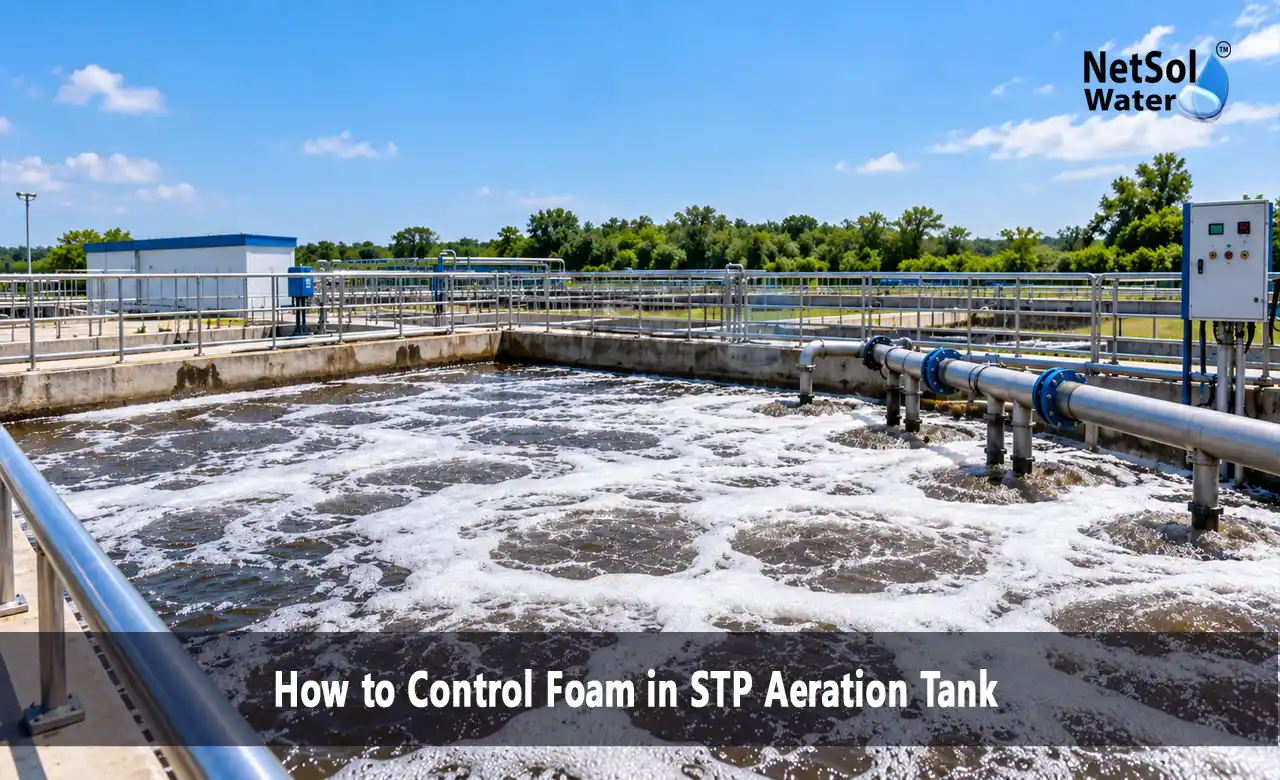
How to Control Foam in STP Aeration Tank: Causes, Fixes and Best Practices
A layer of foam floating on the aeration tank is one of the most common sights in a sewage treatment plant (STP). A little foam during start up is normal. Heavy, sticky or never ending foam is different. It tells you that something in the biology, the inflow or the air supply is out of balance, and it can hurt effluent quality, make the area unsafe and create a poor impression of the plant.
This guide explains why foam forms, how to read the type of foam you are seeing, and the practical steps operators can follow to bring it under control for good.
Why Does Foam Form in STP Aeration Tank?
Foam appears when air bubbles get trapped by materials that lower the surface tension of water. In an aeration tank these materials come from two places: the sewage itself, and the microorganisms living in the activated sludge.
. Surfactants from soaps, detergents and cleaning chemicals entering with the sewage.
. Filamentous bacteria that grow when sludge is too old or conditions are unbalanced.
. Oil, grease and fats that coat bubbles and make the foam stable.
. Strong or uneven aeration that churns the surface and whips up bubbles.
. Because several causes can look alike, treating the foam without finding the source usually gives only short relief.
Types of Foam and What They Tell You
Colour, thickness and how long the foam lasts are useful clues. Use the table below as a quick reference during your daily rounds.
| Foam type | Appearance | Likely cause | First action |
|---|---|---|---|
| Thin white foam | Light, bubbly, breaks easily | Plant start-up, low MLSS, young sludge, detergents | Raise MLSS gradually, check inflow for surfactants |
| Thick brown foam | Dense, greasy, stays on surface | Old sludge, filamentous bacteria, high sludge age | Increase sludge wasting, review F/M ratio |
| Dark, sticky foam | Slimy, scum-like layer | Nocardia-type growth, oil and grease in inflow | Remove foam, control oil and grease at source |
| Persistent white foam in a mature plant | Large bubbles, keeps returning | Detergent load, turbulent aeration | Trace the discharge point, adjust air supply |
7 Practical Steps to Control Foam in STP Aeration Tank
1. Find the Cause Before You Treat the Foam
Start by noting how thick the foam is, what colour it has and how fast it comes back after removal. Then look at sludge quality, dissolved oxygen, organic loading and recent changes in the inflow. A short log kept every day makes patterns easy to spot, and it saves the plant from guesswork.
2. Keep Dissolved Oxygen in the Right Range
Microorganisms need steady oxygen to break down waste. Too little DO weakens the biology, while too much wastes power and creates extra turbulence at the surface. Check DO at regular intervals and adjust blower output to match the actual load. Many conventional plants work with a DO of about 1.5 to 2 mg/L, but always follow the range given for your own process design.
3. Balance Sludge Age and MLSS
A high sludge age encourages filamentous organisms, which are a leading cause of thick brown foam. Track MLSS, sludge volume index (SVI), return activated sludge (RAS) and wasting rates together. Change wasting and return flows based on what the process needs, not simply because foam has appeared on the surface.
4. Control Detergents and Surfactants at the Source
Residential buildings, hotels, hospitals and commercial kitchens often send detergent rich water to the plant. If foam rises at a certain time of day, trace the discharge point that matches it. Source control, grease traps and an equalization tank can smooth out sudden load changes and reduce their effect on the aeration tank.
5. Correct Aeration and Air Distribution
Blocked diffusers, faulty valves and wrong blower settings lead to uneven air and a rough, bubbly surface. Inspect the air header, branch lines and diffusers on a schedule and clean or replace parts that are damaged. The aim is to supply enough oxygen evenly without over aerating. Well maintained blowers and diffusers make a big difference here.
6. Remove Excess Foam Mechanically
Surface sprays, foam skimmers and other removal systems can keep the tank clean while you work on the real cause. Handle the removed foam safely and do not let it flow to areas where it can create environmental or operating problems. Remember that removal only manages what you can see. It does not fix why the foam formed.
7. Use Antifoam Chemicals with Care
Antifoam can give quick relief when foam is out of control, but it should never be the first answer to persistent biological foam. Some products can reduce oxygen transfer or disturb downstream treatment. Select a product based on compatibility with your process and the maker’s advice, and run a jar test or a small controlled trial when in doubt.
Daily Operator Checklist for Foam Control
. Record foam colour, thickness and coverage at each round.
. Measure DO, pH and MLSS and compare with normal values.
. Check blower output, diffuser pattern and air valves.
. Review any change in inflow from kitchens, laundries or cleaning activity.
. Confirm that sludge wasting and RAS are set to plan.
. Inspect skimmers, sprays and the foam disposal path.
When Should You Call an Expert?
If foam keeps returning after you have corrected aeration, sludge age and inflow, it may be time for a detailed process audit. A specialist can examine the sludge, test the influent and suggest a lasting fix. Plants that follow a planned annual maintenance contract (AMC) usually face fewer surprises, and the team at Netsol Water offers AMC and troubleshooting support for STPs.
Foam behaves differently in different plant designs, so it helps to know your technology. Read how the MBBR process works in sewage treatment plants, learn how MBR technology is changing sewage treatment, or compare all the technologies used in sewage treatment plants. Planning a new plant? Explore our sewage treatment plant manufacturer page, our compact sewage treatment plants, and our effluent treatment plants (ETP) for industrial wastewater.
Frequently Asked Questions
Q1. Is some foam normal in an aeration tank?
Yes. Light white foam is common during start up or when the sludge is still building. It is only a concern when foam turns thick, dark or stays for long periods.
Q2. Can I use antifoam every day?
It is not advised. Daily use hides the real issue and may affect oxygen transfer and the biology. Use it as a short term support while you correct the cause.
Q3. How long does it take to stop foaming after corrective action?
It depends on the cause. Detergent related foam can ease within a few days once the source is controlled, while foam linked to sludge age may take longer because the biology needs time to recover.
Conclusion
Foam control in STP aeration tank comes down to understanding why it forms and keeping the process stable. Watch DO, sludge age, MLSS, inflow quality and aeration performance, and take corrective action based on what these readings show. Mechanical removal and compatible antifoam can help along the way, but chemical suppression alone will not give long term results. A well balanced treatment process is the real answer.
Need help with a foaming problem at your plant? Contact Netsol Water or get a free quote for an inspection and a practical solution.