

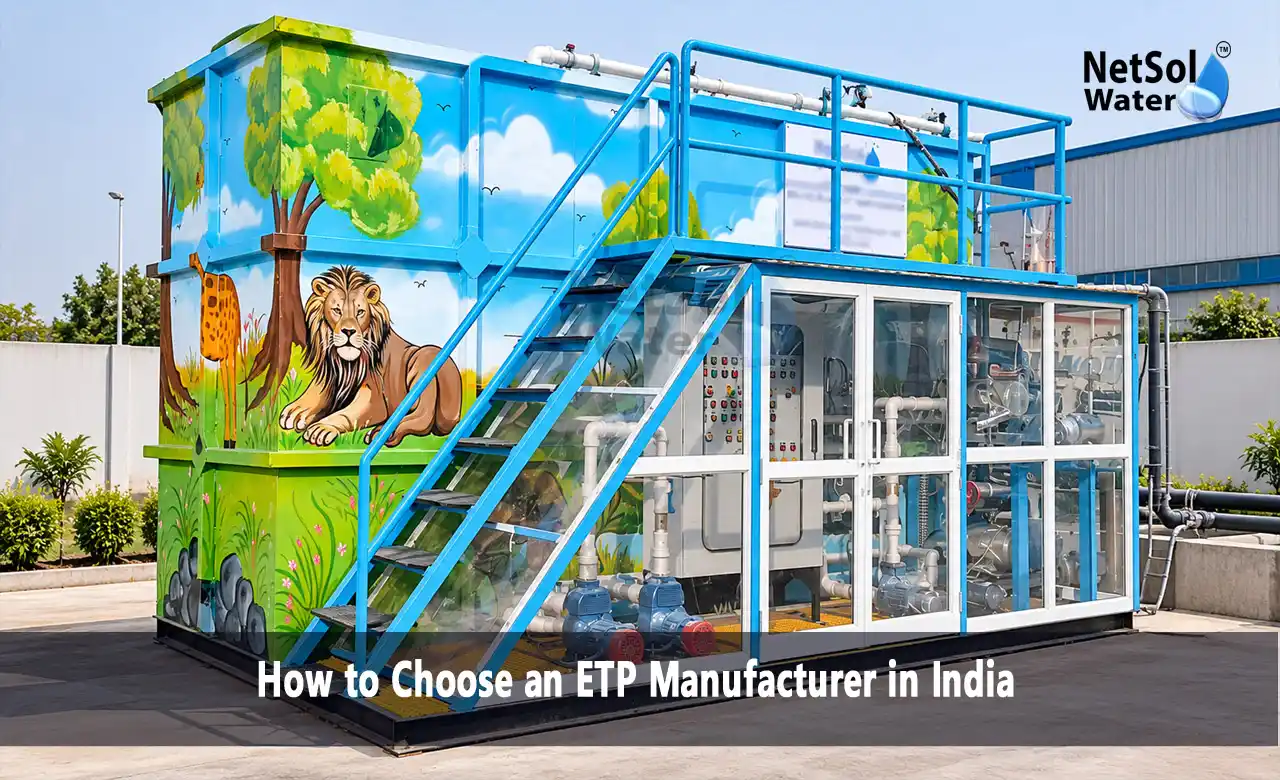
How to Choose an ETP Manufacturer in India?
An effluent treatment plant is not a one time purchase. Once it is commissioned, you live with its power bill, chemical use, sludge handling and service calls for years. A plant that looks fine on a quotation can still fail on the first inspection by the pollution control board, or quietly drain your budget every month.
That is why the manufacturer matters more than the price list. This guide gives you 15 questions to put to every supplier, along with what a good answer sounds like and what should make you pause. Use it to compare quotes on equal terms before you sign anything.
Why the Right ETP Manufacturer Matters?
Every factory produces a different kind of wastewater. A dye house, a dairy, a pharma unit and a metal finishing shop each carry different oils, solids, salts and chemicals. A supplier who hands you a standard drawing without studying your effluent is guessing, and you carry the risk of that guess.
A good ETP partner studies your process, designs around your actual flow and load, builds with suitable materials, commissions the plant properly and stays reachable afterwards. If you want to see how a full service effluent treatment plant manufacturer in India presents its capacity range, technologies and industries served, compare that against what your shortlisted suppliers show you.
Experience and Plant Design
1. Have you worked with my industry before?
Ask for two or three completed projects in your sector. Wastewater from a textile unit behaves very differently from food processing effluent. A supplier with relevant experience will name the likely problem pollutants without being prompted.
2. Will you test our wastewater before designing the plant?
Insist on this. Share samples from different shifts and production days, not just one convenient morning. Flow and quality data decide the treatment stages, so a supplier who skips testing is designing blind.
3. How do you decide the plant capacity?
Capacity should rest on daily flow, peak flow and a realistic growth plan. If you expect to add a production line in two years, say so now. Adding capacity later is usually costlier than planning space and hydraulics for it upfront.
Technology and Treated Water Quality
4. Why is this technology right for our effluent?
Whether the proposal uses physical, chemical, biological or membrane stages, the supplier should explain the reason in plain language. The answer should be tied to your test results and your discharge or reuse goal, not to what the supplier happens to sell most.
5. What treated water quality will you guarantee?
Ask for written targets on parameters such as BOD, COD, TSS and pH, along with the inlet conditions those targets depend on. A guarantee with no stated conditions is not much of a guarantee.
6. Can the treated water be reused?
Tell the supplier early if you plan to reuse water for cooling, washing, gardening or process use. Reuse often needs extra filtration or polishing, and adding it after the design is frozen costs more.
Compliance, Materials and Handover
7. How will the plant meet CPCB and SPCB requirements?
Discharge limits depend on your industry, location and the consent conditions issued to your unit. Ask the supplier to read your consent to operate and confirm in writing which limits the design is built to meet.
8. Which materials and components will you use?
Ask why each tank, pump, pipe, blower and control panel was chosen. Corrosive or high salinity effluent can destroy the wrong material quickly. Branded, replaceable components also make future repairs simpler.
9. What checks and documents do we receive at handover?
Request commissioning test results, operating instructions, drawings and a list of critical spares. These papers prove that the plant was tested against the agreed performance and help your team run it correctly.
Price, Installation and Running Cost
10. What exactly is included in the quoted price?
Check whether transport, civil work, piping, electrical connections, installation, commissioning and operator training are inside the quote. Two quotes are only comparable when the scope is the same.
11. What will it cost to run the plant every month?
Ask for an estimate covering electricity, chemicals, manpower, sludge disposal and spares. A cheaper plant that needs heavy chemical dosing or constant attention can cost more over a few years than a better designed one.
12. What is the project timeline?
Get dates for design approval, manufacturing, delivery, installation and commissioning. Also agree who is responsible for site readiness, since delays often start with civil work or power connections that nobody owned.
After Sales Service and Proof of Work
13. Do you offer maintenance and emergency support?
Ask about response time, spare parts availability and annual maintenance contract options. When a blower or dosing pump fails, a delay of a few days can push your effluent out of limits.
14. Will you train our operators?
Good training covers daily checks, chemical dosing, sludge handling and basic troubleshooting. A well trained operator prevents most breakdowns before they begin.
15. Can you share references from completed projects?
Request references from plants with similar capacity and effluent. Call them and ask about performance, service response and actual running cost compared to what was promised.
Quick Comparison: Good Answers and Red Flags
| Topic | What a Good Supplier Says | Red Flag |
|---|---|---|
| Design Basis | Uses your test data and peak flow | Offers a standard model without any testing |
| Technology | Explains each stage and why it is needed | Cannot justify the process chosen |
| Performance | Gives written limits with inlet conditions | Verbal promises only |
| Compliance | Reads your consent conditions first | Says approval is your problem |
| Quote Scope | Itemised, with exclusions listed | One lump sum with no breakup |
| Service | Defined response time and AMC terms | No clear support plan after handover |
How to Use This Checklist?
. Send the same list of questions to every shortlisted supplier and ask for answers in writing.
. Score each answer on clarity, evidence and relevance to your industry.
. Visit at least one running plant, not only the factory or showroom.
. Compare five year cost, which means purchase price plus running cost, not the quotation alone.
What to Expect from Netsol Water?
Netsol Water designs and builds effluent treatment systems for industries across India, with solutions shaped around effluent composition, site conditions and discharge norms. Its team can walk you through sizing, treatment stages and reuse options for your unit. You can read more about its range as an ETP plant manufacturer and then share your effluent details to get a design specific to your plant.
Frequently Asked Questions (FAQs)
Q1. How long does it take to install an ETP?
It depends on capacity, technology and site readiness. Smaller packaged plants move faster than large site built systems. Ask the supplier for a dated schedule that includes design approval, manufacturing and commissioning.
Q2. What affects ETP plant cost the most?
Effluent strength, treatment stages, capacity, material of construction and the level of automation. Reuse and zero liquid discharge requirements also add to the cost.
Q3. Is a cheaper ETP quote a bad sign?
Not always, but check scope and running cost before you accept it. A low price with missing items or a weak design often becomes expensive after installation.
Q4. Do I need an annual maintenance contract?
If you do not have trained in house staff, an AMC is a practical choice. It keeps inspections regular and gives you a known contact when something goes wrong.
Conclusion
Choosing an ETP manufacturer in India is about more than comparing prices. Look at the supplier’s experience in your industry, how they study your wastewater, what they promise in writing, how they handle compliance and how they support the plant after commissioning. Put these 15 questions to every supplier, compare the answers side by side and pick the partner whose answers are specific, documented and backed by running plants.