

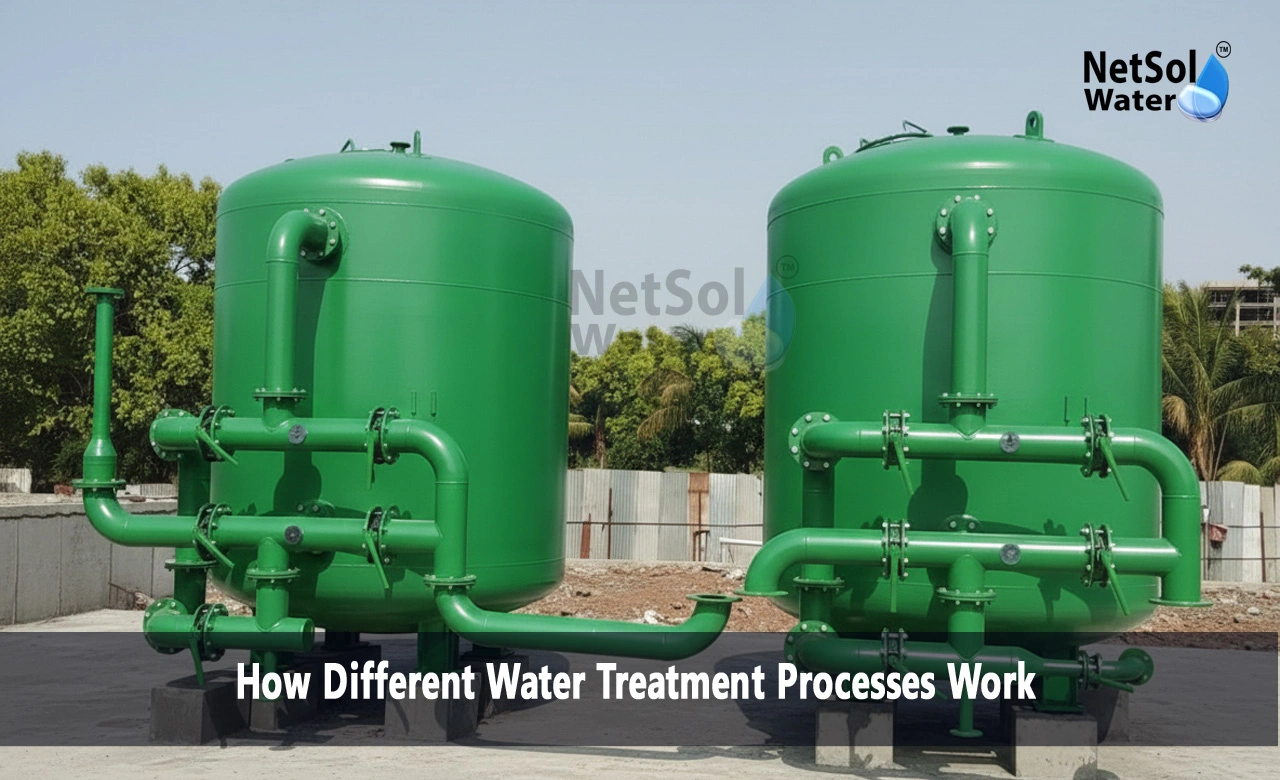
How Different Water Treatment Processes Work?
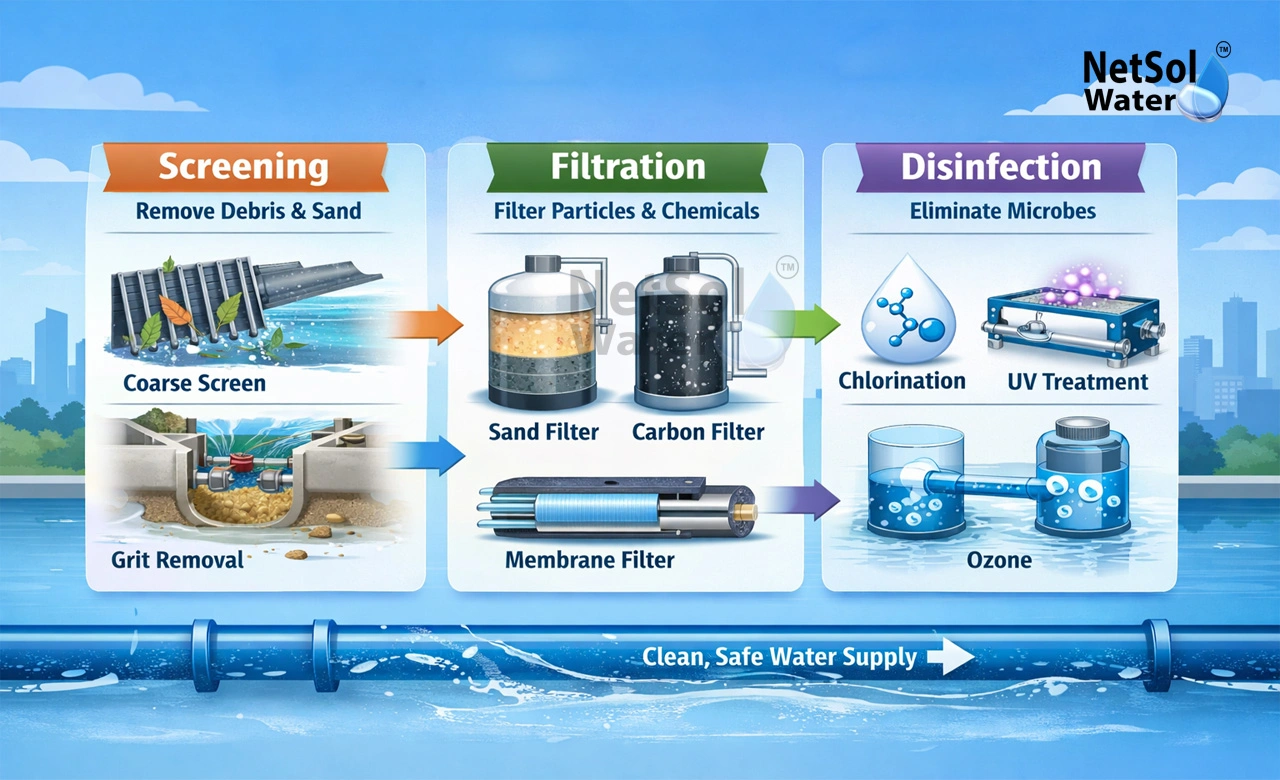
Clean water keeps people healthy and communities working. Water treatment plays a key role in turning water from sources into water that people can use safely. The main steps of water treatment include screening, filtration and disinfection. Each step removes specific problems from water. Screening removes large debris and sand. Filtration removes smaller particles and some chemicals. Disinfection removes microbes that can make people sick. Good design and steady operation keep these steps effective. Operators watch the water and they make changes when needs shift. This chain of actions keeps water clear, safe and fit for use. The idea behind these water treatment processes is simple and strong. Remove the big stuff then remove the small stuff then remove the germs. This order gives water that meets health standards and helps extend the life of pipes and machines.
1: Screening
Screening protects pumps, pipes and downstream equipment from damage. It also makes later steps work better by removing large items that block flow and create extra work. Let us have a look on some common screening approaches and the reasons they work.
2: Coarse Screening
Coarse screening catches large objects that float or flow with the water. Workers place large bars or rakes in channels to stop sticks, plastic and rags. These screens sit at an angle to let water flow while the solids stay behind. Staff remove the trapped items by hand or with machines. This step keeps machines safe and keeps water moving smoothly into the next step.
3: Fine Screening
Fine screening removes smaller solids that pass through coarse screens. These screens have tighter openings and they target fine debris and plant matter. The finer screens reduce the load on filtration systems and cut down on the frequency of filter cleaning. Operators choose the screen size to match the source water and the needs of the plant. Regular cleaning keeps pressure low and keeps the screens effective.
4: Grit Removal
Grit removal focuses on sand and small stones that settle in basins. These heavy particles can wear down pumps and clog filters. Plants use grit chambers that slow water speed to let grit sink. The settled grit moves to a collection area for disposal. Removing grit early stops abrasion and preserves the life of key equipment.
5: Filtration
Filtration comes after screening and it removes smaller particles and some dissolved materials. Filtration improves clarity and reduces the load on disinfection. Filtration also removes taste and odour-causing substances in some cases. Let us have a look on some filtration types and how each one helps clean water.
Also Read: Commercial RO Plant Manufacturer in India
6: Sand Filtration
Sand filtration uses layers of sand and gravel to trap particles. Water flows downward through the bed and particles stick to the grains. Over time the bed traps more material and it needs cleaning. Operators clean the filter by reversing flow in a process called backwashing. Sand filters work well for rivers lakes and surface water where suspended solids make the water cloudy.
7: Activated Carbon Filtration
Activated carbon filtration removes organic molecules and chemicals that cause taste and odour problems. The carbon surface adsorbs these molecules and holds them in place. This process can also cut down on some disinfection by products that form later. Plants replace or regenerate the carbon when it becomes full. When combined with sand filtration the result gives a higher quality finished water.
8: Membrane Filtration
Membrane filtration uses thin sheets that block particles and microbes while letting water pass. Examples include microfiltration, ultrafiltration and reverse osmosis. Membranes provide precise control and they remove very small particles. They also remove some dissolved salts in the case of reverse osmosis. Membrane systems need steady pressure and careful cleaning to keep pores open and flow steady. These systems fit well where high purity is required.
9: Disinfection
Disinfection inactivates bacteria viruses and protozoa that can cause disease. Disinfection also protects water as it travels through the distribution system. Let us have a look on some disinfection methods and how operators choose among them.
10: Chlorination
Chlorination uses chlorine or chlorine based chemicals to kill microbes. Operators add a measured dose to the water and let it contact the water for a set time. Chlorine works well against many bacteria and viruses. It also leaves a residual that keeps water safe in pipes. Plants monitor chlorine levels to keep them effective and to avoid an excess that could affect taste.
11: Ultraviolet Light
Ultraviolet light inactivates microbes by damaging their genetic material. Water flows under UV lamps and microbes lose the ability to reproduce. UV treatment does not add chemicals and it does not leave a residual. Because of that plants sometimes add a small chlorine dose after UV to keep protection in the distribution system. UV offers strong control over resistant organisms when the water contains low turbidity.
12: Ozonation
Ozonation uses ozone gas to oxidize and destroy microbes and organic molecules. Ozone forms quickly and it breaks down after it reacts with contaminants. This process removes tastes and odours, and it can reduce some chemicals that might form harmful by products later. Ozone plants must generate the gas on site and they must manage the safe handling of the gas. Many utilities use ozone in combination with other disinfection steps to meet quality targets.
Conclusion
Water treatment processes protect public health and they protect the equipment that serves communities. The steps of screening, filtration and disinfection work together to remove physical, chemical and biological risks. Each step adds a layer of safety and each step has choices that match the needs of a water source. If you want to learn more about water treatment processes or if you need advice on selecting the right steps for your project get in touch for more information or request a consultation. Our team can guide you through site review system selection and operational planning so you can deliver clean safe water.
Contact Netsol Water at:
Phone: +91-9650608473, Email: enquiry@netsolwater.com