

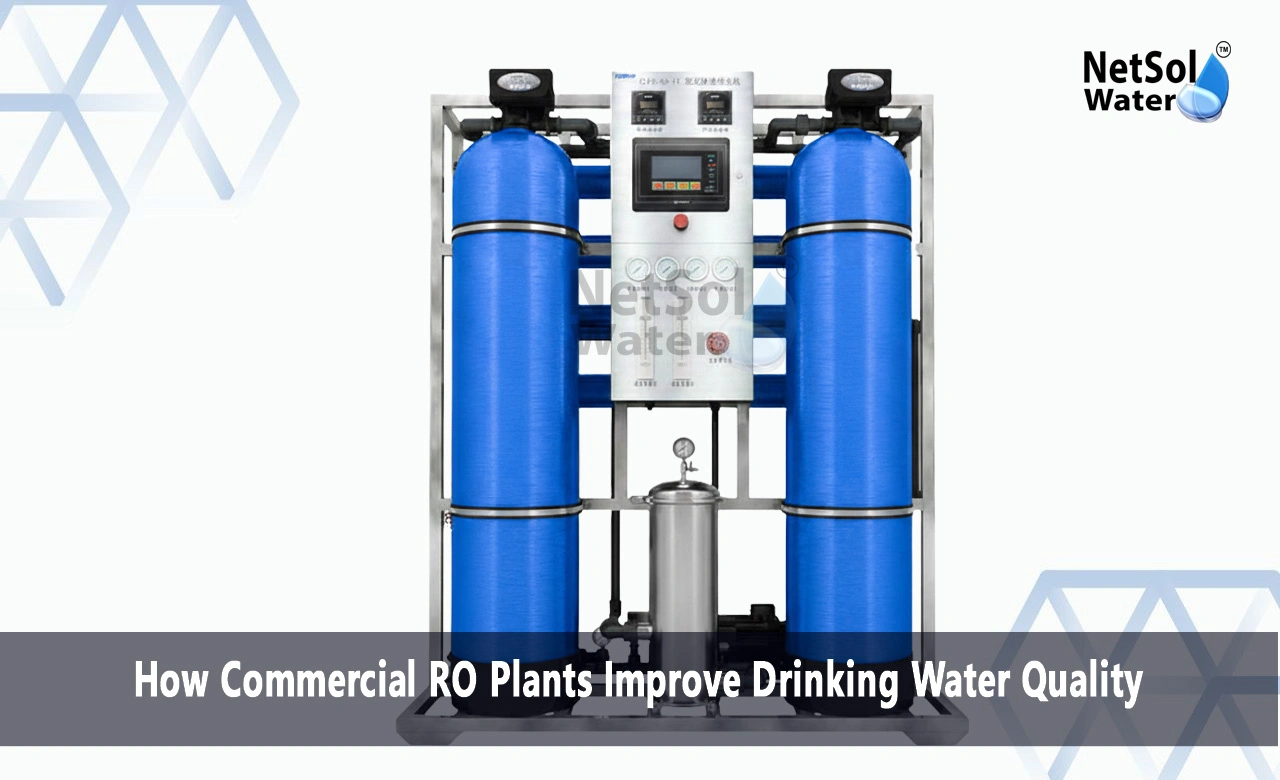
How Commercial RO Plants Improve Drinking Water Quality?
Clean water forms the base of health and growth in any town or city. Industries, schools, hotels and hospitals need water that meets clear quality needs. A Commercial RO Plant can change raw water into safe drinking water that meets standards. Netsol Water stands as a leading Commercial RO Plant manufacturer. We will explain how these plants work and how they improve drinking water quality.
How Commercial RO Plants Work
How the process works helps users see why a Commercial Reverse Osmosis Plant can improve water quality. The process uses several stages. Each stage prepares water for the next stage. Let us have a look on some stages that make the process effective.
1: Pre-treatment for safe membrane life
Pre-treatment prepares water by removing rough parts and by moving out chemicals that can harm the membrane. Sand filters remove sand and grit from river or ground water. Carbon filters take out chlorine and organic taste and odour compounds that can damage membranes. Softening removes hard minerals that form scale on pipes and on membranes. Good pre-treatment reduces membrane fouling and extends the life of the plant. When operators follow a proper pre-treatment routine the membrane sees fewer shocks and the plant keeps a steady flow. Proper pre-treatment also makes post treatment easier because the water comes out in a more stable state. When the feed water stays consistent the system performs with less downtime. A well designed pre-treatment stage also lowers operating cost because it reduces the need for chemical cleaning. This step forms the backbone for a reliable plant.
2: RO membrane separation
The heart of a Commercial RO Plant lies in the membrane stage. The system uses high pressure to force water through a semi permeable membrane. This membrane blocks dissolved salts and many organic and inorganic contaminants. Fresh water moves through the membrane while contaminants remain on the concentrate side. The process removes hardness, salts, heavy metals and many microscopic particles. The operation continues as long as pressure and flow rates stay in the needed range. Operators monitor pressure and flow to keep the membrane in its best condition. The membrane also needs periodic cleaning to remove biological growth and mineral deposits. Modern membranes reach high rejection rates for common pollutants. This stage gives the main boost in water quality. The result is water that meets strict drinking quality parameters after the next steps.
3: Post treatment and final polishing
After the membrane the plant uses post treatment to correct pH and to add protective disinfectants. Many RO plants make water that tastes flat because of low mineral content. A small mineral addition can improve taste and make the water healthy for long term use. UV disinfection or an added disinfectant gives a final safety barrier against microbes. Polishing filters remove any trace particles that bypass earlier stages. Final checks of conductivity and pH ensure the water meets limits before it reaches the storage tank. These steps close the loop and give the customer water that looks clear and that also meets hygiene needs. When all the stages work together the plant supplies water that is safe and pleasant to drink.
Key Components and Their Role
A plant performs well only when its components work well together. Each part plays a distinct role in protecting the membrane and in delivering constant quality. Understanding these parts helps users choose and operate systems in a smarter way. Let us have a look on some key components that you will find in most reliable plants.
1: High pressure pump and energy use
The high pressure pump gives the energy that pushes water through the membrane. The pump must match the membrane pressure needs. An undersized pump will not give enough flow. An oversized pump will waste power and may stress the system. Efficient pump choice lowers electricity consumption and keeps operating cost down. Operators choose pumps with suitable materials for the water they use. Pumps that accept variable speed control allow the plant to adapt to changes in feed water and to work in an energy efficient way. Proper pump maintenance reduces the risk of sudden failures. When the pump runs well the rest of the system stays steady. That stability directly improves the quality of the produced water.
2: Membranes and modules
Membranes come in many types and each type suits a different water source. Spiral wound modules work well for many applications because they offer a good balance of performance and service life. Hollow fiber modules can help in compact designs but they need careful cleaning. Membrane selection depends on feed water quality required rejection rates and site needs. Good membranes deliver consistent salt rejection and keep permeate quality stable over time. They also resist fouling better when paired with proper pre-treatment. Choosing the right membrane and replacing it at the correct time keeps the plant flow steady and keeps the water quality within target values.
3: Controls and sensors for steady quality
Modern plants use automatic controls to guard water quality and to reduce human errors. Sensors monitor pressure flow conductivity and pH values. The control system adjusts valves and pump speed based on these measurements. When conductivity rises the system can trigger cleaning or reduce recovery to protect the membrane. When feed water changes the controller can change set points to keep output stable. Remote monitoring helps technicians spot potential issues before they affect water quality. These controls give confidence to plant users that the plant will keep delivering safe water even when conditions change.
Benefits for Drinking Water Quality
A Commercial RO Plant brings specific improvements that make a big difference for daily water use. These benefits do not come from one single action. They come from the combination of stages parts and controls. The outcome shows in how safe and pleasant the water becomes. Let us have a look on some of the main ways a plant improves water quality.
1: Removal of dissolved salts and heavy metals
One core benefit lies in the strong removal of dissolved salts and heavy metals. Many water sources contain high levels of salt, calcium, magnesium lead and arsenic. The membrane rejects these components and lowers conductivity. The result meets drinking water limits that protect health. Heavy metals that cause long term damage stop at the concentrate line. This removal makes the water safe for domestic use cooking and for sensitive users such as children and the elderly. A steady membrane with correct pressure and good pre-treatment keeps rejection performance high over time. This result gives users a clear reduction in water related health risks.
2: Reduction of microbes and organic contamination
While RO membranes provide a barrier to many microbes the plant also uses disinfection steps to ensure safety. UV treatment or added disinfectant in the post treatment stage removes bacteria viruses and protozoa that may survive other steps. The combined action of fine filtration and disinfection gives multiple lines of defence. Organic matter that causes taste and odour comes out earlier in the pre-treatment stages. When the organic load stays low the membrane faces less biofouling. Clean membranes keep permeate free from organic compounds that can harm taste or that can help microbes regrow. This layered approach reduces the chance of a microbial problem and keeps the output safe.
3: Consistent water quality and user confidence
Many households and businesses need water that stays within a narrow quality range. A well run Commercial RO Plant gives that steady supply. The controls automatic cleaning schedules and sensor feedback reduce surprises. When operators test the water regularly they can act before any drift becomes a problem. Consistency builds trust for users who expect clean water every day. That trust supports many services such as food preparation medical care and hotel operations. Stable quality also means lower cost in the long run because fewer emergency repairs and less frequent membrane replacement occur.
Choosing and Maintaining Commercial RO Plants
Selecting the right plant and keeping it well maintained decides how long and how well the system will improve water quality. A good choice today prevents trouble tomorrow. Good maintenance keeps performance steady and reduces lifecycle cost. Let us have a look on some practical steps and choices that matter.
1: How to choose the right plant
Choosing a plant starts with understanding the water source and the required output. Users must test feed water for hardness salts organics and microbiological load. The capacity needs must match peak use and any future growth. Operators should also check manufacturer capabilities in customization delivery and after sales support. Netsol Water offers personalized solutions and local service for many industry types. A supplier that tests the site and helps select pre-treatment membrane and pump increases the chance of a good outcome. Budget matters but so does the total cost of ownership. A lower price may lead to higher energy or maintenance costs later.
2: Routine maintenance and cleaning
Routine care keeps a plant running and protects water quality. Operators follow a cleaning schedule that may include chemical cleaning and membrane flushing. Routine tasks also include filter changes pump inspections and sensor calibration. Operators should log all maintenance actions and water test results. This record helps spot slow trends before they become failures. Training for staff keeps them able to handle common tasks and basic troubleshooting. When teams act on early warning signs the plant avoids long downtime and the water supply stays steady. Good maintenance also extends membrane life and lowers replacement cost.
3: Dealing with common issues
Some issues arise often and each needs a clear response. Scaling appears when hardness reaches the membrane and it reduces flow. Operators increase antiscalant dosing or improve softening to address this issue. Biofouling appears when organics and microbes build up on membrane surfaces. Better pre-treatment and regular cleaning help prevent this problem. Pressure drops may indicate clogged filters. Checking the pressure profile across stages helps find the cause. When a plant uses automatic alerts the team can act fast to fix the issue and keep water quality within desired limits.
Conclusion
Commercial RO Plants make a clear change in water safety and taste through staged treatment strong membranes and consistent monitoring. These plants remove dissolved salts, heavy metals and many other contaminants. They also add steps for disinfection and for mineral balance to make the water safe and pleasant to drink. Netsol Water stands as a leading personalized Commercial RO Plant Manufacturer that match site needs and budget. If you want water that meets clear quality goals please reach out to discuss your site needs and to request a consultation.
Contact Netsol Water at:
Phone: +91-9650608473, Email: enquiry@netsolwater.com