

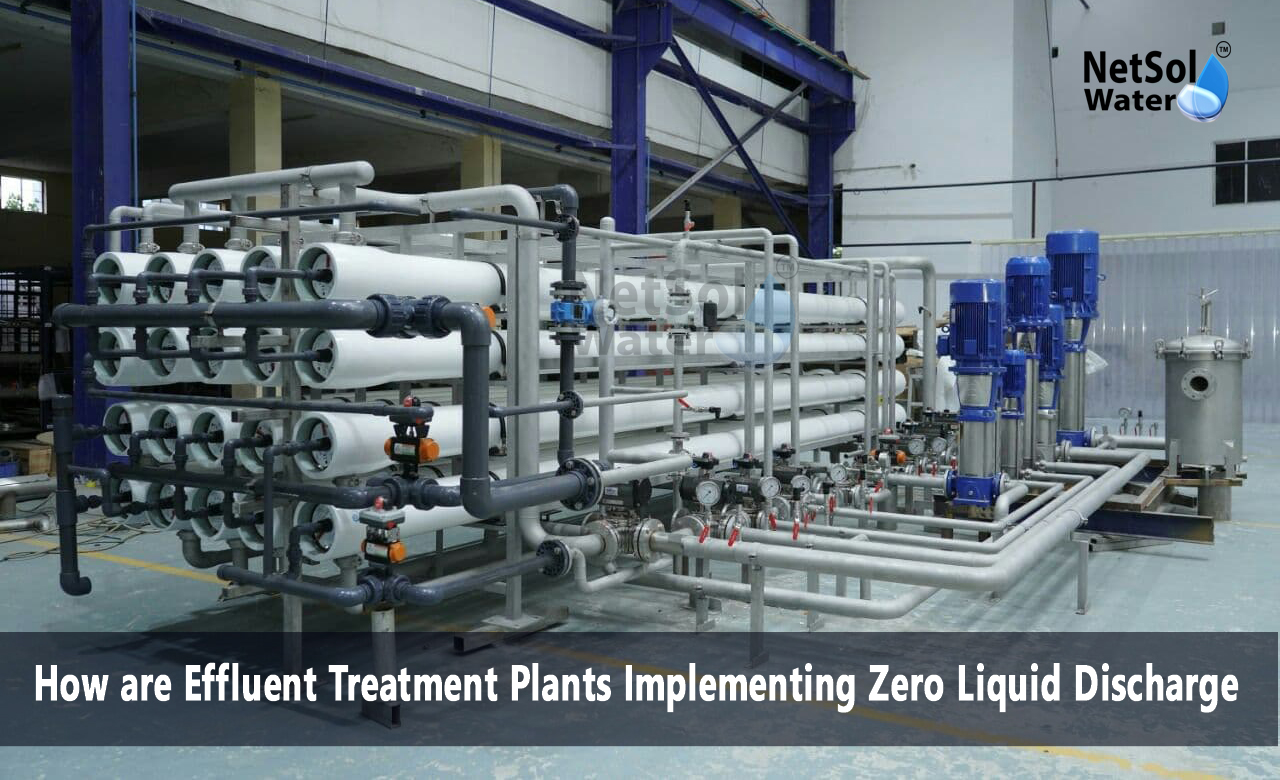
How are ETP Plants Implementing Zero Liquid Discharge?
Effluent treatment plants are important structures in industries where there is production of wastewater. ETPs are used to process the effluent so that it can be safely released into environment or reused within the production process and without polluting the environment as required by law. Among all the issues associated with ETPs, implementing a Zero Liquid Discharge system is a major issue regarding any significant development. ZLD implies the absence of any effluent discharge into the environment, which means recycling or reusing 100% of the liquid waste. In this blog, we will outline how ETPs are employing ZLD systems.
The Decentralization of Effluent Treatment Systems
ZLD approach provides for decentralization of the treatment systems in the plant, and this is one of the critical pre-requisites. When there are modified, localized ETPs for each process or unit, it is more manageable to have focused treatment, monitoring, and maintenance to get the best out of the wastewater treatment.
It is the process, where wastewater generated from different sectors is treated separately in a decentralized system. This also means that various types of wastewaters which contain distinct pollutants can be treated satisfactorily, since the system allows for optimization of treatment conditions for each independent type of wastewater.
High-Level Effluent Treatment Technologies
To achieve ZLD, it is necessary to apply the advanced treatment technologies. Some of these technologies include:
· Membrane Filtration: Modern technologies like ultra filtration, nanofiltration, and reverse osmosis are very costly but they can separate and remove contaminants from the wastewaters. The separated contaminants can then be recycled back or further processed while the purified water can be utilized for purposes like irrigation, cooling and for make up to the boiler feed water.
· Advanced Oxidation Processes: AOPs work with the generation of highly reactive free radicals to cause oxidation of different contaminants present in wastewater. Such a process can also help to reduce and eliminate organic and inorganic pollutants, making the advanced process of wastewater purification possible. The treated water can be recycled, whereas the oxidized pollutants could undergo further treatment or stabilization by methods such as dewatering.
· Evaporation and Crystallization Technologies: Evaporative technologies as well as crystallization technologies, these concentrates particular and solidify the solid materials or contaminants found in water, creating dry residues or salts. Such residues are non-hazardous and can thus be discharged; the vaporized water, on the other hand, can be condensed and recycled. Some of the examples of such technologies are multiple-effect evaporation, mechanical vapor recompression and freeze crystallization.
Water Reuse and Recycling
Achieving Zero Liquid Discharge means that effective techniques for water reuse and recycling in the industrial facility must be identified. Water reuse can be categorized into two types: direct and indirect reuse. Direct reuse involves the water going directly back to the use it was taken then on the other hand, the indirect reuse involves the water being used for other purposes before again being used in the original use.
Some of the common water reuse applications in industrial settings include:
· Cooling Towers: The water in cooling towers recirculates after being cooled through treatment and it is in a position to cool again. This can greatly help to minimize fresh water use for cooling thus reducing costs and the impact in the environment.
· Boiler Feed Water: Water used in steam generation may be recycled back for steam generation hence does not have to be sourced from water resources.
· Irrigation: Reclaimed wastewater can be employed in the production of water for irrigation purposes thus promoting the sustainability means in managing water in industries which are known to use a large proportion of water for example in agriculture, lawn and planting business among others.
Managing of residuals
One of more important points when using ZLD approach is the proper management of residuals generated in treatment stages. These residuals may be of sludge forms, brine forms, or even in solidified forms depending of the type of residual removal through evaporation or crystallization. Disposal or use of these residuals play a crucial role in determining the feasibility of the ZLD system.
Some common methods of managing residuals include:
· Landfilling: Non-hazardous solidified residuals may also be disposed of in landfills if they conform to the requirements of the landfill.
· Agricultural Use: The residuals with very little quantity of the contaminants can be used as soil conditioners or fertilizers in agriculture so that generation of wastes can be minimized.
· Energy Recovery: Some of the residual material like; sludge or digested organic matter can be utilized in the CHP plants as another form of energy in the particular plant.
Conclusion
The achievement of Zero Liquid Discharge in the treatment of effluents depends on the integration of improved treatment techniques, water recycling, and treatment of residual. This is actually because through decentralizing treatment systems, implementing new as well as efficient methods of wastewater treatment and water recycling and waste management, industries can go for ZLD and promote sustainable water management. The shift from conventional zero liquid discharge systems is not only beneficial to the environment, but also commercially viable by cutting on costs like water expenses and improving processes. Since more and more industries introduce these systems, the general trend in water conservation can be considered progressive.
Do you need an advice or assistance on selecting the best water and waste water treatment unit? We have solutions for all your problems!
Let us know your problem, our experts will make sure that it goes away.
For an assistance or related query,
Call on +91-965-060-8473 Or write us at enquiry@netsolwater.com