

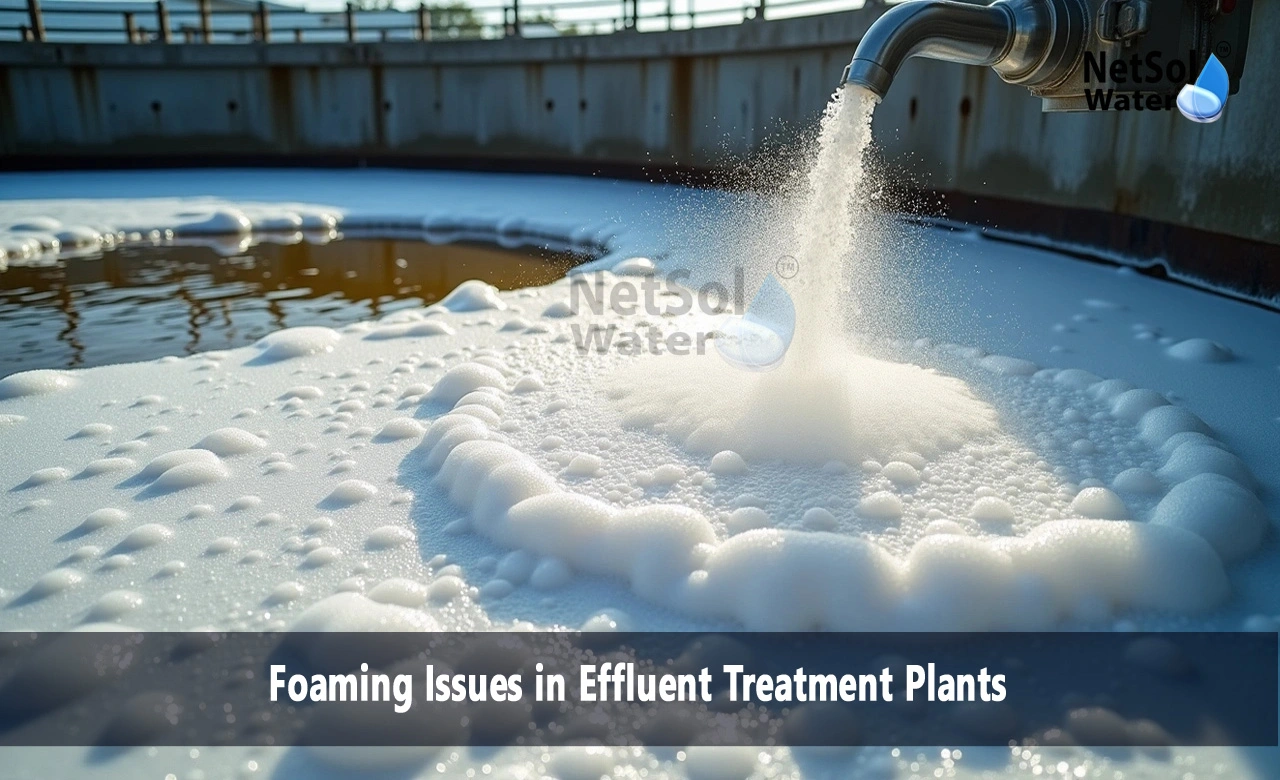
Foaming Issues in Effluent Treatment Plants
One of the most apparent and disruptive operation issues in effluent treatment plants is foaming. Although this seemingly is a superficial phenomenon at first glance, the consistent formation of foam usually indicates that there is some underlying biological or chemical imbalance in the treatment process. Foaming out of control may lower treatment efficiency, sludge will be washed out, equipment may be damaged and it may pose safety risks to operators. Understanding foaming issues in effluent treatment plants requires examining the interaction between influent characteristics, biological activity, and operational practices rather than relying on surface-level fixes alone.
The Nature of Foam in Effluent Treatment Plants
1: What Causes Foam Formation?
When the gas bubbles formed during the aeration process are stabilized by surface-active substances that exist in wastewater, foam is formed. These are surfactants, fats, oils and grease, proteins and some microbial by-products. The accumulation of these compounds at the air-water interface prevents the breakdown of bubbles resulting in stable foam layers.
2: Distinction between Temporary and Persistent Foam
Temporary foam is formed at startup or load change, and it normally disappears soon after the conditions stabilize. Persistent foam, on the other hand, is long lasting and is spread on tank surfaces. Constant foam is normally linked to bio imbalance or certain foam creating microorganisms.
Root Causes of Foaming Issues in Effluent Treatment Plants
1: Overload Surfactants and Industrial Chemicals
The industrial effluents usually contain detergents, emulsifiers and cleaning agents, which facilitate the stability of the foam. Such compounds cannot be biodegraded and build up in aeration tanks and thus preventing the control of foam using only conventional biological treatment.
2: Unbalanced Bacterial Flora
Some filamentous bacteria have been known to yield cell surfaces which are hydrophobic and entrap air bubbles. Foam is thick and persistent when the operating conditions are favorable to these microorganisms. Unbalanced nutrients, low dissolved oxygen, and unbalanced wasting of sludge is a good nutrient to promote filamentous growth.
3: Increasing Loading of High Fats, Oils, and Grease
FOG gets into ETPs with food processing, chemical production, and maintenance operations. These substances lower the surface tension and they are foam stabilizers. Poor oil separation in the pretreatment step permits the FOG to enter the biological reactors, and foaming is worse here.
4: Low Sludge Age and Process Upsets
Sludge of a small age with a large rate of microbial growth is the one that is more likely to generate extracellular polymeric substances. These coagulations increase the formation of foam. This condition is increased by frequent process upsets, hydraulic shocks and irregular aeration.
5: Improper Aeration Control
Over aeration only enhances the production of bubbles but does not increase oxygen uptake. Large rates of air flow and surface-active compounds drastically boost the formation of a foam resources as well as waste energy.
Impact on Operations and Processes of Foaming
1: Biodegradation of Organic Matter and Decreased Treatment
In the aeration tank, foam performs the removal of suspended solids and biomass, preventing the concentration of effective MLSS. This causes the ineffective organic removal and fluctuating effluent quality.
2: Mechanical and Safety Risks
Level sensors, blowers, and overflow structures are interfered with by the foam accumulation. Slippery floors present a risk in the safety of the operators, and foam release is a compliance issue.
3: Increased Operating Costs
An emergency foams control system like chemical antifoams adds to the operating expense and can interfere with the biological systems used when used excessively.
Solutions for Foaming Issues in Effluent Treatment Plants
1: Enhancement of Influent Pretreatment
The separation and equalization of oil and grease and screening of the same minimizes the load of foam-forming compounds to the biological treatment units. The pretreatment benefits tend to promote long-term benefits of foam control.
2: Maintaining Biological Operating Conditions
Maintaining the steady level of dissolved oxygen, adequate age of sludge and proportional nutrients deter the growth of filamentous bacteria. Constant biological conditions are a cut off in the formation of foam-stabilizing materials.
3: Aeration System Optimization
Keeping airflow in accordance with the real oxygen demand means that the amount of unnecessary bubble formation is reduced. Diffuser operations can be improved by fine-tuning, which enhances the performances of transferring oxygen and decreases foaming characteristics.
4: Specific application of Antifoaming Agents
Antifoaming chemicals are recommended to be applied selectively and interim. Symptom masking by continuous dosing without correction of underlying causes and interference with the microbial activity may occur in case of misuse.
5: Process Surveillance and Preemption
Monitoring tendencies in the foam development, influent composition and biological indicators allow the operators to act before foam becomes uncontrolled. Proactive measures are better than the reactive ones.
Foam Prevention Long-term Strategies
1: Process Design Adaptation
Plastic alterations like deeper aeration tanks, better mixing patterns and foam control baffles decrease foam persistence. Design flexibility enables handling of variable effluent characteristics better.
2: Training Operator Awareness and Operator Training
The operators who are trained to identify the initial signs of foaming are able to make changes to the process parameters in advance. Knowledge of the biological and chemical factors that promote foam eliminates the use of short-term chemical solutions.
Conclusion
Foaming issues in effluent treatment plants are rarely isolated problems. They are indicators of process imbalance, variability in influents or design constraints. Although temporary foaming might be a normal occurrence when transitioning the operational state, consistent foam is indicative of a more profound corrective effort. ETPs can successfully control foaming by emphasizing the idea of influent control, biological stability, optimization of aeration and informed operational practices, preserving the efficiency of treatment and adherence to regulations. Process understanding provides long-term foam control, rather than reactive suppression.
Do you need an advice or assistance on selecting the best water and waste water treatment unit? We have solutions for all your problems!
Let us know your problem, our experts will make sure that it goes away.
For an assistance or related query,
Call on +91-9650608473 Or write us at enquiry@netsolwater.com