

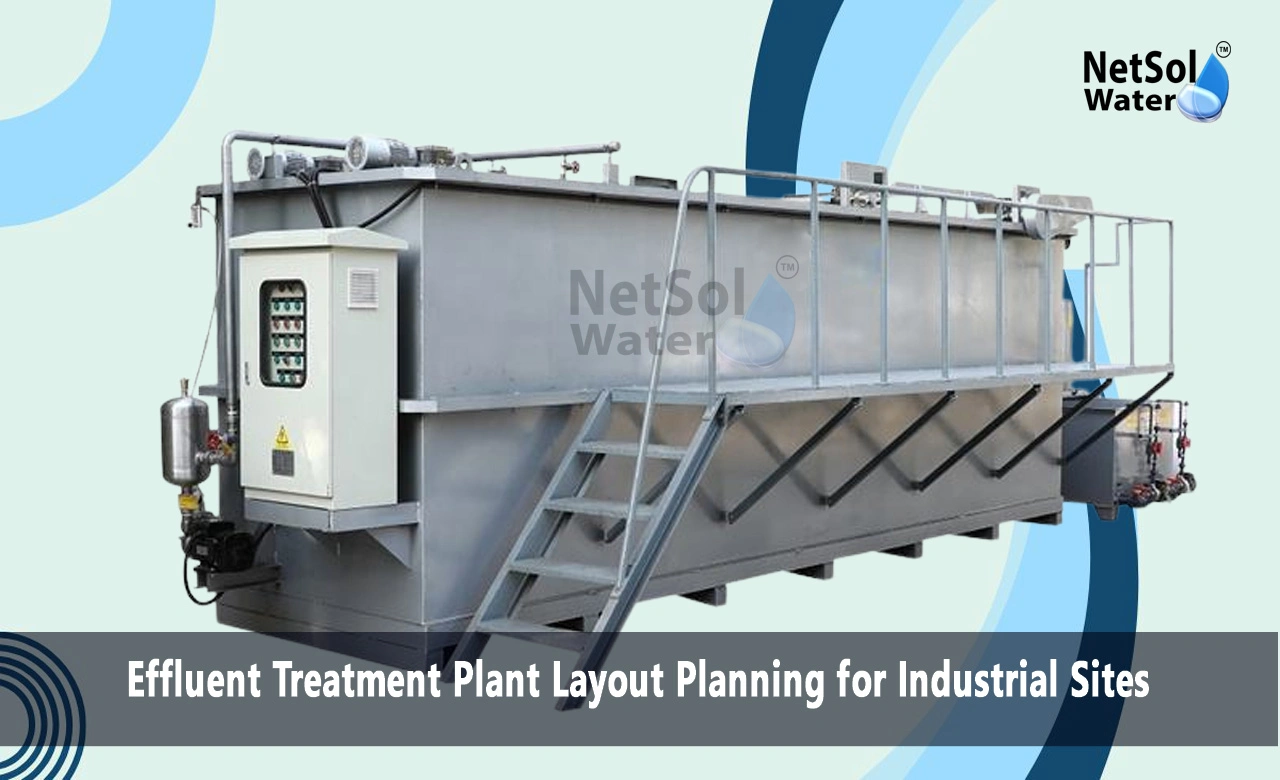
Effluent Treatment Plant Layout Planning for Industrial Sites?
An Effluent Treatment Plant is an important element of industrial infrastructure that aims at treatment of wastewater produced in the course of manufacturing and processing. An Effluent Treatment Plant requires proper layout planning so that it can be treated efficiently, meet the regulations, be safe in terms of operation and yet cost effective to operate, as advised by an Effluent Treatment Plant Manufacturer. In contrast to domestic effluent, industrial effluent may include the significant amount of chemicals, oils, heavy metals and toxic compounds, and the choice of planning becomes even more important.
Background on Treatment Plant Layout Planning of effluents
Industrial wastewater is very different depending on the industry type, raw materials used and procedures. So, effluent treatment plant layout should be designed in such a way that the features of effluents can be addressed but at the same time that they allow an easy passage, ease of work and subsequent extension.
All these can be achieved through a well-regulated design which helps minimize energy usage, minimize repair/maintenance problems, enhance efficiency in treatment and ensure that the environment regulations are met. Layout planning is also important in the safety of the workers and saving the environment.
1: Site Selection and Location Planning
The layout planning of ETP Plant should begin with the idea of the selection of the right place on the industrial premises. The plant must be installed at the lower level as much as possible so that the flow of the water can be done by gravity so that it does not require the pumping and the spend of power. It must be at a distance that would reduce odour, noise, and safety hazards, as well as be positioned at a distance concerning production sites, offices, and residential areas.
The plant should have enough buffer areas that enable safe operation, movement of vehicles and emergency access to the plant. The position should also take into consideration the distance to the discharge points or reuse facilities in order to reduce the length and cost of the pipeline.
2: Equalization and Tanks Arrangement Inlet
The inlet section will be able to take the wastewater of different industrial units and transfer it to the treatment facilities. The inlet is provided with flow measurement devices and control structures to control the hydraulic loading.
Equalization tanks are important in industrial Effluent Treatment Plant. These tanks equalize the changes in flow rate, pH, and concentration of pollutants and provide equal treatmentconditions in the downstream. The design must be in a manner that gives room to large equalization tanks, mixers and aeration systems.
3: Primary Treatment Unit Plan
The arrangements that follow the equalization tank are primary treatment units like oil and grease taps, neutralization tanks and primary clarifiers. These units eliminate free oil and suspended solids as well as extreme pH conditions prior to biological treatment.
The design must be such that there is a rational course of units, wherein the wastewater is directed to flow in the smooth manner into one process to another. Spacing between tanks should be proper in order to maintain access to tanks as well as install mechanical equipment.
The Biological Treatment System Planning
Most Effluent Treatment Plants revolve around the biological treatment. Systems used depend on the characteristics of the effluent as they are either activated sludge or Moving Bed Biofilm Reactor (MBBR) or the Sequencing Batch Reactor (SBR).
The aeration tanks, blowers and diffusers need proper layout planning so that oxygen transfer is efficient and maintenance is not difficult. The equipment that produces noise such as blowers should be located in remote spaces or buildings that are enclosed to minimize noise pollution.
The placement of secondary clarifiers should be near the biological reactors in order to reduce the pipe lengths and the head losses.
1: Advanced Units and Tertiary Treatment
After the biological treatment, tertiary treatment units including pressure sand filters, activated carbon filters, membrane systems and advanced oxidation units are scheduled. The layouts of these units need to be clean and well organised as they are sensitive and complex in their operations.
There should be enough room to accommodate chemical storage, dosing apparatus and safety gear. It should also be easy to access and replace the membranes, backwash and monitor.
2: Sludge Handling and Disposal Area
Facilities involved in Sludge handling are included in the layout planning of ETP Plant. It should be installed in a specific area to avoid cross-contamination and odor problems by putting thickening tanks, sludge drying beds, filter presses, or centrifuges.
There should be an area that is accessible to the vehicles that are concerned with the transportation and disposal of sludge. The layout should have proper drainage systems and odour control systems.
3: Utility, Safety and Control Facilities
The layout planning of the Effluent Treatment Plant shall incorporate the areas of electrical panels, control rooms, chemical storage, and laboratories. The design should include safety features like emergency showers, spill containment, fire protection system and ventilation.
Another significant factor is provision of future upgrading. The design must be in such a way that more treatment units can be incorporated without the significant rebuilding.
Conclusion
The Effluent Treatment Plant Layout Planning to serve an industrial facility is a challenging yet a necessary process that has a direct impact on efficiency of treatment, the safety of the operation and the adherence to regulations. An effective design guarantees ease of hydraulic flow, maintenance, less energy use, and sustainability.
Through proper site selection, design of treatment units, sludge management, and utility, industries can have effective Effluent Treatment Plants that can safeguard the environment, at the same time, enhancing the growth and sustainability of industries.
Do you need an advice or assistance on selecting the best water and waste water treatment unit? We have solutions for all your problems!
Let us know your problem, our experts will make sure that it goes away.
For an assistance or related query,
Call on +91-965-060-8473 Or write us at enquiry@netsolwater.com