

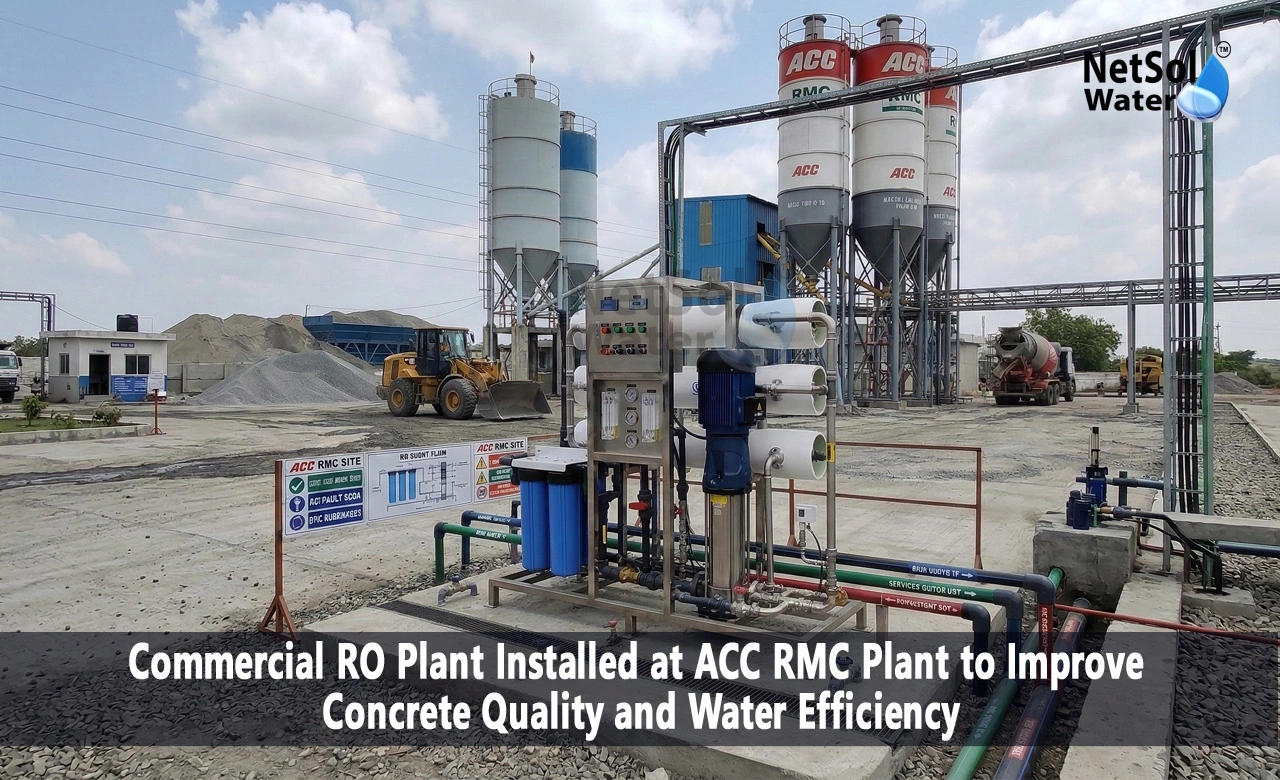
Commercial RO Plant Installed at ACC RMC Plant to Improve Concrete Quality and Water Efficiency: A Case Study by Netsol Water
Water plays a crucial role in the production of high-quality concrete. In Ready Mix Concrete (RMC) plants, the quality of water used for batching and mixing directly impacts the strength, durability, and performance of the concrete produced. Impurities such as high Total Dissolved Solids (TDS), hardness, chlorides and suspended particles can negatively affect the hydration process of cement and ultimately compromise the structural integrity of concrete.
Construction companies and cement manufacturers are therefore increasingly focusing on maintaining strict water quality standards in their RMC operations. One of the most effective solutions to ensure consistent water quality is the installation of Commercial RO plants, which remove dissolved salts and contaminants from raw water sources such as borewell water.
Recognizing the importance of reliable water treatment for its operations, ACC Limited, one of India's leading cement and concrete companies, implemented a high-performance 3000 LPH Commercial RO Plant at its Ready Mix Concrete (RMC) plant in Greater Noida.
The system was designed, manufactured, and installed by Netsol Water, a leading water and wastewater treatment company specializing in industrial RO plants, sewage treatment plants and water treatment solutions.
This case study highlights the challenges faced at the RMC plant, the design and installation of the RO plant, and the significant improvements achieved in water quality, operational efficiency, and sustainability.
About the Client – ACC Limited
ACC Limited is one of the oldest and most reputed cement manufacturers in India. The company operates several cement plants, grinding units, and Ready Mix Concrete plants across the country.
Its RMC plants produce ready-to-use concrete used in:
. Infrastructure projects
. High-rise buildings
. Commercial complexes
. Industrial construction
. Roads and highways
. Metro rail projects
Due to the scale of its operations, maintaining consistent quality in concrete production is a top priority for ACC. Water quality plays a critical role in ensuring the strength and durability of concrete produced at these plants.
Project Overview
To improve water quality for concrete production at its Greater Noida facility, ACC decided to install a 3000 LPH Commercial RO Plant.
Project Details
| Parameter | Details |
| Client | ACC Limited |
| Location | Greater Noida, Uttar Pradesh |
| Application | Ready Mix Concrete Plant |
| RO Plant Capacity | 3000 LPH |
| Technology | Reverse Osmosis |
| Installed By | Netsol Water |
| Raw Water Source | Borewell Water |
The primary objective of installing the RO plant was to remove excess dissolved salts and impurities from raw water and ensure that only treated water meeting acceptable quality standards is used in concrete production.
Challenges Faced by the RMC Plant
Before installing the RO plant, the RMC facility was using groundwater sourced from borewells for its operations. However, the water quality analysis revealed several issues.
Key Challenges
1: High TDS Levels
Groundwater in many parts of the Delhi NCR region contains high levels of dissolved salts. The raw water at the site had TDS levels exceeding 2000 ppm, which could negatively impact concrete quality.
2: Hardness and Mineral Content
Excessive hardness caused scaling in pipelines, valves, and batching equipment, increasing maintenance requirements.
3: Chlorides and Sulphates
High concentrations of chlorides and sulphates can affect the corrosion resistance of reinforced concrete structures.
4: Equipment Scaling
Mineral deposits inside pipelines and mixers resulted in reduced efficiency and higher maintenance costs.
5: Water Quality Inconsistency
Seasonal variations in groundwater quality made it difficult to maintain uniform water quality for concrete production.
These challenges prompted ACC to install a reliable and efficient water treatment solution.
Importance of Water Quality in Ready Mix Concrete
Water used in concrete mixing must meet specific quality standards to ensure optimal performance.
Poor water quality can result in:
. Reduced compressive strength of concrete
. Delayed or irregular cement hydration
. Corrosion of reinforcement steel
. Poor durability of concrete structures
. Reduced workability of concrete
Therefore, RMC plants must use treated water that meets established construction standards.
Water Quality Standards for Concrete Production
In India, water used for construction must comply with the guidelines specified in IS 456:2000 – Plain and Reinforced Concrete Code of Practice.
Recommended Water Quality Parameters
| Parameter | Raw Water | Treated Water |
|---|---|---|
| TDS | 2200 ppm | < 100 ppm |
| Hardness | High | Low |
| Suspended Solids | Moderate | Negligible |
| Chlorides | High | Controlled |
The installation of the RO plant ensured that treated water supplied to the batching process remained within the recommended limits.
Solution Provided by Netsol Water
To address the challenges at the ACC RMC facility, Netsol Water Solutions Pvt. Ltd. designed and installed a 3000 LPH Commercial RO Plant.
The system was engineered to deliver:
. Reliable water purification
. Consistent water quality
. Reduced scaling and maintenance
. Long-term operational efficiency
The RO plant was customized specifically for the site conditions and water quality parameters.
RO Plant Design and Technical Specifications
RO Plant Capacity
3000 Litres per Hour (LPH)
Major Components
. Raw Water Pump
. Multi Grade Sand Filter
. Activated Carbon Filter
. Micron Cartridge Filters
. High Pressure Pump
. Reverse Osmosis Membrane System
. Control Panel with Automation
. Flow Meters and Pressure Gauges
Treatment Process Flow
The RO plant installed at the ACC RMC facility follows a multi-stage treatment process to remove contaminants from raw water.
Step 1: Raw Water Collection
Borewell water is collected in the raw water storage tank.
Step 2: Sand Filtration
The Multi Grade Sand Filter removes suspended solids, sand particles, and turbidity.
Step 3: Activated Carbon Filtration
Activated carbon removes chlorine, organic impurities, and unpleasant odours.
Step 4: Micron Cartridge Filtration
Fine filtration removes particles larger than 5 microns.
Step 5: Reverse Osmosis Process
Water is forced through semi-permeable RO membranes at high pressure.
The membranes remove:
. Dissolved salts
. Heavy metals
. Chlorides
. Sulphates
. Hardness
Step 6: Treated Water Storage
The purified water is stored in a treated water tank and supplied to the RMC batching process.
Raw Water vs Treated Water Quality
The installation of the RO plant significantly improved water quality.
| Parameter | Raw Water | Treated Water |
|---|---|---|
| TDS | 2200 ppm | < 100 ppm |
| Hardness | High | Low |
| Suspended Solids | Moderate | Negligible |
| Chlorides | High | Controlled |
This improvement ensured that water used for concrete mixing met acceptable standards.
Benefits Achieved
1: Improved Concrete Strength
Using purified water improved cement hydration and enhanced the compressive strength of concrete.
2: Consistent Concrete Quality
Treated water ensured consistent mix quality across batches.
3: Reduced Equipment Scaling
Lower hardness levels reduced scaling inside batching equipment and pipelines.
4: Lower Maintenance Costs
Reduced mineral deposits decreased maintenance frequency and equipment downtime.
5: Water Efficiency
The RO plant helped optimize water usage and minimize wastage.
6: Environmental Sustainability
Efficient water treatment contributed to responsible water management at the RMC plant.
Operational Performance
The 3000 LPH RO plant has been operating efficiently since its installation.
Key Performance Indicators
. Continuous operation with minimal downtime
. Stable treated water quality
. Reduced scaling issues
. Consistent supply of purified water
The plant has proven to be a reliable solution for maintaining water quality in concrete production.
Role of Netsol Water
Netsol Water provided complete project execution, including:
. Water analysis
. System design
. Manufacturing
. Installation and commissioning
. Operator training
. After-sales service and support
The project was successfully completed within the required timeframe, ensuring minimal disruption to plant operations.
Future Scope
As water scarcity and environmental regulations become more stringent, water treatment systems will play an increasingly important role in the construction industry.
RMC plants across India are adopting solutions such as:
. RO plants for raw water purification
. Water recycling systems
. Effluent treatment systems
These technologies help companies maintain high quality standards while promoting sustainable water management.
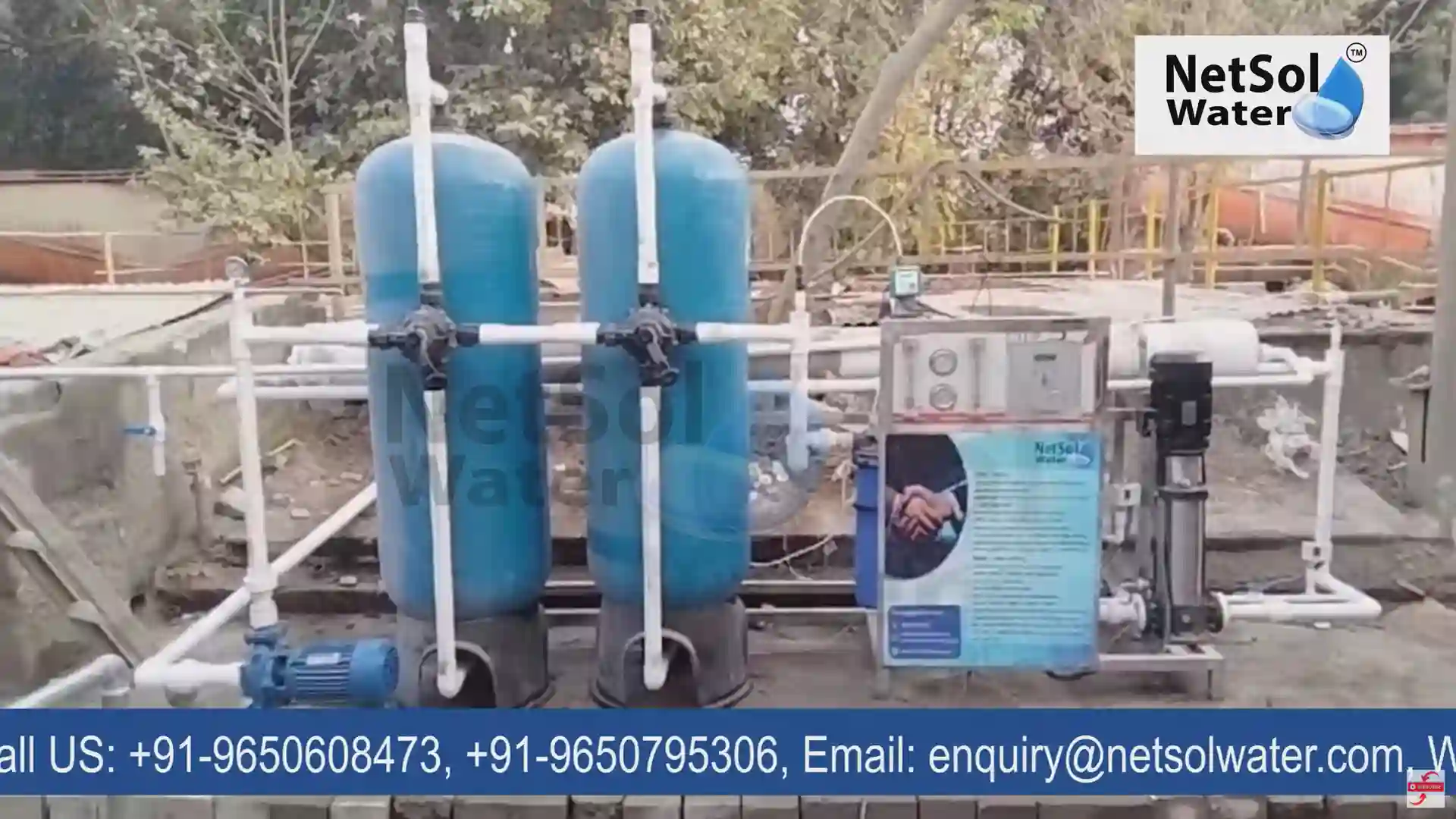
Watch Project Video
Watch the real installation video of the 3000 LPH Commercial RO Plant installed by Netsol Water at the ACC RMC Plant in Greater Noida.
Related Water Treatment Solutions by Netsol Water
At Netsol Water, we provide advanced water and wastewater treatment solutions for construction, infrastructure, and industrial applications. In addition to installing commercial RO plants for Ready Mix Concrete (RMC) plants, we also design and manufacture a wide range of water treatment systems for different industries.
Explore our related solutions:
. Commercial RO Plant Manufacturer in India - Customized RO systems for commercial and industrial water purification needs.
. Industrial RO Plant Manufacturer - High-capacity RO plants designed for factories, manufacturing units, and infrastructure projects.
. Sewage Treatment Plant Manufacturer in India - Advanced STP systems for treating domestic and municipal wastewater.
. Effluent Treatment Plant Manufacturer - Reliable ETP solutions for treating industrial wastewater and ensuring environmental compliance.
These solutions help industries maintain water quality, improve operational efficiency, and support sustainable water management practices.
Conclusion
The installation of the 3000 LPH Commercial RO Plant at the ACC RMC facility in Greater Noida demonstrates the critical role of water treatment in ensuring high-quality concrete production.
By implementing a reliable Reverse Osmosis system, ACC successfully addressed the challenges associated with poor groundwater quality and achieved consistent water purification for its operations.
The project highlights how advanced water treatment solutions can enhance operational efficiency, improve product quality, and support sustainable industrial practices.
With extensive experience in designing and installing water treatment systems for industrial applications, Netsol Water Solutions Pvt. Ltd. continues to provide innovative and reliable solutions for the construction, cement, and manufacturing sectors.