

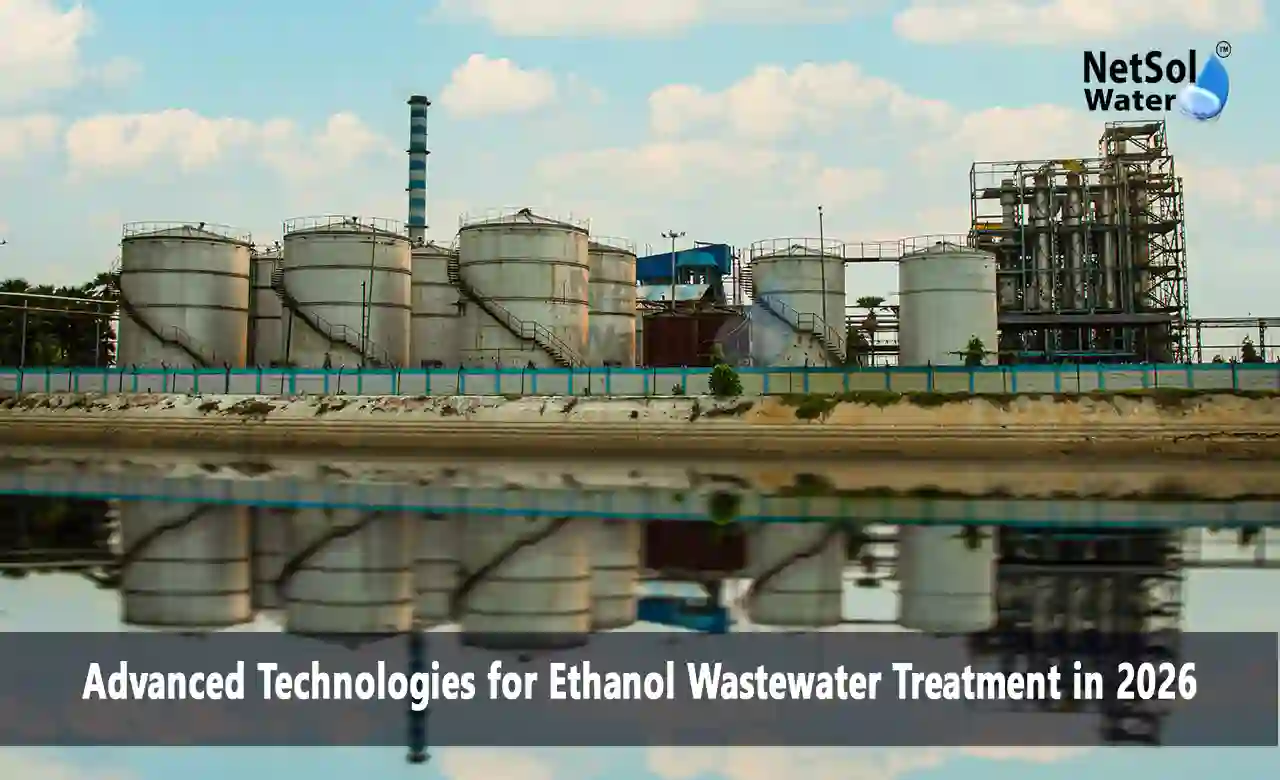
Advanced Technologies for Ethanol Wastewater Treatment in 2026
Ethanol plants support clean fuel goals but they also create a hard wastewater problem. This water often carries a high organic load, dark colour and strong smell. If a plant releases it without proper treatment, it can harm the river's soil and local health. Advanced Technologies for Ethanol Wastewater Treatment matter so much in 2026. The knowledge is also important for India since the country has a strong sugar and distillery base and many regions depend on this industry for jobs and growth. At the same time water rules are getting stricter and plant owners now want better recovery and lower running cost. So the focus has moved from basic treatment to smarter and more efficient systems. In this blog we look at the main technologies that help ethanol plants treat wastewater in a better way and also support reuse inside the plant.
1. Membrane systems for cleaner water and better reuse
Advanced Technologies for Ethanol Wastewater Treatment now depend a lot on membrane systems because these systems can give high water quality in a smaller space. They help plants handle tough liquid streams after the main biological stage. This makes them useful for reuse in cleaning cooling and other non drinking needs. In 2026 many ethanol units choose membranes because they want stable output and less water loss. Let us have a look at some of the key membrane based methods that are shaping modern treatment plants.
2. Ultrafiltration for solid removal
Ultrafiltration works well when the goal is to remove fine solids and large organic matter from wastewater. It uses a membrane with small pores that block suspended particles and many microbes. This step helps protect later stages from clogging and heavy loads. In ethanol plants, the wastewater can carry yeast residue, fibre and other matter from the process. Ultrafiltration makes the water clearer and easier to polish further.
This method also helps when the plant wants more stable treatment. It can handle changing flow if the system is designed well. Operators often place it before reverse osmosis or before reuse tanks. That way the next stage receives cleaner water and works with less stress. For plants that want to improve recovery this step is often a smart choice.
3. Reverse osmosis for high quality reuse
Reverse osmosis gives a much higher level of purification. It removes dissolved salts and many small impurities that other systems cannot catch. Ethanol plants often use it when they want water for reuse in boiler feed or process support after proper conditioning. Because the membrane works under pressure it pushes clean water through while rejecting contaminants.
In 2026 this technology matters more because many industries want to cut fresh water intake. Reverse osmosis can help with that goal. It also supports zero liquid discharge systems when used with other stages. Still the feed water must be treated well before this step because high fouling can reduce performance. When operators manage pretreatment properly, the system can save water and improve plant control.
4. Biological treatment with better control and higher stability
Advanced Technologies for Ethanol Wastewater Treatment also include better biological systems because much of ethanol wastewater contains biodegradable organic matter. These systems use bacteria to break down waste and convert it into simpler forms. The new focus is on faster action better gas recovery and more stable performance. Let us have a look at some biological methods that are now common in modern ethanol plants.
5. Anaerobic reactors for energy recovery
Anaerobic treatment is one of the most useful methods for ethanol wastewater. It works without oxygen and helps microbes break down high strength waste. During this process the system produces biogas which can be used as a fuel source. This gives the plant both treatment and energy gain in one step. That is why many plant owners prefer it for strong wastewater streams.
In 2026 upgraded anaerobic reactors are even more valuable because they can manage high load with better control. They also take less space than many older systems. When the wastewater enters the reactor under steady conditions the microbes perform well and the output becomes easier to handle in later stages. The biogas can support boilers or other energy needs. This reduces pressure on the plant and supports lower operating cost.
6. Moving bed biofilm reactors for stronger output
Moving bed biofilm reactors or MBBR systems use small carriers that hold biofilm on their surface. The microbes grow on these carriers and keep working as wastewater moves through the tank. This design gives a large active surface in a compact space. It also supports better shock handling than many simple systems.
For ethanol wastewater this matters because flow and load can change during production. MBBR systems help plants stay steady when input conditions shift. They also work well after anaerobic treatment where some organic matter still remains. Their strong point is flexibility. They can be adjusted by adding more carriers or changing aeration. In many plants this makes the process easier to manage over time.
7. Smart control and resource recovery for modern plants
Advanced Technologies for Ethanol Wastewater Treatment in 2026 are not only about cleaning water. They also focus on control recovery and better use of each stream. Plants now want systems that can watch process changes in real time and help operators act quickly. They also want to recover value from waste where possible. Let us have a look at some of the methods that support this shift.
8. Automation and real time monitoring
Automation has changed how wastewater plants work. Sensors can now track pH, flow, load turbidity and many other values. This helps operators see problems early and adjust the system before damage grows. In ethanol plants this is useful because wastewater quality can change with production cycles. A manual system may react too late but an automated setup can respond much faster.
Real time monitoring also helps with chemical use and energy control. When the plant knows the exact condition of the water it can avoid wasteful dosing and reduce extra load on pumps and blowers. This leads to better balance and smoother work. In 2026 more plants are moving toward digital control because they want dependable results and lower running cost.
9. Sludge handling and by product recovery
Wastewater treatment does not end with clean water. Sludge and other by products also need safe handling. Modern systems now look for ways to treat this material with less waste and more value. Some plants use dewatering systems to reduce volume. Others work on digestion paths that support energy gain. This helps lower disposal cost and improve plant hygiene.
Resource recovery is becoming more important because many industries now want the circular use of water and energy. Ethanol plants can recover biogas from anaerobic stages and also reuse treated water in parts of the site. This reduces pressure on fresh water sources and makes the plant more efficient. Over time this approach can support both environmental goals and business goals in a practical way.
Conclusion
Advanced Technologies for Ethanol Wastewater Treatment are helping plants deal with a hard problem in a better way. In 2026 the best systems do more than clean water. They save space support reuse cut waste and improve energy use. Ethanol producers who invest in modern treatment can protect the environment and also improve plant performance. For more information or to request a consultation please get in touch with Netsol Water. A well planned system can make a real difference to both compliance and long term savings.
Contact Netsol Water at:
Phone: +91-9650608473, Email: enquiry@netsolwater.com