

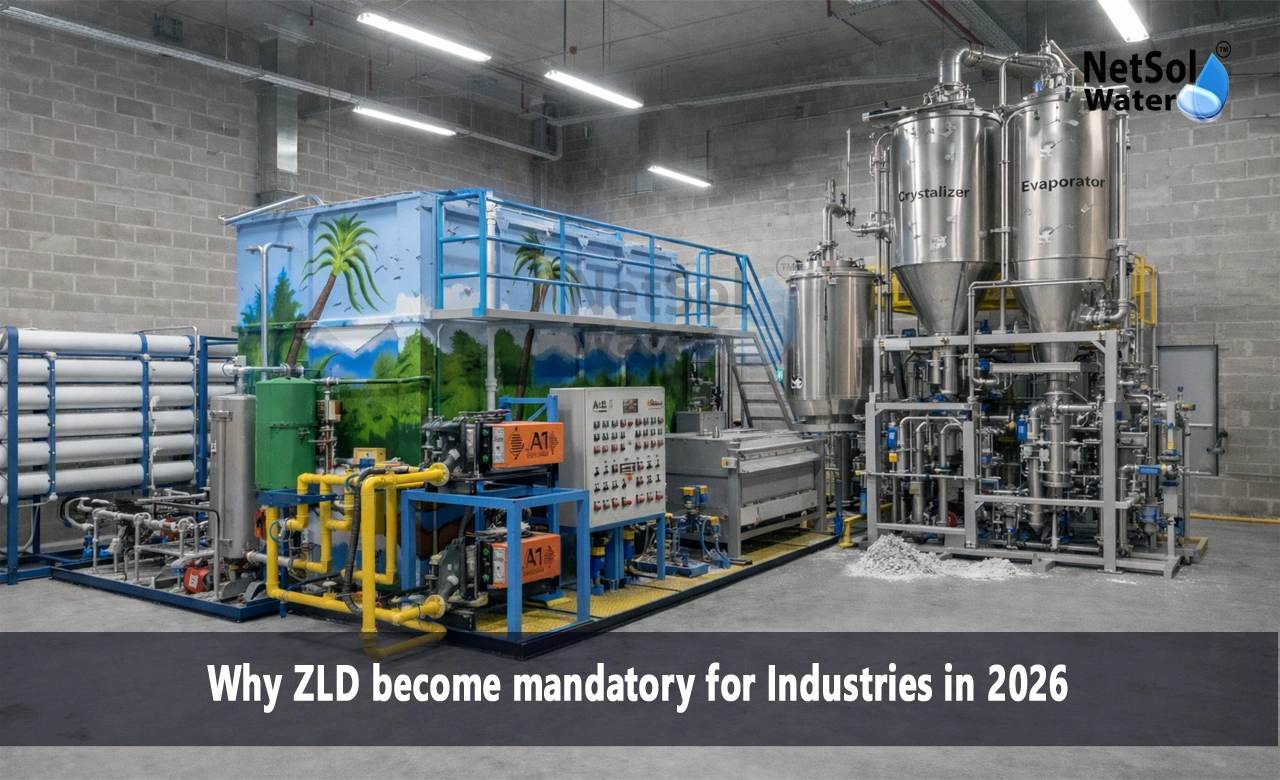
Why ZLD become mandatory for Industries in 2026?
Zero liquid discharge has moved from a technical idea to a compliance goal for many factories. This change touches many parts of business and life. It asks factories to treat and reuse all wastewater so no liquid leaves the site. This rule grows from worry about scarce water and from stronger laws that watch industrial discharge. The move also answers public pressure after many rivers and towns felt the harm of untreated effluent. Companies now must measure their water use and show that they manage waste in new ways. Many regulators now give no space for slow fixes. They want systems that work now and that can be checked in real time. This shift changes how plants plan production and where they place new lines. It also pushes engineers to adopt newer treatment steps, so plants run with less fresh water. As businesses change, they also find ways to cut costs and save water. ZLD has become mandatory for Industries in 2026 and appears as a clear rule in many places. This rule links water security with clean air and soil. Recent steps by national and state agencies show that enforcement will grow fast.
Regulatory changes and enforcement
The role of law has moved from gentle advice to strict orders. This shift changes how industries plan and run their plants.
1: New national and state level orders
Regulatory bodies now issue stricter limits for effluent discharge. They link consent to operate with proof of treatment and online monitoring. The central board has set tighter norms that leave little room for delay. State agencies now add local conditions that match river health and local water stress. These new rules place Zero Liquid Discharge as a condition for many polluting sectors. This step means that companies must upgrade or face closure. Recent documents from board meetings and state orders show direct timelines for ZLD adoption.
2: Stronger enforcement action
Agencies now use continuous online monitoring and data links to central servers. They also issue closure orders when units fail to meet the new portal rules. The move to live data makes it harder to avoid checks. Agencies now take action fast when they see non compliance. Many units face fines or shutdowns for missing deadlines. This trend shows regulators will not treat ZLD as optional.
Why the law now pushes ZLD?
The law now ties public health and water security to industrial permits. The link makes environmental approval and financial backing depend on proof of full treatment. Companies without robust plans face legal and financial risks. This reality forces manufacturers to set ZLD targets in their capital plans. The rule also changes how banks view lending for new plants. Banks now want to see compliance plans before they fund projects.
Environmental reasons and water scarcity
1: Rising water stress
Many regions now face lower ground water and less surface water. Climate changes and more cities raise demand for clean water. Industries now compete with people for the same scarce resource. This pressure forces reuse and recycling inside plants. ZLD helps industries cut fresh water demand and ease local scarcity. The technical shift to recycle water supports long term operations.
2: Pollution of rivers and soils
Untreated or poorly treated effluent harms rivers and farmland. Polluted rivers damage lakes and downstream users. Local cases show how dyeing units and plating shops damaged nearby water bodies. These incidents push local boards to require ZLD to stop flow of pollutants. As a result regulators now act to protect rivers and land from industrial discharge.
3: Public health and community pressure
Communities now speak up when they see bad water or soil. Media and local groups raise alarms. This public pressure helps agencies to tighten standards and to enforce ZLD. Manufacturers now face public scrutiny that affects their brand and market access. This social factor speeds the move to ZLD.
Technology and treatment methods
This section explains the tools that make ZLD possible. It also shows why technology now supports full reuse in many cases. The focus shows practical steps plants use to meet the rule.
1: Core treatment stages
ZLD systems use several steps to treat wastewater. First plants remove solids and oil. Next they use biological or chemical steps to break down organics. Then they apply membrane filters such as reverse osmosis. Finally, they use evaporators and crystallizers to remove the last liquid fraction. These steps reduce water loss and convert waste into solids for safe disposal. Advances in each step now cut energy and space needs for many setups.
2: Modular and scalable systems
Engineers now offer modular units that fit different plant sizes. These modules let small units move to full ZLD in stages. The modular path helps manufacturers spread cost and test performance. It also shortens lead time for installation and permits easier maintenance. This design choice makes ZLD more practical for many manufacturers today.
3: Energy and resource use
Evaporation and crystallization need energy. Newer designs reduce energy use by recovering heat and by using efficient compressors. Manufacturers now pair ZLD with energy recovery and with cleaner fuel choices. This pairing lowers operating cost and cuts emissions from the treatment plant. The combined approach helps meet both water and climate goals.
Economic impact and cost considerations
1: Capital and operating cost
ZLD builds need investment for equipment and space. They also need power and trained staff. These costs hit small manufacturers hard. Many managers now plan finance in phases to lower the initial burden. Some state schemes help with subsidies and credit for treatment projects. These incentives reduce the net cost for early adopters.
2: Cost offset and savings
When companies reuse water they cut fresh water purchase and lower waste charges. This saving adds up over time and can offset the capital cost. Manufacturers that run ZLD with energy recovery also cut power bills. Over years the net cost can fall and the business case can improve. This reality makes ZLD an investment for water scarce plants.
3: Market and finance impact
Banks and buyers now check environmental compliance. Manufacturers with ZLD ready get more trust when they seek loans. Some buyers now prefer goods made under strict environmental control. This market pressure makes ZLD part of a firm strategy to remain competitive. The tie between compliance and finance speeds adoption across sectors.
Implementation steps for industries
1: Assess current waste streams
The manufacturers must first map the type and volume of wastewater. This step sets the design for treatment. Teams should test samples and record variation across the year. The study helps pick the right mix of biological steps membrane filters and thermal units. Accurate data leads to a fit for purpose design.
2: Choose a phased plan
Large upgrades often work best in phases. Start with primary and secondary treatment. Next add membrane systems and then thermal recovery. Phased work lowers disruption and allows testing at each stage. This plan helps managers show quick wins to stakeholders and to regulators.
3: Engage with regulators and the public
Early dialogue with pollution control boards helps to set realistic timelines and to access subsidies. Manufacturers that share plans and data face fewer surprises at audit. Open steps also build trust with nearby communities that care about water and health. This outreach eases the path to approvals.
4: Train staff and set up monitoring
ZLD needs trained operators and online data systems. Companies should run training programs and link local sensors to the regulator portal. Continuous monitoring helps to spot faults and to show compliance in real time. Strong monitoring reduces risk of fines and closure.
Challenges and solutions
1: Small manufacturer and high cost
Small units face tight margins and limited space. One solution uses common effluent treatment plants where many manufacturers share a ZLD hub. Shared models cut cost and help smaller operators meet the rule. States also offer funds and subsidies to reduce the burden on small manufacturers. These steps help even the smallest units to comply.
2: Technical complexity
ZLD systems need integrated design and good operation. Vendors now provide end to end solutions that bundle design, supply and operation. This approach lowers the technical entry barrier. The manufacturer can also use third party operators to run the plant under contract. The service model moves risk off the factory balance sheet.
3: Energy and carbon footprint
Some manufacturers worry that ZLD increases energy use. Better design cuts the extra energy by reusing heat and by using efficient equipment. The manufacturer can also pair ZLD with renewable power to cut the carbon trade off. These steps reduce the climate footprint while keeping water in use.
Conclusion
ZLD becoming mandatory for Industries in 2026 shows that water and law now shape industrial choices. The rule changes planning cost and plant design. It also creates a clear path to protect rivers, land and people. Companies that act now will reduce legal risk and protect their operations. They will also improve trust with buyers and with the public. For managers who need help with assessment design or with permits a specialist partner can speed the work and lower costs. Contact us for more information or request a consultation to plan your ZLD path. Take the next step now to meet the rule and to secure your water future.
Netsol Water is Greater Noida-based leading water & wastewater treatment plant manufacturer. We are industry's most demanding company based on client review and work quality. We are known as best commercial RO plant manufacturers, industrial RO plant manufacturer, sewage treatment plant manufacturer, Water Softener Plant Manufacturers and effluent treatment plant manufacturers. Apart from this 24x7 customer support is our USP. Call on +91-9650608473, or write us at enquiry@netsolwater.com for any support, inquiry or product-purchase related query.