

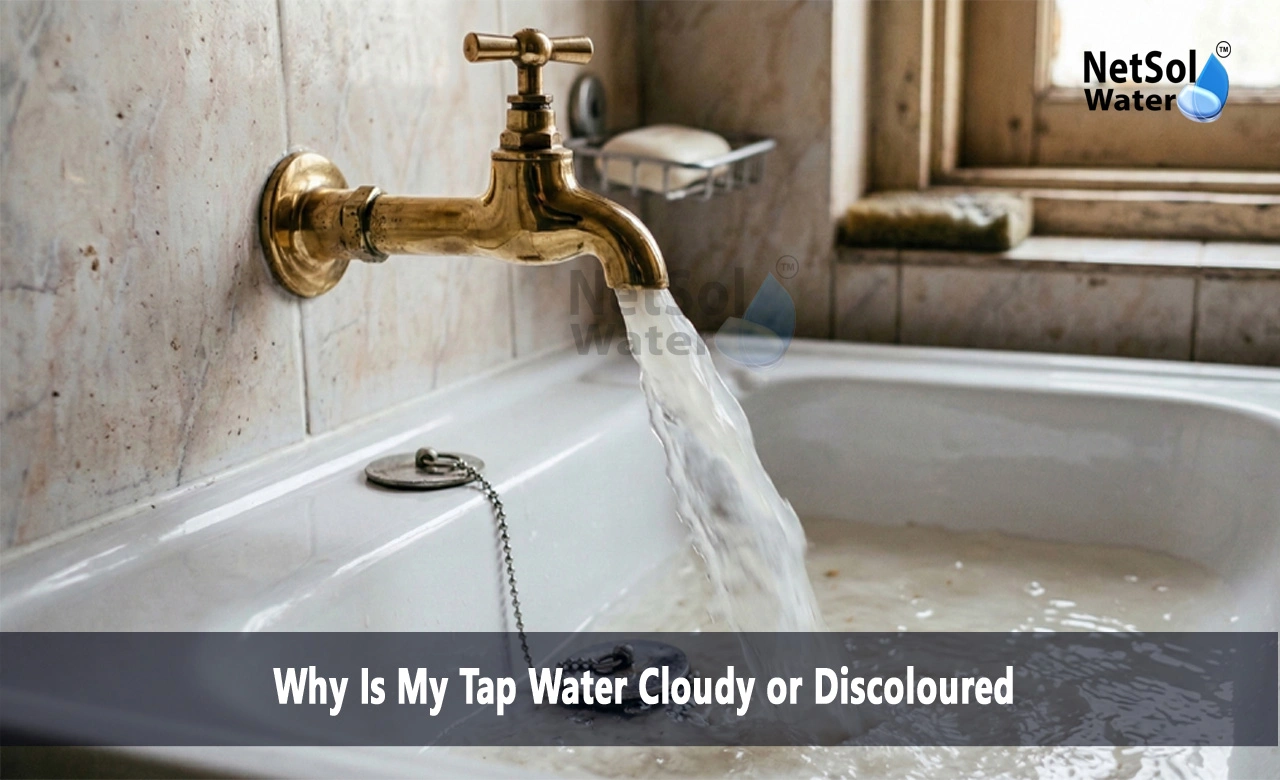
Why Is My Tap Water Cloudy or Discoloured?
Seeing cloudy or discoloured water coming from a tap can alarm anyone. This problem can disrupt daily chores and raise health questions. Understanding why your water looks odd helps you act quickly and safely. If you want to understand how water is properly treated before reaching homes, you can read our guide on Water Treatment Plant. In many cases the issue does not mean danger. In other cases the problem does mean you must act right away. Knowing the likely causes helps you decide if you can fix the issue yourself or if you should get help from your water supplier or a plumber.
Air and Pressure Changes
Air in the pipes often causes cloudy water. This factor affects many homes after repairs or cold nights when pipes shrink. Air makes tiny bubbles that turn the water white or milky for a short time. Let us have a look on some
1: How air gets into pipes?
When the water system changes pressure, air can enter through joints and valves. Workers in the street can also flush the mains and push air into home pipes. The bubbles rise and break leaving clear water.
2: How it looks and how to check?
Fill a clear glass and watch for a few seconds. If bubbles form and clear from the bottom up then air causes the cloudiness. Run the cold tap for one minute. The water should clear fast. This check links your observation to a simple cause.
3: What you can do?
Open several taps and let them run for a short time. If cloudiness clears that day you can stop worrying. If bubbles persist call your water company and report the problem.
Minerals and Hard Water
Hard water contains extra calcium and magnesium. These minerals can make water look cloudy or leave tiny flakes that look like dust. Let us have a look on some
1: Why minerals affect appearance?
When water warms or pressure drops some minerals form tiny particles that float. These particles scatter light and make water look cloudy. Over time these minerals can build up on kettles and pipes.
2: How to spot mineral cloudiness?
If the cloudiness leaves white deposits on cups or on the sink then minerals cause the issue. The deposits feel chalky when you rub them. Boil a small amount of the cloudy water. If white flakes collect on the pan then minerals are the cause.
3: How to reduce the problem?
Install a water softener or use a simple cartridge filter on the tap. Softening reduces mineral buildup and makes water look clear. Choose a filter that fits your needs and change it when it reaches the recommended flow limit.
Rust and Pipe Corrosion
Rust from old pipes can colour water brown or red. This issue poses a higher risk than simple cloudiness. Let us have a look on some
1: Why pipes rust
Older metal pipes corrode over time. Iron and steel release rust into the water when the pipe lining fails. Work on the water main can stir up rust that sits in pipes until flow moves it out.
2: How rust shows itself
Rust turns water yellow, brown or red. It stains laundry and leaves marks on sinks. The colour may appear only after you run hot water. That pattern points to corrosion in the hot water system.
3: What to do when rust appears
Flush the system by running cold water taps for several minutes. If brown water continues avoid washing light fabrics. Contact a plumber to inspect pipe condition. If mains work caused the problem call the water supplier to report it and ask for an update.
Sediment from Mains Work or Repairs
Work on public pipes or sudden bursts can push dirt into home supply lines. Sediment often appears as grey or dark particles. Let us have a look on some
1: How sediment enters homes
When engineers repair mains, they change flow patterns and loosen material inside large pipes. That material can travel into small service lines that feed homes. The result shows up as sand or dark specks in the glass.
2: How to test for sediment
Hold water in a clear glass and let it sit. If particles settle to the bottom then sediment is present. If the water clears from the top down then air remains the likely cause.
3: How to handle sediment
Run cold water for several minutes to clear the line. If particles reappear call the water utility. They can advise about planned work and can send crews to flush mains where needed.
Organic Matter and Contamination
Leaves, algae and other organics can change water colour and smell. This problem can signal a real contamination event so treat it with care. Let us have a look on some
1: How organics get into water
Broken seals or damaged storage tanks allow organic matter to enter the system. Storms can push debris into open parts of the supply. When organics decay they can tint water green or brown and cause an odd smell.
2: Signs that organics are present
A strong earthy or musty smell points to organic matter. If water tastes strange avoid using it for drinking or cooking until you know more. Organic contamination can cause illness in some cases.
3: Steps to protect your household
Stop using the water for food until the supplier confirms safety. Boil water for drinking if you must use it while waiting for help. Report the issue to your supplier and ask them to test the supply at your address.
Treatment Plant or Supply Issues
Sometimes the cause sits upstream at the plant that treats water. Problems there can change colour or clarity across a whole area. Let us have a look on some
1: Why treatment faults matter
Treatment plants manage many steps that remove particles and disinfect water. If a filter clogs or a chemical dose changes the output can look cloudy or off colour. These faults can affect many homes at once.
2: How to know if the supply is the cause
If neighbours report the same issue then the problem likely comes from the supply. Check local news or the water supplier website for notices on outages or repairs. This step helps you know if the issue goes beyond your pipes.
3: What to expect from the supplier
Suppliers can test water and issue safety advice. They can also schedule flushing or repairs to restore clear water. Keep a record of the time and the tap you used and share that detail when you call.
Conclusion
Tap water, cloudy or discoloured can come from many causes. Some causes pose no health risk. Others need quick action from a plumber or from the water supplier. If you see cloudiness first run a clear glass test and watch how the water clears. If the cloudiness lasts or if the water shows colour or smell reach out to your water provider. For help with diagnosis or with plumbing work contact a trusted professional for an inspection and for next steps. If you want more information or a consultation please get in touch and we will guide you through the steps to make your water clear again.
Contact Netsol Water at:
Phone: +91-9650608473, Email: enquiry@netsolwater.com