

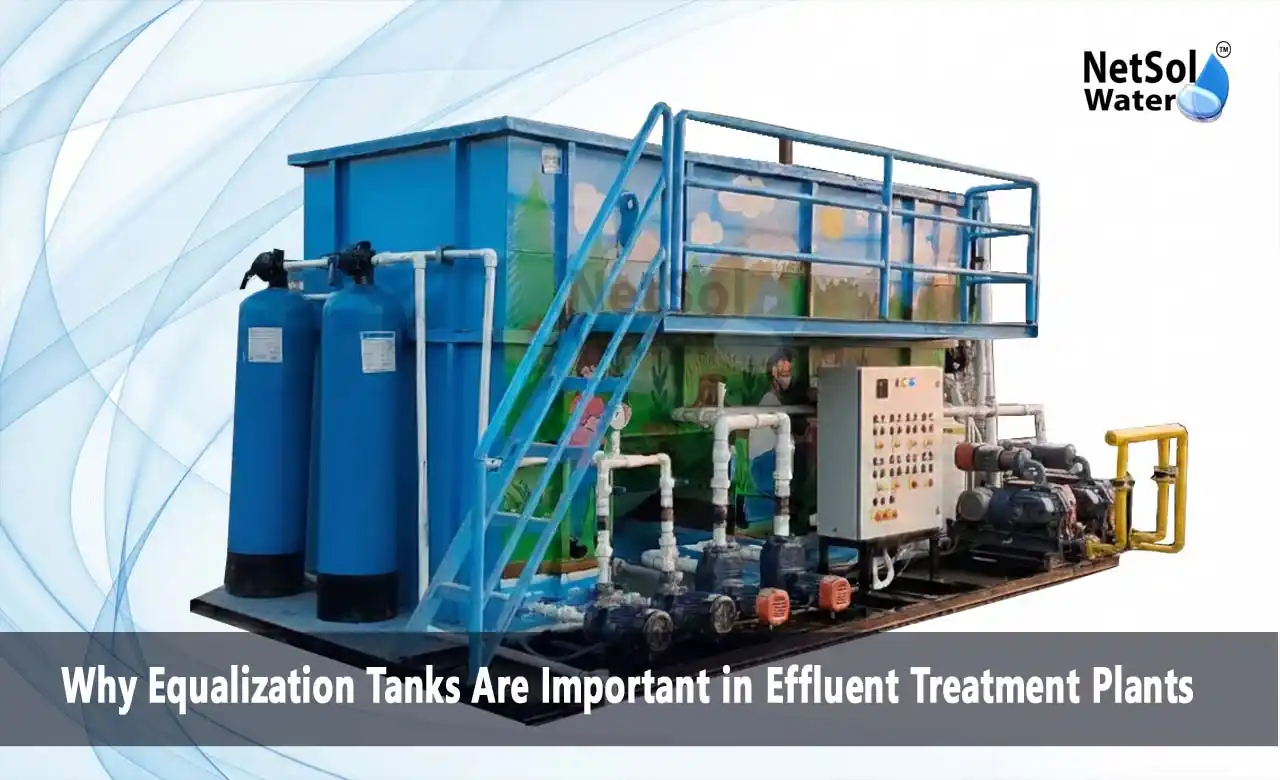
Why Equalization Tanks Are Important in Effluent Treatment Plants?
Industrial wastewater can change in flow and strength throughout the day. This variation can make treatment difficult when wastewater enters a plant at a highly uneven rate. An equalization tank helps manage these changes by collecting wastewater and releasing it forward at a more stable rate. It also helps create more even conditions for the treatment stages that follow, making it an important part of a well-planned treatment system.
Netsol Water is a leading water and wastewater treatment company based in Greater Noida, Uttar Pradesh. Greater Noida is known as an industrial township with integrated town planning, a location closely connected with industrial growth that creates a strong need for effective wastewater management. Understanding the role of an equalization tank can help industries make better choices during ETP design and plant operation.
Why an Equalization Tank Matters in ETP Design?
An equalization tank plays an important role because wastewater does not always arrive at a steady rate. Industrial activities often change from one hour to another, and production schedules can also affect the amount and strength of wastewater. These changes can put pressure on the treatment process. An equalization tank acts as a buffer between wastewater generation and the main treatment units. Below are some key reasons why this tank matters.
. It Controls Changes in Flow
Flow variation can create serious problems in a treatment plant. A sudden increase in flow can overload pumps and treatment units, while a sudden fall in flow can leave treatment systems working below their planned level. The equalization tank stores wastewater during periods of high flow and then releases it forward at a more controlled rate, helping maintain a smoother flow through the plant.
A steady flow also makes it easier to operate other treatment units. Pumps can work within their planned range, chemical dosing becomes more predictable, and biological treatment can receive wastewater at a more stable rate. Netsol Water explains that equalization basins help provide consistent influent flow to downstream treatment stages.
. It Balances the Wastewater Load
Flow is not the only thing that changes in industrial wastewater — the amount of organic matter and other pollutants can also rise and fall. Some production steps may release stronger wastewater than others. If this concentrated wastewater reaches a biological or chemical treatment unit too quickly, the process can face a sudden load shock.
The equalization tank helps mix wastewater from different times and sources, creating a more uniform feed for the next treatment stage. The result is better process control and fewer sudden changes in treatment conditions. Netsol Water also describes equalization as a way to balance raw effluent and stabilize conditions before further treatment.
How the Equalization Tank Protects Downstream Treatment?
The equalization tank does more than hold wastewater for a short period — it also protects the treatment stages that come after it. Each treatment unit works best when it receives wastewater within a suitable flow and load range. When wastewater changes too quickly, these units may not perform as expected. This is why the equalization stage has a direct effect on overall plant stability. Below is how it supports the later treatment stages.
. It Supports Biological Treatment
Biological treatment depends on microorganisms that break down biodegradable pollutants. These microorganisms need suitable operating conditions, and a sudden increase in organic load can create stress in the biological process. Changes in wastewater strength can also affect oxygen demand and treatment performance.
An equalization tank helps smooth these changes before wastewater reaches the biological stage. Mixing creates a more uniform wastewater stream, giving the biological unit a more consistent load and helping prevent sudden shock loads that may disturb the process. Netsol Water notes that equalization can buffer changes in flow and organic strength, and describes air mixing as a method for keeping solids in suspension and preventing wastewater from becoming septic.
. It Helps Chemical Treatment and pH Control
Many industrial waste streams show changes in pH during production — one batch may be more acidic while another may be more alkaline. Sending these changes directly into a chemical treatment unit can make dosing difficult.
The equalization tank creates a better mixing point before neutralization and other chemical treatment stages. When the wastewater becomes more uniform, the dosing system can respond more easily, improving chemical use and supporting more stable treatment. Netsol Water places equalization before neutralization in its described ETP process.
ETP Design Around the Equalization Tank
Good ETP design requires more than choosing a tank and connecting pipes. The equalization tank should match the wastewater flow and suit the type of wastewater and the treatment process that follows. A poorly sized tank may not provide enough storage during high flow periods, while an oversized tank adds unnecessary cost and space needs. The table below summarizes the key design considerations.
| Design Factor | Why It Matters |
|---|---|
| Tank Capacity | Must match the flow pattern; sized using inflow data and cumulative flow analysis so the outlet remains controlled during peak periods. |
| Retention Time | Wastewater must stay long enough to smooth out major flow and load changes without creating septic conditions. |
| Mixing System | Mechanical mixers or air systems keep solids suspended and blend wastewater from different periods into a uniform outlet. |
| Operating Flexibility | Extra volume beyond calculated needs accommodates unexpected changes in production and flow. |
| Location in Process | Typically placed before neutralization and biological treatment so downstream units receive a stabilized feed. |
. Tank Capacity and Retention Time
Tank capacity should match the pattern of wastewater generation. Designers study the flow over time to understand when peak flow occurs and how long the variation lasts. This information helps determine the storage needed to maintain a controlled outlet flow.
Retention time also matters — the tank must hold wastewater long enough to smooth out major changes without creating unwanted conditions. Netsol Water describes the use of inflow data and cumulative flow analysis to calculate the required equalization volume, noting that practical tank capacity can include extra volume for operating flexibility and unexpected changes.
. Mixing and Aeration
Mixing is another important part of tank design. Without proper mixing, solids may settle at the bottom and some wastewater may become stagnant, creating odour and process problems.
Mechanical mixers or air systems can keep wastewater moving through the tank. Good mixing and aeration also helps combine wastewater from different periods so the outlet remains more uniform. Netsol Water notes that mixing helps keep solids suspended and supports equalization of wastewater conditions, so design should consider mixing equipment along with tank size and flow control.
Operational and Environmental Benefits
A well-designed equalization tank can improve the overall working of a treatment system. It gives operators greater control over changing wastewater conditions and can help treatment units perform closer to their intended operating range. These benefits support better plant stability and make daily operation easier, as summarized below.
| Benefit | Impact on Plant Operation |
|---|---|
| Flow Control | Prevents pump overload and hydraulic shock by delivering a steady outlet flow. |
| Load Balancing | Mixes strong and weak wastewater streams to create a uniform feed for treatment units. |
| Biological Stability | Reduces shock loads on microorganisms, supporting consistent oxygen demand and treatment performance. |
| Chemical Dosing Accuracy | A more uniform pH and pollutant profile allows dosing systems to respond predictably. |
| Equipment Protection | Downstream units face less stress from sudden hydraulic and pollutant swings, supporting longer service life. |
. Better Process Control
Stable flow makes plant operation more predictable. Operators can manage pumps more easily, chemical dosing becomes more consistent, and biological treatment works under more even conditions — reducing the effect of sudden changes in wastewater generation.
Better control also supports easier monitoring. When incoming wastewater remains more uniform, operators can identify process changes more quickly and make adjustments before a small issue becomes a larger treatment problem. This makes the equalization stage useful for both new plants and systems handling highly variable industrial wastewater.
. Support for Long-Term Plant Performance
A treatment plant should not only handle wastewater today — it should continue to perform as production patterns change. Equalization provides flexibility by managing short-term changes in flow and wastewater strength.
A strong ETP design also considers equipment protection and process stability. When downstream units receive a more controlled feed, they face less stress from sudden hydraulic and pollutant changes, supporting smoother operation over time. Netsol Water includes equalization tanks as part of its primary treatment systems to help stabilize influent before later stages.
Conclusion
Good wastewater treatment begins with good process control. Industrial wastewater rarely stays the same throughout the day, and the equalization tank helps manage this change by balancing flow and wastewater strength before the next treatment stage. Its correct size and design can support smoother operation and better treatment performance.
Choosing the right system requires an understanding of wastewater flow and quality as well as the needs of each industry. Effluent treatment plants should therefore include an equalization stage when process conditions call for better flow and load control. Businesses planning a new plant or improving an existing system can contact Netsol Water for more information and consultation on suitable ETP design solutions.
Contact Netsol Water
Phone: +91-9650608473, Email: enquiry@netsolwater.com