

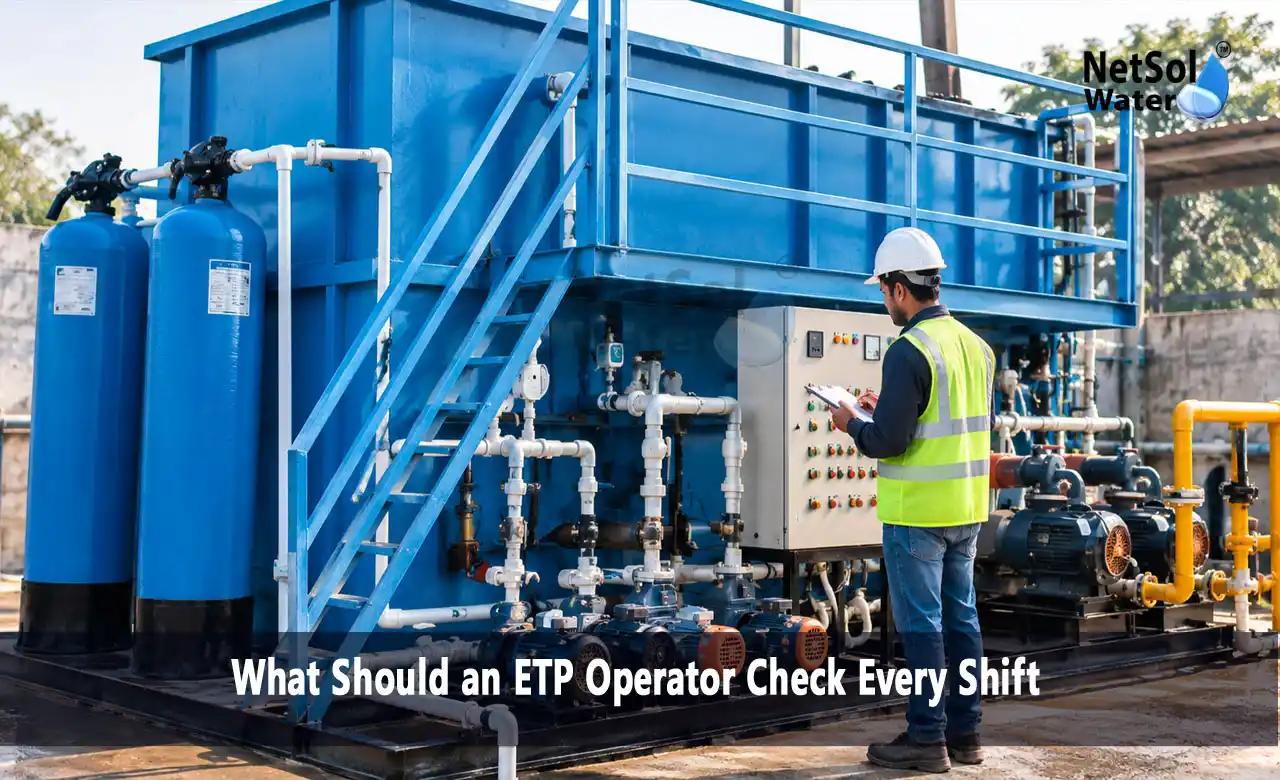
ETP Operator Shift Checklist: What to Check Every Shift
An Effluent Treatment Plant (ETP) runs largely on its own, but it still needs a trained eye on every shift. Skipping routine checks is one of the fastest ways to end up with a compliance issue or an unplanned breakdown. A disciplined shift routine, covering equipment, water quality, chemical dosing, sludge and flow, is what keeps an ETP stable and predictable.
A well-structured shift checklist helps operators spot problems early, builds a reliable performance history, and makes troubleshooting far easier when something does go wrong. Below is a practical breakdown of what every ETP operator should verify, shift after shift.
1. Check Inlet Flow and Wastewater Quality
Start every shift by checking the wastewater entering the plant. Log the inlet flow and compare it against the plant's normal operating range.
Track key parameters such as pH, temperature, TDS, conductivity, COD, BOD and suspended solids, based on what the site monitoring plan requires. Not every parameter needs to be checked on every shift, but the critical ones should never be skipped.
A sudden shift in these readings usually points to a production change, an accidental chemical discharge, a cleaning activity upstream, or an unusual wastewater stream entering the system.
2. Check the Equalization Tank
The equalization tank should stay well mixed with no visible solids settling. Watch the mixer or air-mixing system and listen for unusual noise or vibration.
Confirm the tank level is normal and that wastewater is flowing smoothly into the next treatment stage. Big swings in level usually mean a flow imbalance, a pump fault, a blocked line, or unusually high wastewater generation.
3. Check pH and Chemical Dosing
pH control is one of the most important parameters in almost every ETP. Monitor pH at all required points and confirm the dosing systems are functioning correctly.
Inspect chemical tanks, dosing pumps, pipelines and injection points, and make sure there is enough chemical stock to last the shift.
If chemical consumption suddenly rises or drops, investigate the cause first, rather than simply adjusting the dose rate.
4. Inspect Pumps and Motors
Every shift, check transfer pumps, dosing pumps and sludge pumps for unusual vibration, noise, leaks, abnormal pressure readings or overheating. Confirm standby pumps are ready wherever the plant design calls for them.
Suction and discharge should also be checked. Poor flow through a pump can mean a blockage, air lock, low tank level, or another underlying process issue.
5. Check the Biological Treatment System
For plants using biological treatment, inspect the aeration tank closely. Monitor dissolved oxygen against the plant's operating targets and observe the aeration pattern.
Uneven bubbling, visible dead zones, excess foam, or an unusual colour can all signal a process problem worth flagging early.
Also inspect blowers, air headers, valves and diffusers. Unexpected blower pressure or airflow readings often point to fouling, blockage, leakage or equipment wear.
6. Check Clarifier Performance
The clarifier should settle steadily. Check the clarity of the outlet water and watch for suspended solids carrying over into treated water.
Where monitoring is available, check the sludge blanket, and inspect the sludge scraper, return sludge pumps and withdrawal systems.
Poor sludge removal lets the sludge blanket build up over time, which eventually affects treated water quality.
7. Check Filtration and Advanced Treatment Units
If the plant includes pressure sand filters, activated carbon filters, UF, RO or other advanced treatment units, review their operating readings during the shift.
Record pressure, flow, conductivity and differential pressure for each unit. A rising pressure drop or a falling treated-water flow usually indicates fouling, clogging, scaling or weak pretreatment.
8. Check Sludge Handling
Sludge should never sit in the system longer than the plant design allows. Check sludge pumps, holding tanks, filter presses, centrifuges or other dewatering equipment.
Monitor the dewatering rate and sludge characteristics. Sludge that stays too wet can point to a polymer dosing issue, underperforming equipment, or a change in sludge characteristics.
Log the quantity of sludge removed as per the standard operating procedure.
9. Check Treated Water Quality
Compare the final treated water against the plant's required quality limits and applicable reuse or discharge norms.
Track every parameter defined in the facility's testing plan. If treated water quality changes suddenly, trace it back through the treatment process rather than making random equipment adjustments.
10. Record Every Important Observation
The shift log is one of the most valuable tools an ETP operator has. Record flow, pH, chemical usage, tank levels, equipment readings, sludge removal, treated water quality, alarms and any unusual observations.
Compare current readings with previous shifts. Operators who log consistently are the ones who catch small changes before they turn into bigger problems.
ETP Shift Checklist (Quick Reference)
Before each shift, the operator should confirm:
. Inlet and outlet flow are normal.
. Tank levels are within the normal operating range.
. All required parameters, including pH, are within limits.
. Chemical dosing systems are operating correctly.
. Pumps and blowers are running as expected.
. Aeration is uniform across the tank.
. Clarifier sludge removal is working properly.
. Filters are within their pressure limits.
. Sludge handling equipment is available and functional.
. Treated water quality meets required discharge/reuse limits.
. Alarms and abnormal conditions have been noted and actioned.
. All unresolved issues have been handed over to the next shift.
Conclusion
An ETP operator should never wait for an alarm or a treated-water quality failure to trigger a plant check. Every shift should include a general review of flow, tanks, pumps, chemical dosing, aeration, clarification, filtration, sludge handling and treated water quality.
A standard checklist helps operators catch small issues before they turn into major process failures. It also improves communication between shifts and keeps overall ETP performance stable.
To understand how the individual treatment stages work together, see our guide on how an Effluent Treatment Plant works, and for equipment-level detail, check our page on ETP plant components and machinery.
Need Help With Your ETP?
Looking for advice on choosing the right water or wastewater treatment unit? We have solutions for every requirement.
Share your requirement with us, and our experts will help resolve it.
Call: +91-9650608473, Email: enquiry@netsolwater.com