

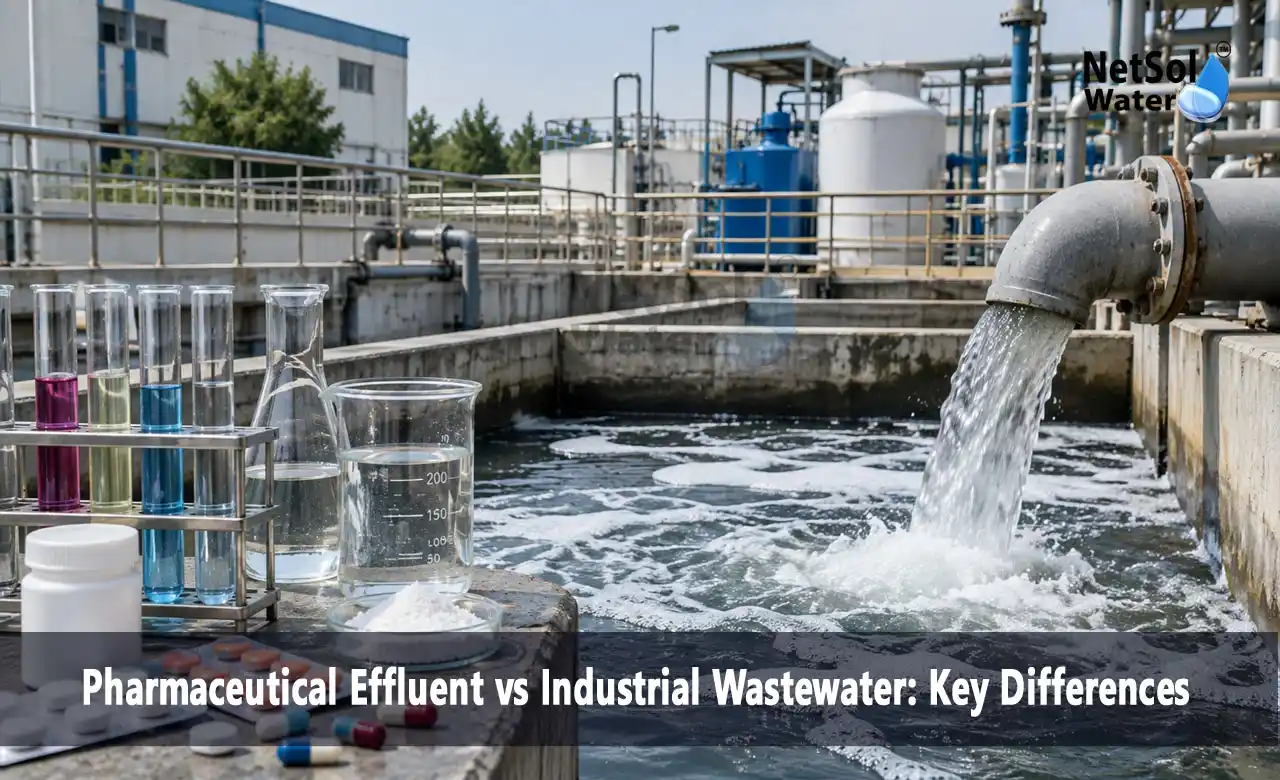
Pharmaceutical Effluent vs Industrial Wastewater: Key Differences
India holds a prominent place in the global pharmaceutical manufacturing landscape. The country produces medicines at scale and exports pharmaceutical products to markets across the world. While this industry drives healthcare access and economic growth, it also generates wastewater that demands careful handling before it is discharged or reused. Pharmaceutical effluent often carries chemicals and compounds that behave very differently from typical industrial discharge, and its makeup can shift depending on which medicine is being manufactured. This variability is exactly why pharmaceutical wastewater treatment tends to be far more demanding than treatment for many other industrial sectors.
Most industrial wastewater streams contain organic matter and suspended solids that respond reasonably well to standard processes. Pharmaceutical wastewater, on the other hand, can carry a broader range of chemical residues that resist conventional biological treatment. This is why an effluent treatment plant built for the pharma sector needs to be matched to the actual nature of the waste rather than a generic template. Recognising these differences helps manufacturers choose the right system and sustain consistent treatment performance over time.
Why Pharmaceutical Wastewater Has a More Complex Composition
The composition of any wastewater stream determines how easily it can be treated. Pharmaceutical units rely on a wide variety of raw materials and chemical processes depending on the product line, so the resulting wastewater can carry many substances at fluctuating concentrations. This makes pharmaceutical wastewater considerably less predictable than effluent from many other industrial operations.
Here are the key factors that add to this complexity.
Presence of Active Pharmaceutical Compounds
Manufacturing operations can release trace amounts of active ingredients into the wastewater stream. These compounds sometimes persist even after conventional treatment stages, and their chemical behaviour can vary widely based on the product and the process used to make it.
Certain active compounds degrade under the right treatment conditions, while others stay stable for extended periods. Their presence can also interfere with the microorganisms responsible for biological treatment, which means the process needs close monitoring and disciplined process control.
These compounds also matter at the point of discharge or reuse. Even trace concentrations can call for extra treatment steps depending on local regulatory standards and the water quality required for reuse, which makes strong source control a critical part of pharmaceutical wastewater management.
Chemicals and Solvents in Process Waste
Pharmaceutical production often involves solvents, cleaning agents, salts, and various process chemicals that enter the wastewater during manufacturing and equipment cleaning. Some solvents push up the organic load significantly, while others disrupt biological processes outright. Strong chemicals can also shift pH levels and create conditions that make biological treatment far less effective.
Because of this, treatment systems cannot rely on a single process. A combination of physical, chemical, and biological treatment stages offers much better control, and the exact configuration should be based on actual wastewater characteristics rather than a one size fits all design.
Why Wastewater Quality Can Change From One Batch to Another
Wastewater quality in a pharmaceutical facility can shift rapidly. Different products draw on different raw materials and production steps, and cleaning operations add yet another distinct wastewater stream. These shifts can affect flow rate, pH, chemical oxygen demand, and several other treatment parameters.
This constantly changing nature makes process management essential. An effluent treatment plant has to absorb these variations without losing treatment performance. Here are some of the main reasons behind these fluctuations.
Different Production Processes Create Different Waste Streams
A single pharmaceutical facility may manufacture several product types, each involving its own chemicals and operating conditions. One production cycle might generate wastewater with a heavy organic load, while another produces effluent loaded with salts or chemical residues. This variability makes direct treatment tricky, since a system tuned for one condition may not perform as well once the wastewater profile changes suddenly.
Industries can manage this through proper segregation and equalisation. Equalisation tanks help balance flow and pollutant concentration before the wastewater moves into later treatment stages, giving the system steadier operating conditions. Consistent monitoring also helps catch changes early, so operators can track key parameters and adjust the treatment process as needed. This approach supports stable performance and helps prevent sudden process failures.
Cleaning and Maintenance Add Another Layer
Cleaning operations generate a wastewater stream that is distinct from process wastewater. Pharmaceutical equipment needs regular cleaning to maintain hygiene and product quality, and the cleaning chemicals used can alter the pH and chemical profile of the wastewater. These streams sometimes carry concentrated residues, and feeding them directly into a biological treatment stage can stress the microorganisms at work there. Proper collection and controlled mixing help reduce this impact.
A well designed system accounts for both production wastewater and cleaning wastewater, creating a more balanced feed and supporting better overall process stability.
Why Biological Treatment Can Be More Difficult
Biological treatment plays a central role in industrial wastewater management, using microorganisms to break down biodegradable organic matter. Pharmaceutical wastewater makes this stage harder because certain compounds resist easy degradation, and some substances can actively affect microbial activity. Understanding this challenge helps industries pick the right treatment methods, covered in more detail in this guide on how to treat pharmaceutical effluents.
Low Biodegradability Can Slow the Process
Some pharmaceutical compounds have complex chemical structures that microorganisms struggle to break down. When that happens, conventional biological treatment alone may not achieve the required treatment level, and a high share of non-biodegradable organic matter adds further to the treatment burden, sometimes calling for additional steps before or after the biological stage.
Pre-treatment can help remove or transform stubborn compounds before biological treatment begins. Advanced oxidation is one option in suitable cases, and adsorption can help strip out certain dissolved substances. The right approach always depends on laboratory analysis and the actual wastewater characteristics, so industries should avoid picking technologies purely by comparing them against general industrial wastewater treatment systems.
Toxic Compounds Can Affect Microorganisms
Microorganisms need stable conditions to function well, and certain chemicals in pharmaceutical wastewater can turn toxic for biological cultures. Sudden spikes in concentration can weaken the microbial population and drag down treatment efficiency, a risk that grows when untreated wastewater reaches the biological reactor without proper balancing. Equalisation and controlled dosing help prevent these sudden shocks.
Operators should also keep an eye on pH, temperature, and other operating conditions. Consistent monitoring helps catch problems before they spread through the entire treatment process. A stable biological stage improves overall treatment performance and cuts down on frequent process recovery and maintenance.
Why Pharmaceutical Wastewater Needs Careful Treatment Planning
Every industrial wastewater stream needs a suitable treatment approach, but pharmaceutical wastewater usually demands greater attention because it can carry persistent compounds and constantly shifting pollutant loads. Treatment planning has to account for the source of the wastewater, the required discharge quality, and the potential for reuse.
Here are some key elements of a well planned treatment approach.
Combining Different Treatment Stages
A single treatment technology rarely removes every pollutant found in pharmaceutical wastewater, which is why a multi-stage process works better. Primary treatment removes larger solids and settleable matter, chemical treatment targets certain dissolved pollutants and improves water quality, and biological treatment addresses biodegradable organic matter. Additional processes can then remove whatever compounds remain after these stages. The right combination should always come from testing and clear process goals, since wastewater analysis helps identify which pollutants need the most attention and guides engineers in designing an effluent treatment plant that matches the site's actual needs. You can see this multi-stage approach applied in practice in this industrial wastewater treatment case study for the pharmaceutical sector.
Monitoring and Compliance Matter
Treatment does not stop once the system is installed. Regular monitoring plays a key role in maintaining stable performance, since changes in raw materials, production volume, or cleaning practices can all alter wastewater characteristics. Industries need to track key parameters and maintain their treatment equipment properly, and routine testing helps catch process deviations before they turn into major issues. For reference, facilities can also check the CPCB guidelines for ETPs in the pharmaceutical industry to stay aligned with regulatory expectations.
Sound wastewater management supports environmental compliance and opens up better water reuse opportunities. It gives industries greater control over their operations and lowers the risk of untreated discharge.
Conclusion
Pharmaceutical wastewater stands apart from most other forms of industrial wastewater because it can carry a complex mix of chemicals and compounds, with quality that shifts alongside production activity and cleaning operations. Some pollutants also resist conventional biological treatment, which is why careful analysis and treatment planning are so important for safe, effective wastewater management.
A suitable wastewater treatment system should always match the real characteristics of the waste stream. Proper segregation, equalisation, the right treatment selection, and regular monitoring all work together to improve performance and support compliance.
Netsol Water provides solutions for industrial water and wastewater treatment needs, and its expertise helps industries understand their treatment requirements and choose the right systems. For guidance on pharmaceutical effluent treatment and suitable effluent treatment plants, get in touch with Netsol Water for a consultation.
Contact Netsol Water at:
Phone: +91-9650608473, Email: enquiry@netsolwater.com