

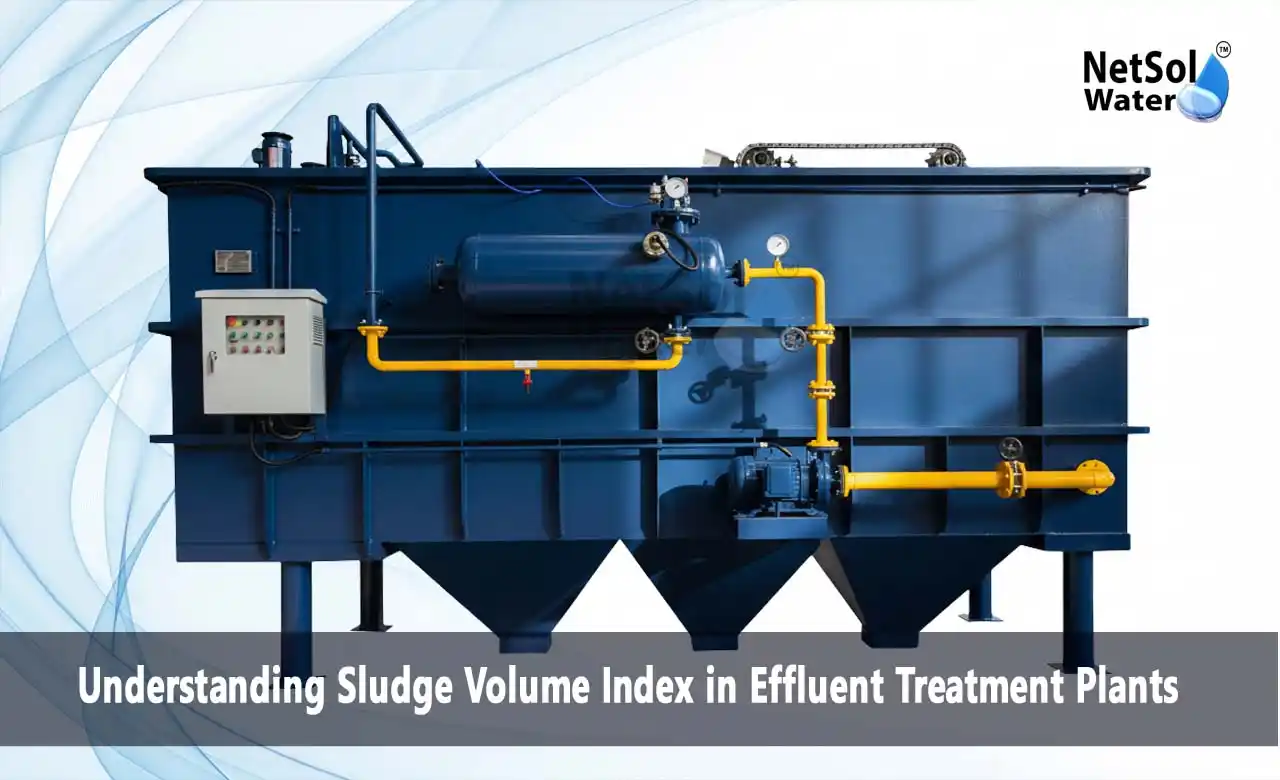
What is Sludge Volume Index (SVI) in Effluent Treatment Plants?
Effluent treatment plants help industries treat wastewater before it reaches the environment or returns for reuse. These systems handle wastewater that may contain organic matter and suspended solids. Biological treatment often forms sludge that must settle properly before treated water moves to the next stage. This is where Sludge Volume Index (SVI) becomes an important operating measure. It helps plant operators understand how well activated sludge settles in a clarifier. EPA guidance describes SVI as a measure of the volume occupied by one gram of activated sludge after 30 minutes of settling. A higher value points toward poor settling and can indicate sludge bulking.
Netsol Water is a leading effluent treatment plant manufacturer based in Noida in the Delhi NCR region. The company provides effluent treatment solutions for industrial and municipal applications. Noida has seen strong industrial growth, which makes efficient wastewater management an important need for businesses in the area.
What Does Sludge Volume Index Tell About Activated Sludge?
Understanding the condition of biological sludge helps operators keep an effluent treatment plant stable. Good settling allows the secondary clarifier to separate sludge from treated water. Poor settling can cause solids to escape with the treated effluent, which can increase TSS levels and affect overall treatment performance. Let's look at some important aspects of this test.
. Meaning of SVI in Wastewater Treatment
Sludge Volume Index shows how much space a given amount of activated sludge occupies after settling. Operators normally take a mixed liquor sample from the biological treatment stage and allow it to settle for 30 minutes. They then record the settled sludge volume and compare it with the MLSS concentration.
EPA documents describe the common calculation as the settled sludge volume in mL/L, multiplied by 1000 and divided by MLSS in mg/L. The result comes in mL/g. A lower SVI value usually indicates denser sludge that settles more easily, while a higher value indicates sludge that occupies more space and may settle poorly. This test gives operators a quick view of sludge behaviour but does not work as a stand-alone measure of plant health. Operators should also check MLSS and dissolved oxygen along with the final effluent quality, since changes in these values can help identify the reason behind poor settling.
. Why Good Settling Matters?
The secondary clarifier needs to separate biological solids from treated water. When sludge settles well it forms a compact blanket at the bottom of the tank, and clearer water leaves the clarifier with fewer suspended solids. Part of the settled sludge can return to the aeration tank as return activated sludge (RAS).
When sludge settles poorly, the blanket can become larger and may move toward the clarifier outlet, carrying solids into the treated water. Very high SVI is commonly linked with bulking sludge and poor clarification. EPA material also connects high SVI with poor sludge settling and handling characteristics.
What Does an SVI Around 1100 Mean?
Plant operators should take a reading such as SVI around 1100 seriously because it sits far above the common operating ranges described in wastewater guidance. EPA sources describe values around 50 to 100 as showing excellent settling in one reference, while values above 150 can indicate bulking conditions. The suitable range can still vary with plant design and operating conditions. An extremely high result needs careful checking before an operator changes the process.
The table below summarises typical SVI ranges and what they generally indicate:
| SVI Range (mL/g) | Settling Behaviour | What It Generally Indicates |
|---|---|---|
| 50 – 100 | Excellent settling | Dense, compact sludge; efficient clarifier separation |
| 100 – 150 | Acceptable / typical range | Normal operating conditions in many plants |
| Above 150 | Poor settling | Possible onset of sludge bulking; needs monitoring |
| Around 1100 | Very poor settling | Far above normal ranges; requires investigation of filamentous growth, DO, loading and lab procedure before process changes |
Let's look at some possible reasons and effects that may appear in an effluent treatment plant.
. Possible Causes of Very High SVI
Poor settling can develop for several reasons. One common cause involves filamentous microorganisms that form long structures within the sludge, creating a loose sludge structure that does not compact well. Changes in dissolved oxygen can also affect biological growth and sludge characteristics.
Organic loading can also influence the biological process, since a sudden change in wastewater strength can disturb the normal balance of microorganisms. Nutrient conditions can affect biological growth when the wastewater does not provide a suitable environment. Operators should therefore review flow conditions and incoming wastewater quality along with process data.
A reading as high as 1100 also deserves a test check. Operators should confirm the MLSS result and the settled volume, and should also review sampling and laboratory procedures, since an incorrect sample or calculation can create a misleading result. EPA guidance recommends using the settling test to understand changes in sludge characteristics.
. Effects on Clarifier Performance
Very poor settling can create problems in the secondary clarifier. Sludge may remain suspended instead of forming a compact blanket, and as the blanket rises it can approach the outlet level, increasing suspended solids in the treated water.
High SVI can also make sludge thickening and dewatering more difficult. Bulky sludge can occupy more tank volume and place extra pressure on sludge handling operations, which can affect the overall stability of effluent treatment plants when the issue continues for a long period.
Operators should not treat one high reading as proof of one specific problem. A trend gives a better picture. When SVI rises over several tests, the operating team can compare the results with dissolved oxygen and MLSS trends. This approach helps the team find the actual cause before making large process changes.
How Can Effluent Treatment Plants Control Poor Sludge Settling?
Good sludge management requires regular observation and controlled operation. Operators should not focus only on the final SVI value; they should understand what changed in the biological process and how that change affected sludge behaviour. Let's look at some practical areas that need attention when settling problems appear.
. Check Aeration and Dissolved Oxygen
The aeration stage supplies oxygen to microorganisms that break down biodegradable matter. A change in oxygen conditions can change the microbial population and affect sludge settling. Operators should monitor dissolved oxygen (DO) at suitable points in the aeration system.
Very low oxygen can create conditions that favour unwanted microbial growth, while excessive aeration can increase energy use without solving the actual cause of poor settling. The plant team should therefore compare dissolved oxygen readings with organic loading and other biological process data before adjusting air supply.
Regular monitoring also helps operators notice changes before they become major problems. This creates better control over the biological stage and supports stable clarification.
. Review MLSS and Sludge Return Conditions
MLSS shows the concentration of suspended solids in the aeration tank. Operators can use it with settling test results to understand changes in sludge concentration and behaviour. The return activated sludge (RAS) rate also affects the amount of biological solids that remain in the process.
A sudden change in wasting or return sludge flow can disturb the system. Operators should compare current conditions with normal plant operation before making adjustments, and should also review sludge age and organic loading when the plant uses an activated sludge process.
A balanced approach can help the biological process maintain good floc formation, supporting better separation in the clarifier and helping protect treated water quality. In some cases the correct response may require process changes based on the specific wastewater characteristics rather than a single standard adjustment.
Conclusion
Good wastewater treatment depends on more than simply meeting a discharge limit. The biological process must also remain stable so that sludge can separate properly from treated water. A very high SVI reading can point toward poor settling and possible sludge bulking. Effluent treatment plants perform better when operators monitor sludge behaviour and respond to changes with care. Regular testing can help identify problems before they affect clarifier performance and treated water quality. Sludge Volume Index offers a useful window into this behaviour when plant teams read it together with other operating parameters.
Netsol Water provides wastewater treatment solutions for different industrial needs. Its team can help assess treatment requirements and develop suitable systems for efficient wastewater management.
Contact Netsol Water to discuss your wastewater treatment requirements or request a consultation for your plant.
Phone: +91-9650608473, Email: enquiry@netsolwater.com