

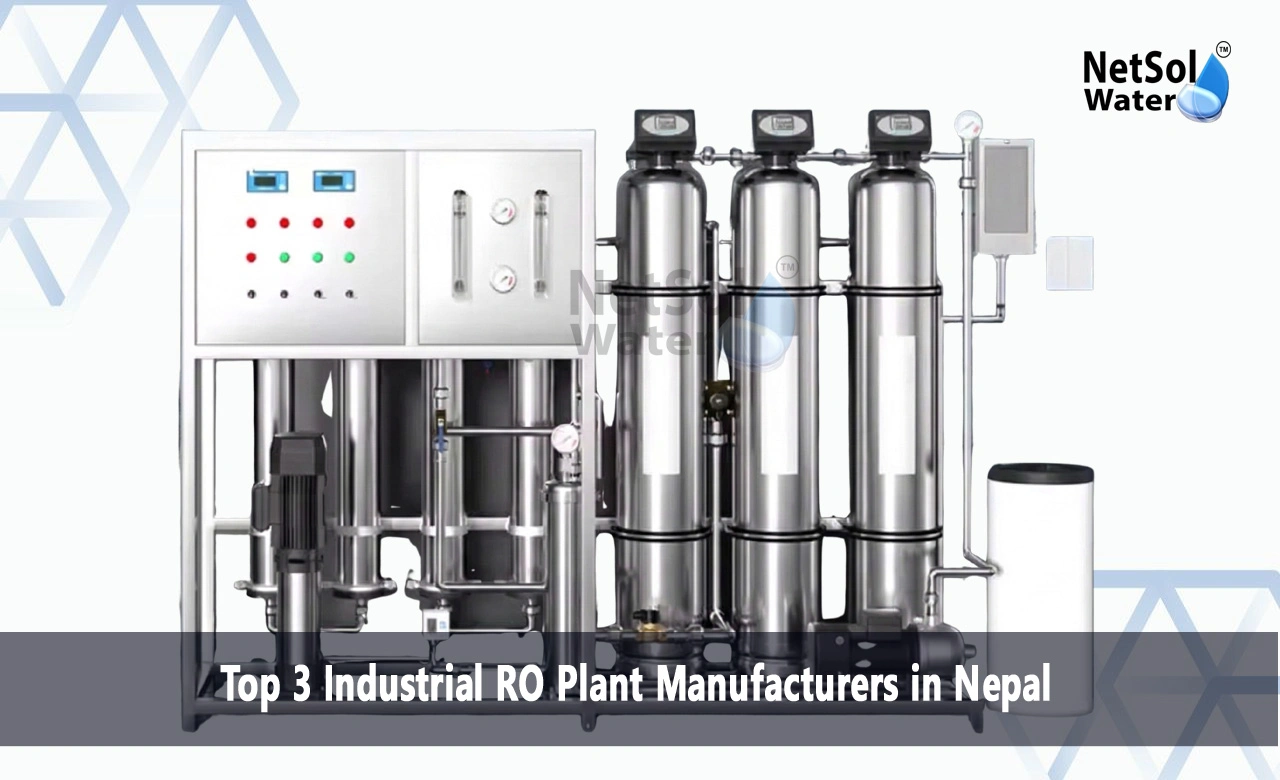
Top 3 Industrial RO Plant Manufacturers in Nepal
The industrial sector in Nepal relies on groundwater and local water sources for its various operations. The water source contains various contaminants which include dissolved salts and hardness and iron and bacteria. Industrial systems experience machine breakdowns because untreated water damages their equipment which results in operational decline and increased costs for repairs.
Factories choose to use reverse osmosis systems because they need this technology for their operations. The industrial reverse osmosis plant functions as a water purification system which eliminates unnecessary elements from the water supply. The system generates pure water which industrial facilities can use without safety concerns.
The system installation process requires a supplier selection process which holds equal importance to the system installation itself. A well designed plant works smoothly for years, while a poorly designed one can create constant operational problems. Hence Industrial RO Plant Manufacturer in Nepal become essential!
Industries That Commonly Use Industrial RO Systems Today
The number of industries in Nepal that install RO systems has reached its highest point throughout history. The trend currently exists because of several practical reasons.
The first reason untreated water damages industrial machines. The presence of minerals and salts leads to pipeline and machinery systems developing scaling problems. The system will experience diminished operational capacity which requires more maintenance work to restore its functions.
The pure water requirement exists because various industries need it to support their production activities. Beverage manufacturers and pharmaceutical companies must follow specific quality requirements which they establish themselves. The use of purified water ensures that products maintain their quality throughout the entire production process.
RO systems enable industries to achieve improved operational efficiency. Clean water extends the lifespan of equipment while decreasing the likelihood of unexpected equipment failures.
Industries prefer working with experienced Industrial RO Plant Manufacturers in Nepal who can design reliable purification systems. Each of these industries requires purified water for different processes, but the goal remains the same. They all need reliable water treatment for smooth operations.
Some of the most common examples include
1: Food and beverage factories
2: Pharmaceutical manufacturing units
3: Textile and garment industries
4: Chemical processing plants
5: Bottled drinking water companies
3 Best Rated Industrial RO Plant Manufacturers in Nepal
1. Netsol Water
Netsol Water is widely recognized for its expertise in industrial water treatment solutions. The company designs RO plants that can handle large scale water purification for factories and manufacturing units.
What many industries appreciate about Netsol Water is its practical approach. Instead of offering a standard plant, the company usually studies the water quality first. Every water source is different. Some locations have high TDS levels, while others have iron, hardness, or chemical contamination.
Industrial RO plants from Netsol Water are used in several sectors such as food processing, pharmaceuticals, textile production, and manufacturing facilities. Because of this experience and technical approach, many businesses consider Netsol Water one of the most trusted Industrial RO Plant Manufacturers in Nepal.
Some key advantages include
• Customized RO plant design for industrial use
• High efficiency membranes for better purification
• Durable systems built for continuous operation
• Strong technical support and installation assistance
2. Commercial RO Plant
Commercial RO Plant is another company known for providing reliable water purification systems. While the company supplies commercial systems, it also manufactures large capacity RO plants that work well for industrial applications.
Industries often choose these systems because they are designed for heavy usage. Factories typically run for long hours every day, so they need equipment that can handle continuous operation.
Their plants usually include several filtration stages. Water first passes through sand filters and carbon filters before reaching the RO membrane. This process removes suspended particles, chemicals, and dissolved salts step by step.
The result is clean and stable water quality that industries can depend on.
Important benefits include
• High capacity purification systems
• Strong plant structure for industrial environments
• Efficient filtration technology
• Simple operation and easy maintenance
3. Urban RO Plant
Urban RO Plant focuses on water and wastewater treatment solutions for commercial and industrial projects.
Many industries today are not only thinking about purification but also about water reuse. Industrial operations generate a significant amount of wastewater every day. Instead of discarding this water, companies can treat and reuse it for different purposes.
This is where integrated water management becomes useful. Businesses can combine RO purification with wastewater treatment systems. Treated water can then be reused for cooling, cleaning, or other industrial processes.
This approach helps industries reduce water consumption and lower operating costs.
Some advantages include
• Advanced wastewater treatment systems
• Water recycling solutions for industries
• Energy efficient plant designs
• Suitable for large infrastructure projects
Companies looking for both purification and recycling solutions often work with manufacturers that offer this combination.
Summing Up
Installing a well designed RO plant helps solve these issues. It ensures a steady supply of purified water that industries can rely on every day.
Companies like Netsol Water is known for providing effective solutions in this field. These organizations continue to support industries that are looking for dependable Industrial RO Plant Manufacturers in Nepal. With the right water treatment system in place, industries can improve efficiency, protect equipment, and maintain high product quality for years to come.