

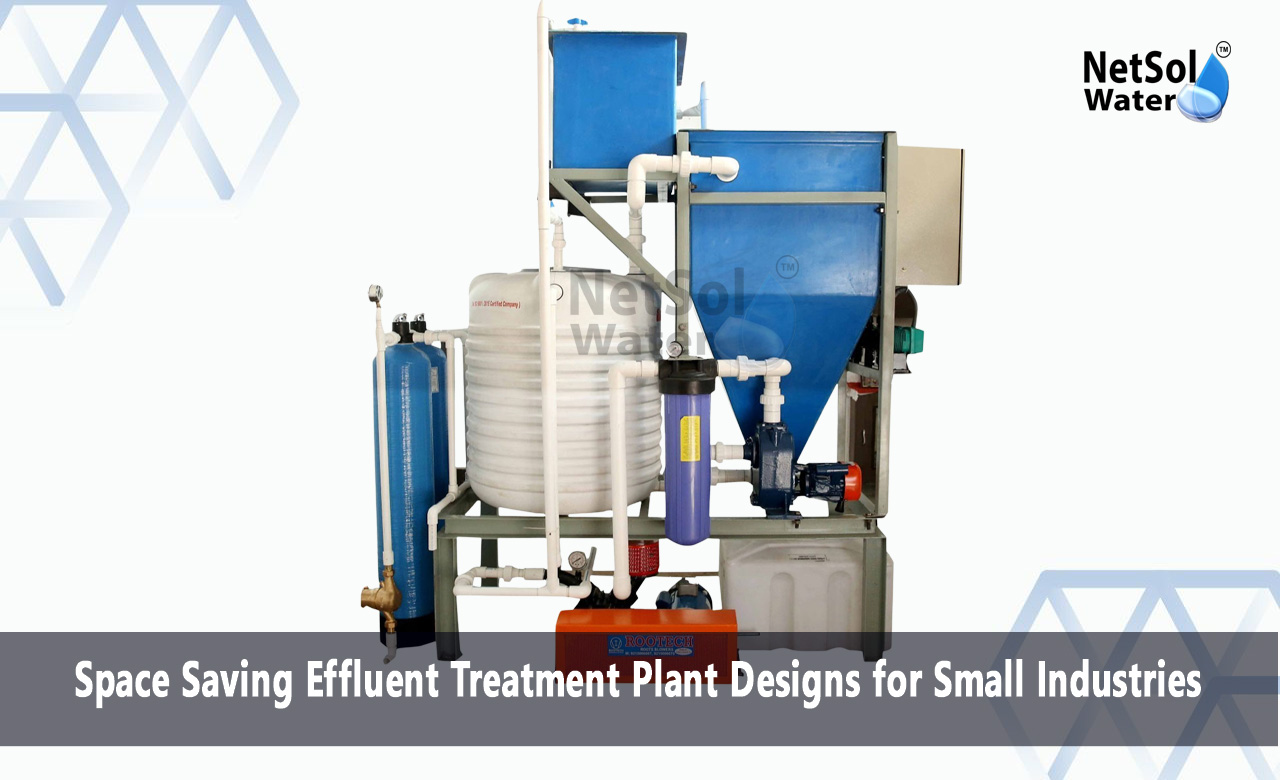
Space Saving ETP Plant Designs for Small Industries
Small industries produce large amounts of wastewater in the manufacturing, cleaning, cooling and processing processes. But, unlike huge industrial units, small industries are usually subjected to severe limitations regarding land and capital investment, and complexity of the operations. In this case, space saving Effluent Treatment Plant designs offered by an Effluent Treatment Plant Manufacturer are crucial in achieving regulatory compliance and ensuring efficiency and low cost.
Introduction to Space Constraints at Small Industries
Small industries like food processing units, dyeing units of textile, electroplating workshops, pharmaceutical plants, and small manufacturing units tend to be located on small industrial plots or within the urban environment. The use of large land spaces to treat waste water is sometimes not feasible. Meanwhile, the environmental laws provide that the industries should treat the effluents prior to discharge and re-use.
To overcome these issues, developments on compact Effluent Treatment Plant designs have been made where several treatment processes are combined in a smaller area without affecting the efficiency of the treatment process.
Rules of Space-Saving Effluent Treatment Plant Design
The primary goal of a space saving ETP Plant is to have a maximum treatment efficiency with minimum space. It is done through decreasing the size of tanks, amalgamation of treatment phases, vertical layout and incorporation of advanced treatment technologies.
Wherever possible, gravity flow is used to minimize the pumping needs and the modular construction can be used to achieve flexibility in installation. Compact designs are also concerned with automation, which makes it unnecessary to have extensive areas of operations and manual processing.
1: Small Equalization and Primary Treatment Unit
To achieve space saving designs, equalization tanks are constructed with a deeper tank as opposed to a wide tank, which makes the balancing of flow in a smaller space effective. The quality of wastewater is maintained through the use of mechanical mixers or fine-bubble aeration systems.
Oil and grease taps, neutralization tanks, and settling chambers are primary treatment units which are commonly combined into one small unit. Instead of the traditional sedimentation tanks, lamella clarifiers or tube settlers are often employed because they have greater settling efficiency in a significantly less area
2: Biological Advanced Biological Treatment Systems
Biological treatment has consumed the most space within traditional Effluent Treatment Plants. In order to deal with this shortcoming small biological systems are common in small industries.
MBBR systems are of particular use in space-saving. Such systems employ plastic material where the microbes have a high surface area to grow, which makes them easy to treat in low volume tanks. The increased concentration of biomass increases the rate of decomposition of organic pollution.
Another type of popular compact design is the sequencing Batch Reactor (SBR) systems. The SBR systems also minimise land space since all treatment processes including aeration, sedimentation, and decanting take place in one tank. They are suitable in industries where the amount of wastewater is variable.
3: Membrane-Based Small-scale Treatment Systems
The membrane-based system like Membrane Bioreactors (MBR) has been increasingly applied in space-saving designs of the Effluent Treatment Plant. These systems incorporate both biological and membrane filtration systems, thus removing the use of secondary clarifiers.
MBR systems generate exceedingly high-quality effluent and they also need minimal space in comparison to the traditional systems. They find their application especially in industries that want to reuse water because the water that has been treated can be used directly as cooling water, washing water, or even in the process.
4: Small Tertiary and Advanced Treatment Unit
As space-constrained designs, tertiary treatment units like pressure sand filters, activated carbon filters and advanced oxidation systems are mounted as skid-mounted or vertical units. They are prefabricated systems with a small space of installation and can be simply incorporated into the plants.
Chemical dosing systems, disinfection units and reverse osmosis systems are also provided in compact skid-mountable configurations that minimise the space whereas maintain high rate of treatment.
5: Effective Sludge Management in Small areas
The small industrial Effluent Treatment Plants are usually difficult in sludge handling. Mechanical sludge dewatering systems like filter presses or centrifuges are also applied as space-saving designs instead of big drying beds. These systems lower the sludge volume speedily and occupy little space.
Sludge storage facilities are constructed either vertically or in closed units so as to reduce odor and environmental effects. Effective sludge management minimizes the challenges of operation and adherence to the rules of disposal.
Modular Design and Automation
In small Effluent Treatment Plant designs, automation is important. Automated control panels, sensors and online monitoring system lessen the need to have huge control rooms and supervision manually.
Effluent Treatment Plant units are made in a modular and prefabricated format that can be easily installed, relocated and expanded. Such modular systems are particularly useful in cases of small industries that rent premises or are situated in such spatial constrained industrial estates.
Conclusion
The space saving Effluent Treatment Plant designs are an appropriate solution to the small industries that are limited by land and cost factors. The small industries can treat the wastewater effectively with limited space by employing compact treatment units, advanced biological systems, membrane technologies and modular layouts.
These designs do not only guarantee regulatory compliance, but also facilitate water reuse, less impact and positive industrial development. As more and more people become environmentally aware and more stringent laws are enacted, compact Effluent Treatment Plants are becoming an inseparable part of the current industrial infrastructure of small-scale providers.
Do you need an advice or assistance on selecting the best water and waste water treatment unit? We have solutions for all your problems!
Let us know your problem, our experts will make sure that it goes away.
For an assistance or related query,
Call on +91-965-060-8473 Or write us at enquiry@netsolwater.com