

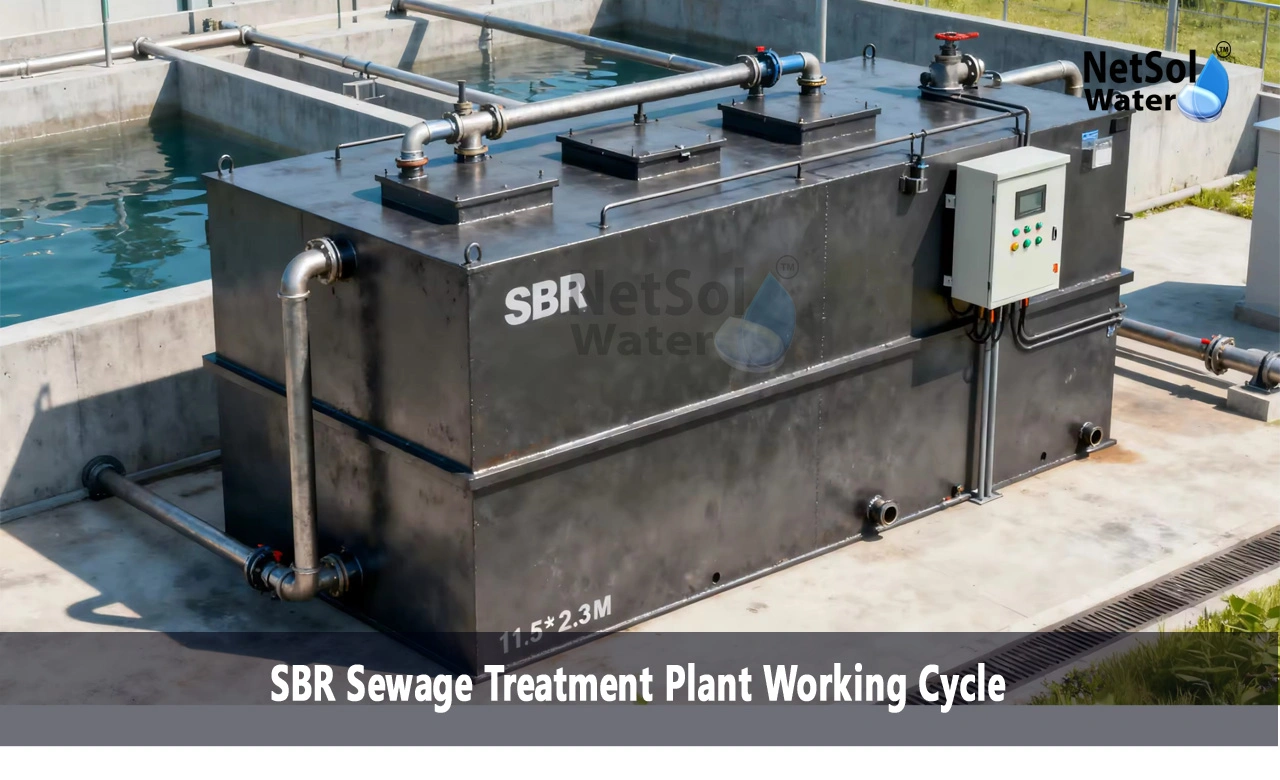
SBR Sewage Treatment Plant Working Cycle
India has many growing towns and busy industries. These places need clean water and safe disposal of sewage. Netsol Water is the leading company that designs reliable SBR systems for urban and industrial use. We will explain SBR Sewage Treatment Plant Working Cycle.
What SBR means and why it matters
SBR stands for Sequencing Batch Reactor. It is a single tank process that treats sewage in timed steps. Let us have a look on some key ideas that make SBR useful.
1: Basic concept of SBR
The SBR acts like a controlled bowl. Operators fill the tank with wastewater. They let microbes break down organic waste in an aerated stage. Then they stop aeration and let solids settle. After settling the clear water is drawn off. The sequence repeats. This setup works well where flow changes during the day. It also fits where space is tight. The SBR gives good removal of organic matter and nutrients when it runs correctly.
2: How SBR helps local communities?
SBR plants use one tank to do many jobs. That lowers land needs and cuts civil work. The controlled timing helps remove nitrogen and phosphorus if that is required. Small towns and industrial parks can install modular SBR units. These units scale up as demand grows. Operators can tune the cycle to match load and temperature. That makes SBR cost effective over time. Netsol Water supports clients with design and training to run these systems well.
SBR Sewage Treatment Plant Working Cycle phases
Understanding each phase in the SBR Sewage Treatment Plant Working Cycle makes operation easier. Let us have a look on some main phases.
1: Fill phase
The plant starts by filling the reactor with sewage that needs treatment. The fill may be continuous or in batches. The choice depends on how the plant gets inflow. In some designs the feed mixes with recycled mixed liquor. In other designs the feed goes in without air. The fill stage sets the load for the next stages. Operators monitor flow and make sure sensors record the start and stop times. Proper control here keeps the rest of the cycle balanced.
2: React or aeration phase
After filling the tank the system supplies air to the reactor. Aeration encourages aerobic microbes to consume organic matter. This stage also helps convert ammonium to nitrate when needed. Operators control oxygen levels and mixing intensity. Good control stops foam and avoids loss of biomass. The length of the react phase depends on the strength of the wastewater and the treatment goals. For nutrient removal the plant may use alternating aerobic and anoxic intervals within this phase.
3: Settle phase
Once the microbes finish most of the work the plant stops aeration and mixing. The biomass then settles to the tank bottom. This settle phase separates clear treated water from the sludge. The plant must allow enough time for solids to compact. Short settling leads to solids carry over into the decant stage. Long settling wastes time and reduces throughput. Operators watch turbidity and sludge blanket position to decide the right moment to stop settling.
4: Decant phase
During decant the clear supernatant leaves the reactor. The plant uses a fixed overflow weir or a floating decanter to remove treated water. The decant device must avoid drawing sludge. Controlled decant keeps the treated water quality steady. Some plants return a portion of settled sludge to maintain biomass levels. Others waste a portion to control solids age. Proper decant timing and control help meet discharge standards.
5: Idle and sludge handling
After decant the reactor may have an idle interval before the next fill. This time allows instruments to reset and operators to check signals. The plant then removes excess sludge at planned intervals. Sludge handling may use gravity thickening or external dewatering. Regular sludge management keeps the biomass healthy and stable. Netsol Water advises on schedules that match local regulations and operational capacity.
Operation maintenance and design notes
Good operation keeps the SBR Sewage Treatment Plant Working Cycle efficient and reliable. Let us have a look on some practical points for daily running and long term care.
1: Start up and monitoring
Start up must use seed sludge from an active biological plant. The team should monitor oxygen levels pH and mixed liquor suspended solids. Simple automatic logs help detect trends before they become problems. Training staff on alarm response cuts downtime and avoids upset conditions.
2: Routine tasks and troubleshooting
Operators should inspect blowers decanters valves and sensors every day. They must record cycle times and effluent clarity. If settling worsens the team can adjust aeration timing or waste more sludge. If oxygen drops the team checks blowers and air lines. Keeping spare parts on site helps restore function fast.
Conclusion
SBR Sewage Treatment Plant Working Cycle gives a clear path to treat sewage in one tank with timed steps. This method suits small towns and flexible industries. Netsol Water is the leading partner to plan operate and support SBR installations. If you want to improve your sewage handling or need a consultation contact Netsol Water today. Request a site review or ask for a custom quote.
Contact Netsol Water at:
Phone: +91-9650608473, Email: enquiry@netsolwater.com